Irving is unusual among Texas cities because a large airport is partly inside it. Roughly six thousand acres of Dallas Fort Worth International Airport fall within Irving city limits, and the airport is governed by a board created jointly by the cities of Dallas and Fort Worth rather than by Irving. For a contractor that distinction is not trivia. It means the owner you contract with runs its own design standards, prequalification and access rules, and it means a meaningful share of the construction spend in your own city is federally assisted rather than private.
Aviation construction is a genuinely different product. Terminal work, cargo and freight facilities, hangars, apron and taxiway rehabilitation, airfield lighting, ground transport infrastructure and airport hotels all have to be built around live operations. Work windows open at night and close before the first departure, crews mobilize and demobilize repeatedly rather than once, and every person inside the secure area needs a badge obtained through a fingerprint-based criminal history records check and a security threat assessment. Anyone without one has to be escorted by somebody who has one, and that escort is paid labor doing no production.
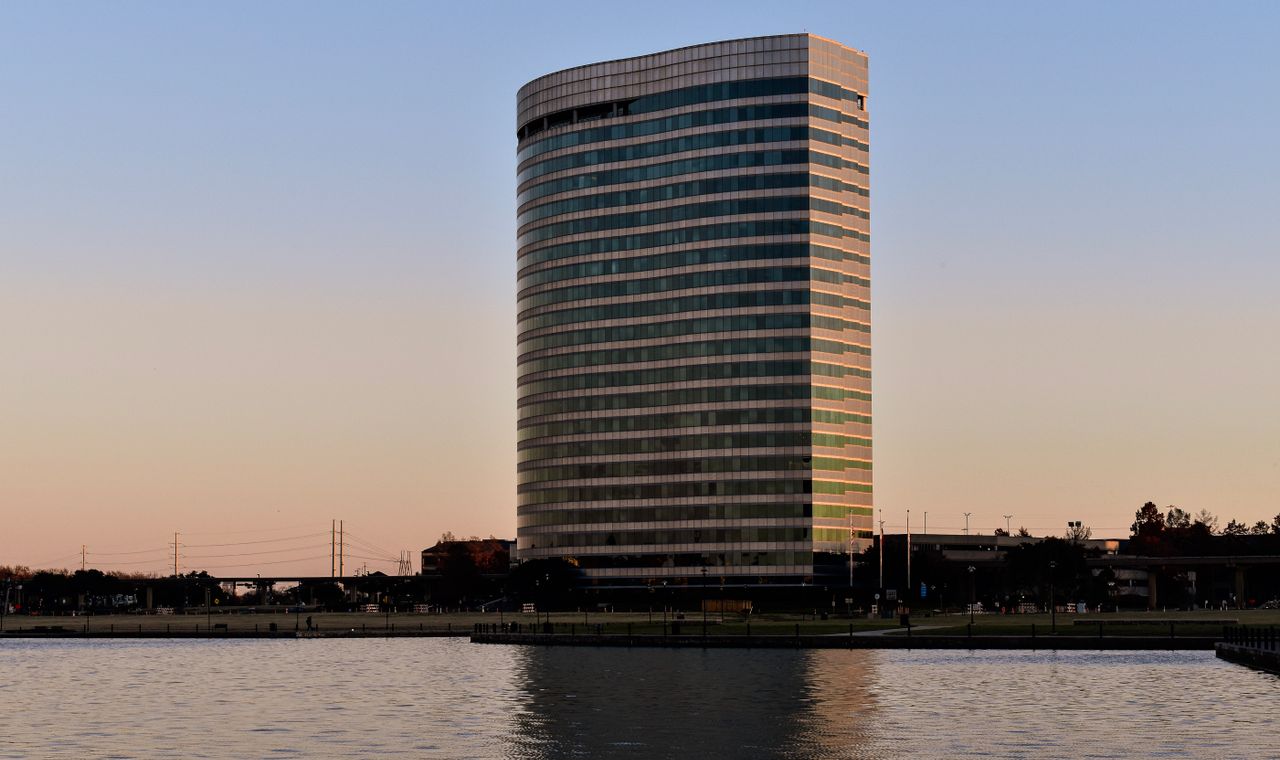
The second Irving economy is corporate. Las Colinas, the master-planned district around Lake Carolyn and the canal walk, holds one of the densest concentrations of corporate headquarters in Texas, including Kimberly-Clark, Fluor, Caterpillar, McKesson and Commercial Metals, and the Mustangs of Las Colinas sculpture at Williams Square is the district landmark. Headquarters relocate in and out, and every move generates interior demolition, fit-out and re-tenanting work. Along State Highway 114, State Highway 183 and the President George Bush Turnpike, distribution and light industrial development follows the freight moving through the airport, and the DART Orange Line linking Las Colinas to the airport has pulled multifamily and mixed-use construction in behind it.
The practical consequence is that a single Irving contractor often runs a Davis-Bacon airfield contract, a private office fit-out on allowances, and a warehouse shell at the same time. Three billing methods, two payroll regimes and two entirely different documentation standards, in one accounting file. Systems that coped at four jobs stop telling the truth at twelve, and the first symptom is almost always the same: the profit and loss looks fine and the bank balance does not.