
Last month we ran a free audit on a contractor's books.
We pulled his Profit and Loss statements going back three full years and walked through them line by line.
One number didn't follow the pattern.
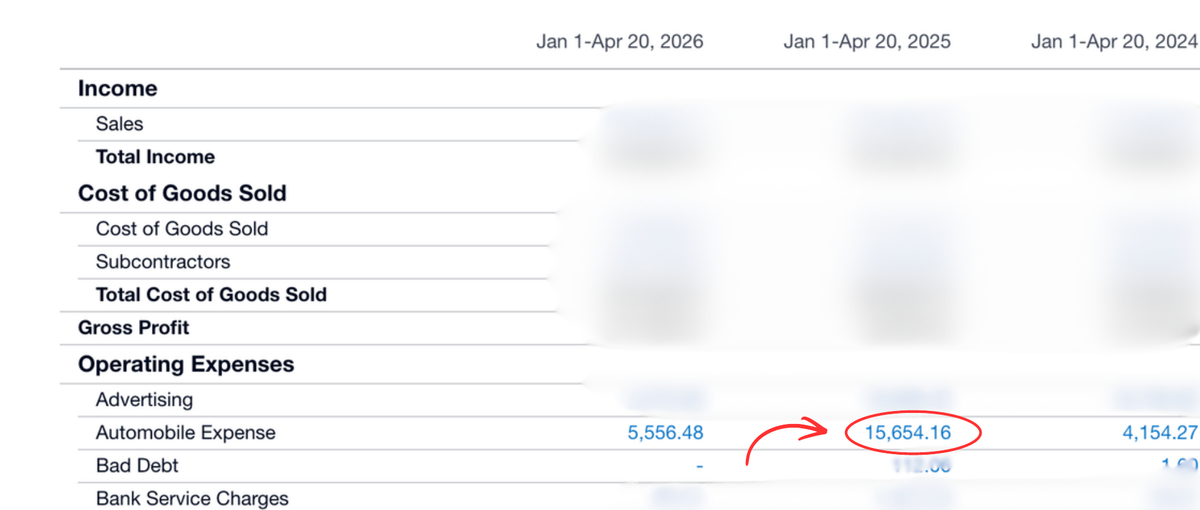
Automobile Expense, 2025: $15,654. The year before, $4,154. A 4× jump in one year, no business reason for it.
So we clicked in.
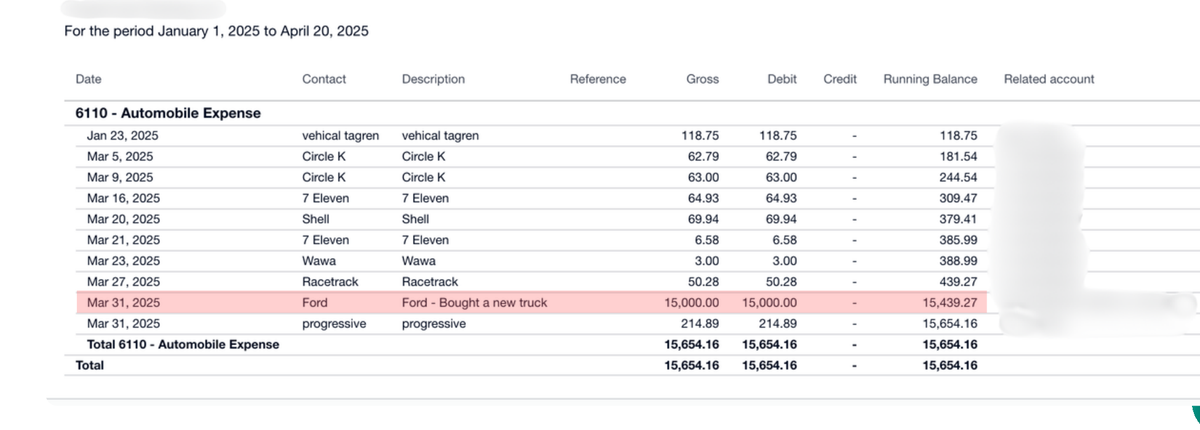
One line. March 31, 2025. Ford. Description: bought a new truck.
A truck. For $15,000. Sitting in Automobile Expense.
But this wasn't even the real problem.
We kept scrolling.
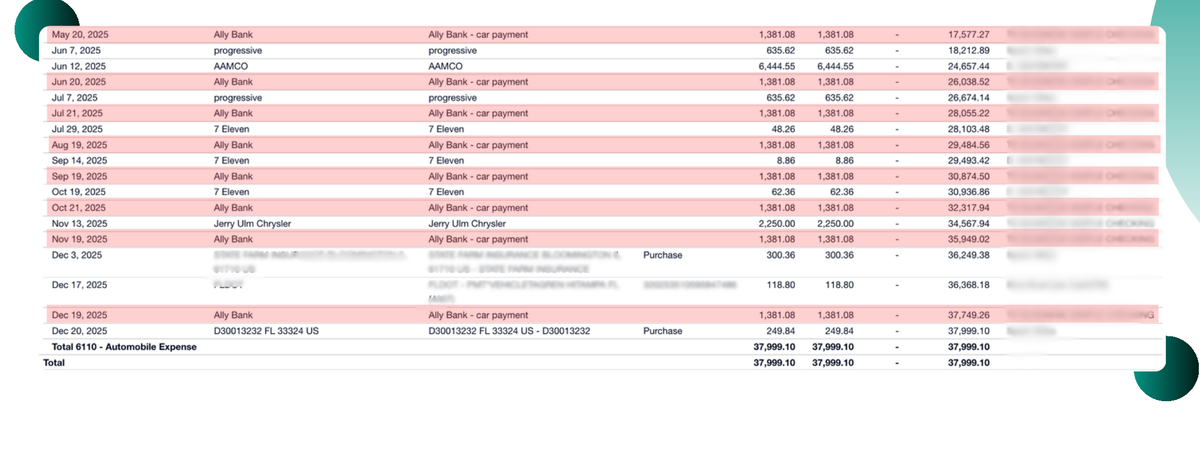
Every month after the purchase, an Ally Bank line for $1,381. Car payment. Going straight into Automobile Expense too.
He financed the truck. And every monthly payment was being booked as an expense.
One truck purchase. Four errors in his books.
-
The truck wasn't booked as an asset.
It went to Automobile Expense instead of the balance sheet.
-
The loan wasn't booked as a liability.
Nothing on the balance sheet showing what's owed to Ally Bank.
-
The loan payments weren't split.
Only the interest is an expense. The principal pays down the loan — it's not a deduction. Instead, the full payment was hitting expenses every single month. He was effectively expensing the truck twice.
-
No depreciation schedule.
The truck should be written off over five years. There was nothing.
Here's what this costs him.
Tax side
When the IRS catches the double-expensing — back taxes. Penalties. Interest.
Deduction side
Five years of clean depreciation write-offs — lost.
Lender side
No truck on the books, no loan on the books. When he goes for a line of credit or to bond the next big job, the bank is making real decisions off numbers that aren't real.
This is what happens when a generalist touches construction books.
If you've ever financed a truck, a trailer, equipment — anything — some version of this could be sitting in your books right now.
How we cleaned up a contractor's messy books & set up job costing
A real client. Before-and-after numbers. The exact steps we took.
Book your free 48-hour audit
A construction-CPA team walks through your books, flags what's miscoded, and shows you the fix.
Get next week's article free.
Every Friday. Job costing, WIP, cash flow — and the bookkeeping mistakes generic accountants miss. Unsubscribe anytime.
Subscribe to FinTruction Insights