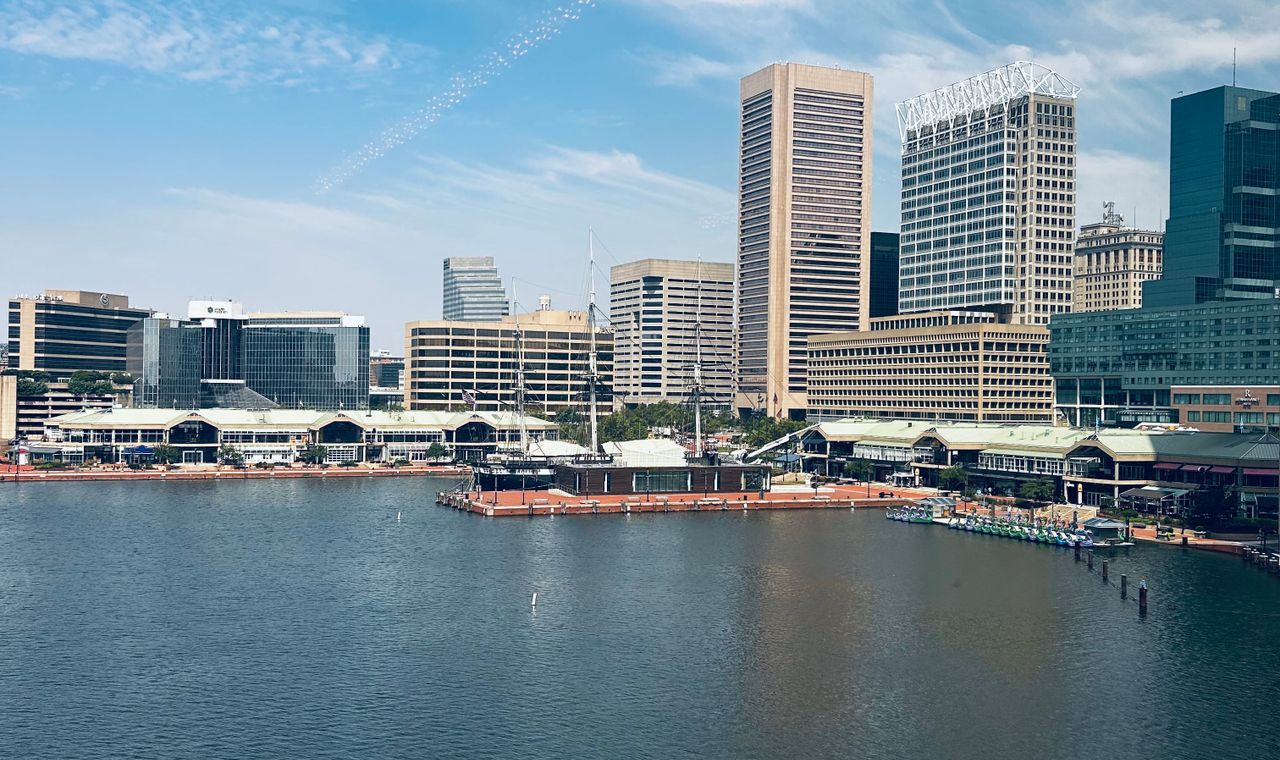
Baltimore metro
Where your jobs run
Accounting built around the local construction market.
Construction only
Not generic bookkeeping
Job costing, WIP, and retainage handled the way contractors need.
Remote-first
Across Maryland
Full support without an in-house hire, anywhere you build.
Baltimore construction is anchored by things that do not slow down: the Port of Baltimore, one of the busiest ports on the East Coast, and the institutional campuses that build year after year. Terminal expansion, warehouse and intermodal facilities, and bridge work keep a steady pipeline of large, multi-phase projects funded from public and federal sources.
The Francis Scott Key Bridge reconstruction has added a major federally supported program to that pipeline, drawing in prime contractors, trades, and suppliers on Davis-Bacon terms. Alongside it, Johns Hopkins University, Johns Hopkins Hospital, and the region's growing biotech sector drive continuous healthcare, research, and lab construction across the metro.
Baltimore's proximity to Washington, DC also pulls local contractors into federal building and infrastructure work an hour down I-95. At the neighborhood scale, historic districts such as Fells Point, Federal Hill, Canton, and Mount Vernon sustain steady demand for renovation firms that can preserve historic fabric while modernizing systems under CHAP review.
The common thread is institutional and public money, and the paperwork that rides with it: prevailing wage, certified payroll, phased billing, and owner audits. FinTruction gives Baltimore contractors the job costing, WIP reporting, and financial oversight that make that reporting load routine instead of a scramble.