Construction Accounting

Construction Accounting in Columbus, Georgia

Job costing, WIP and records that hold up when there is nothing to lien

Working on the installation at Columbus, Georgia changes something most contractors never think about until they are owed money: you cannot place a mechanics lien on federal property. Inside the gate at Fort Benning there is nothing to attach. Your security is the prime contractor's Miller Act payment bond, and a claim on that bond runs on a clock that starts the last day you furnished labor or material, not the day an invoice went unpaid. So the receivable that feels safest, the one backed by the federal government, is the one where recovery depends entirely on records you kept while the work was still live.

The Chattahoochee River running over rock shoals below the converted red brick Eagle and Phenix mills, smokestacks and a water tower on the Columbus, Georgia riverfront On the ground The Chattahoochee riverfront, Columbus, Georgia. Photos: PghPhxNfk and Mccunicano (CC BY-SA 4.0)
Builds the jobs Columbus
Runs the books FinTruction
Why It Matters

Why Columbus, Georgia Contractors Need Construction-Specific Accounting

Federal work pays reliably and forgives nothing on documentation. A market built around an Army installation rewards contractors whose records were already in order and quietly punishes the rest.

  • Last date labor or material was furnished recorded on every job
  • Unpaid balances broken down by contract, change order and delivery
  • Davis-Bacon certified payroll produced from live job-cost payroll
  • Federal and non-federal work kept cleanly separated in payroll
  • Georgia and Alabama hours coded by the state they were worked in
  • Material tax treated as job cost, at the rate actually paid
  • Retainage tracked receivable and payable with its release condition
  • Monthly WIP with over and underbilling by job, ready for a surety
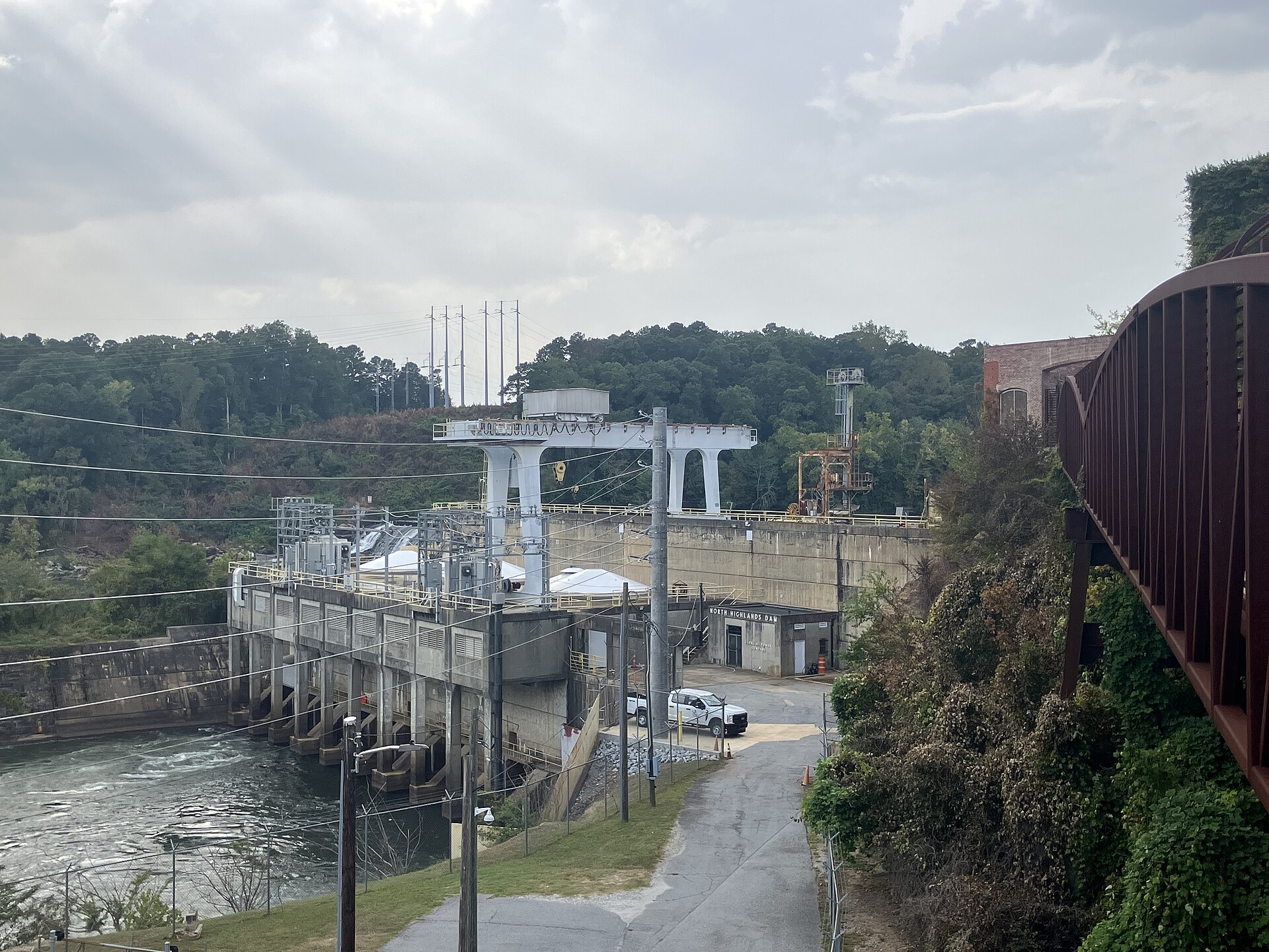
North Highlands Dam and power station on the Chattahoochee at Columbus, concrete spillway and gate piers with a gantry crane and a steel truss bridge
Proof

What Construction Owners Say

Rated 5.0 on Google

Trusted by 25+ construction businesses nationwide

Procore logo Listed on theProcore Network

They didn’t just record transactions and call it a day. They built a custom chart of accounts around how a remodeling company actually runs, did a full catch-up on years of bookkeeping inside QuickBooks Online, and now stay on top of my monthly bookkeeping and payroll. Every step, they broke it down in simple terms instead of burying me in accountant talk.

Oniel Campbell, Founder of Moonz Contracting
Oniel Campbell
Moonz Contracting Founder

FinTruction rebuilt the whole thing from the ground up, with real job costing, work in progress, and retainage. They didn’t just hand me reports and disappear; they walked me through my numbers until I understood them.

Carl Moore, Owner of Hearth & Haus
Carl Moore
Hearth & Haus Owner
Dalton Mayberry, Owner of ProperCoat Painting
Sahil and his team handle the bookkeeping and job costing for my painting business. They cleaned up my books and set up integrations that give me accurate, timely job costing with solid weekly data. Reliable, detailed, and genuinely invested in getting the numbers right.
Dalton Mayberry
ProperCoat Painting
Owner

FinTruction is the only bookkeeping team we’ve found that truly understands construction accounting and WIP reporting. They aligned our income and costs across 21 jobs and gave us full, monthly transparency. Fast, accurate, and an indispensable partner.

John Wesley Sebastian, President of B&B Concrete
John Wesley Sebastian
B&B Concrete President

When I came to FinTruction I had no financial structure. No job costing, no WIP tracking, books behind. They did a full cleanup and rebuilt job costing and WIP tracking in QuickBooks. Now I know what’s billed, what’s owed, and where every job stands.

Clay Pearson, Owner of C. Pearson Contracting Corp
Clay Pearson
C. Pearson Contracting Corp Owner
Client testimonial

Hear it straight from a client we work with

A couple of minutes from a contractor we support, sharing what working with FinTruction has been like and what changed once their numbers finally made sense.

  • An owner sharing their honest experience
  • From guessing to numbers they actually trust
  • Why they’d recommend us to other contractors
Read more reviews
FinTruction client video testimonial
What We Do

Our Construction Accounting Services in Columbus, GA

1 Contractor bookkeeping
2 QuickBooks integrations
3 Job costing
4 WIP reporting
5 Retainage management
6 Controller & CFO services

Records That Protect a Bond Claim

This is the service most Columbus contractors do not know they are missing. On federal work there is no lien to fall back on, so the only thing standing between you and an unpaid balance is a payment bond claim, and that claim lives or dies on dates and amounts you either recorded at the time or did not. We build the job file so both are already there.

  • Last date furnished captured per job from daily reports and time cards
  • Unpaid balances aged by contract, change order and delivery
  • Delivery tickets and invoices tied to the specific job, not an account
  • Change order and unpriced work logged as it is directed
  • Documentation packaged so your attorney can act the same day

QuickBooks Integrations for Your Construction Software

Every construction platform claims to have a "QuickBooks integration." Most break the moment your books need to be accurate. Sales tax mismaps, retainage disappears, change orders create duplicates, and job costing reports stop matching project reality. We fix the integration so your software, your books, and your job‑level numbers all tell the same story.

Also work with Foundation, Sage 100, Bill.com, ADP, Gusto, Ramp, and more. See all platforms we integrate →

Certified Payroll on Federal Work

Georgia has no state prevailing wage law, so plenty of Columbus contractors have run payroll for twenty years without ever producing a certified payroll report. Then a job on the installation arrives, Davis-Bacon applies above 2,000 dollars, and the weekly reporting starts immediately. That is the week a payroll process that was fine forever stops being fine.

  • Wage determination tracked per contract and classification
  • Weekly certified payroll produced from live payroll data
  • Fringe benefit accounting handled properly
  • Federal and non-federal work kept separated in the same file
  • Subcontractor compliance documents collected and retained

Job Costing Across the State Line

Columbus contractors work the Alabama side as a matter of course, and the river is a tax and payroll boundary as well as a bridge. Withholding generally follows where the work was performed, unemployment reporting has its own rules, and material tax follows the install location. None of that is hard if the job carries its state. All of it is painful if it is being reconstructed on Friday.

  • Hours coded to job, cost code and work state at entry
  • Withholding and unemployment reporting split by work state
  • Licensing and registration costs tracked by jurisdiction
  • Travel and drive time costed to the job, not absorbed
  • Material tax recorded at the rate actually paid

WIP Reporting and Revenue Recognition

Long federal and institutional contracts are where underbillings hide, and an underbilling is money you have already spent and not yet asked for. We prepare a monthly work in progress schedule comparing cost to date against the current estimate, calculate earned revenue on percentage of completion, and show over and underbilling by job while there is still time to act.

  • Monthly WIP with an estimate to complete review
  • Percentage of completion earned revenue
  • Over and underbilling analysis by job and in total
  • Backlog reporting for surety and lender review
  • Year-end WIP coordinated with tax planning

Controller and CFO Support

Bonding capacity is the ceiling on how much federal work you can take, and sureties read financial statements before they read your reputation. Our controller services and CFO services cover what your current statements support, what a slowdown in installation spending would do to your cash, and how to present a WIP schedule a surety will actually credit.

  • Monthly financial review with a real conversation
  • Bonding capacity strategy and surety reporting
  • Backlog and receivables by customer, so concentration is visible
  • Cash flow forecasting across overlapping contracts
  • Entity and multi-state structure reviewed for Georgia and Alabama work
  • Equipment purchase versus rent versus lease analysis
The Difference

Generic Local Bookkeeper vs FinTruction

A general bookkeeper can record transactions. Construction accounting is a different job.

What you needGeneric local bookkeeperFinTruction
Job-level costingLumps all jobs into one P&LCost codes and margin per project
WIP & revenue recognitionCash-basis, no WIP scheduleMonthly WIP with over/underbilling
Retainage trackingBuried in AR/AP, often missedTracked receivable & payable by contract
Bonding & lender packagesNot equipped to produce themBonding-ready statements and backlog
Construction softwareQuickBooks set up like a retail shopQuickBooks + integrations tuned for contractors
Local Context

The Columbus, Georgia Construction Market, and What It Does to Your Books

Columbus metro
Where your jobs run
Accounting built around the local construction market.
Construction only
Not generic bookkeeping
Job costing, WIP, and retainage handled the way contractors need.
Remote-first
Across Georgia
Full support without an in-house hire, anywhere you build.

Columbus sits on the Chattahoochee at the Alabama line, with Phenix City directly across the water and the Army installation on its southern edge. That installation, renamed Fort Moore in 2023 and redesignated Fort Benning in 2025, is the single largest fact in the local construction economy. It generates a continuous flow of federal construction, alteration and repair work, and it supports a housing, retail and service market around it that moves with it.

The second layer is corporate. Columbus is the headquarters city for Aflac and Synovus and grew a substantial payments industry, which gives it a professional employment base most cities of its size do not have. The third layer is the river itself: the old textile mills along the water have been converted to housing, offices and hospitality, and the whitewater course through downtown reoriented a working industrial riverfront into a destination. Adaptive reuse work here is ordinary rather than exotic.

Those three layers ask for different things from your accounting, and the federal layer asks for the most. It pays predictably, which is genuinely valuable, but it removes the remedy most contractors quietly rely on. There is no lien on federal property. There is a payment bond, and a bond claim is a documentation exercise with a hard clock attached. A contractor who cannot say, from records, exactly what day it last furnished labor or material on a given job is carrying a risk it has not priced.

Then there is the state line. Working Georgia and Alabama in the same week is normal here, not exotic, which means payroll sourcing, licensing and material tax questions arrive whether or not anyone has thought about them. Columbus contractors rarely think of themselves as multi-state businesses. On the payroll register, that is exactly what they are.


Compliance

Federal and Georgia Rules That Land in Your Accounting

1 No Lien on Federal Property, and What Replaces It

A mechanics lien cannot attach to property of the United States, so the Georgia lien rights you rely on for private work in Columbus do not travel onto the installation. The Miller Act, at 40 U.S.C. sections 3131 through 3134, is the substitute. Before a contract of more than 100,000 dollars is awarded for the construction, alteration or repair of a public building or public work of the federal government, the prime contractor must furnish a performance bond and a payment bond protecting those supplying labor and material. Smaller contracts are handled under separate payment protection rules, so confirm what applies to your specific contract.

2 The Two Clocks in Section 3133

A claimant with a direct contractual relationship with a subcontractor but no contract with the prime contractor must give the prime written notice within 90 days from the day on which it last performed labor or supplied material for which the claim is made. Any civil action on the payment bond must be brought no later than one year after that same last day. Both periods run from your last day of work on the job, not from an unpaid invoice, not from substantial completion, and not from the day the argument started. That is why the last date furnished belongs in your accounting records rather than in somebody's memory.

3 Davis-Bacon on Federally Funded Work

Federally funded and federally assisted construction above 2,000 dollars falls under the Davis-Bacon Act, with wage determinations issued for the locality and trade, weekly certified payroll and fringe benefit accounting. Georgia has no state prevailing wage law, so most Columbus contractors encounter certified payroll for the first time on federal work rather than on a state or municipal job. The requirement is weekly and it starts immediately, which is why we run compliance out of the payroll process rather than as a separate task.

4 Georgia Sales and Use Tax on Materials

Georgia generally treats a contractor as the consumer of the materials it furnishes and installs into real property, so the tax attaches at purchase and becomes part of the job cost rather than a line added to the contract price. Combined state and local rates vary by county, so the same order costs a different amount depending on where it is delivered and installed. Do not assume a government customer makes your purchases exempt: whether an exemption applies turns on the specific arrangement and documentation, and it is a question to settle before the bid, not after the invoice.

5 Georgia Licensing and Renewals

Georgia licenses general and residential contractors and several trades at state level through the relevant state boards, and municipalities add their own registration and permitting on top. Work the Alabama side and you are dealing with a separate state regime again. Licensing fees, bonds, insurance and continuing education are recurring costs of being permitted to work, and they belong in a burden rate your bids actually recover. Booked to a miscellaneous account, they simply make every bid slightly light.

6 Georgia Lien Rights on Private Work

Off the installation, Georgia does give contractors, subcontractors and suppliers lien rights, with strict notice and filing requirements and deadlines that depend on your tier and on what the owner has filed. Those rights are worth having and easy to lose on a technicality. We are not attorneys and we do not file notices or bond claims. What we do is keep unpaid amounts organized by job, tier and date furnished, so whichever remedy applies, private lien or federal bond claim, the underlying facts are already documented and your attorney is not starting from a shoebox.

Who We Serve

Columbus Contractors and Trades We Work With

We support contractors across the Chattahoochee Valley, from crews working inside the gate to the commercial, riverfront and residential builders working Muscogee County.

General Contractors
Federal & Government Contractors
Site & Excavation
Underground Utilities
Paving & Site Concrete
Electrical Contractors
Mechanical & HVAC
Plumbing Contractors
Steel & Structural
Roofing Contractors
Masonry & Restoration
Interior Finish Contractors
Adaptive Reuse & Mill Conversion
Multifamily Builders
Residential Builders

Running a Construction Company in Columbus, GA?

Get Your Free Audit
Why FinTruction

Why Columbus, GA Contractors Choose FinTruction

A fair question if you already have a bookkeeper or a CPA who does the return. Here is the honest answer.

  • Construction is the only industry we work in, so federal compliance is routine here rather than research
  • We record the facts a bond claim needs while the job is live, because afterwards is too late
  • Sahil Ahmad, CPA reviews the work, so you are not relying on a data entry pool
  • Certified payroll and job-cost labor come out of one payroll run, so they cannot drift apart
  • We work inside the tools you already run: QuickBooks, Buildertrend, Procore, ServiceTitan and Knowify
  • A flat monthly fee, so asking a question does not start a clock
  • A free Audit first, so you can see what is wrong before committing to anything
Systems

The Software You Already Run, Set Up Properly

Most Columbus contractors do not need new software. They need what they already pay for configured for construction, so compliance, job cost and the facts behind a claim all come from one file.

QuickBooks Set Up for a Contractor

Most QuickBooks files we inherit were configured for a business that sells products. For a contractor that means jobs are customers, cost codes do not exist, retainage hides inside receivables, and nothing anywhere in the file records the last date you furnished labor or material on a job you are now owed money for.

  • Chart of accounts rebuilt for job costing
  • Cost codes structured by the work you actually take
  • Payroll items mapped to classification and work state
  • Retainage tracked at contract and subcontract level
  • Material tax recorded as job cost at the rate paid
  • Delivery and invoice documents attached to the job they belong to

Is your QuickBooks file working against you?

Field and Project Management Integrations

If your project managers already track budgets, commitments, daily reports and change orders in a construction platform, the office should not be typing it in again. The daily report is also where the last date furnished lives, which makes the connection between field and accounting worth more here than in most markets.

One set of numbers that the field and the office both believe.

Reporting You Can Run the Company On

Once the systems are connected, reporting stops being a history lesson. These are the reports Chattahoochee Valley contractors use to decide what to chase and what to walk away from:

  • Job profitability by job and cost code, current not year-end
  • Unpaid balances by job with the last date furnished attached
  • WIP with over and underbilling, refreshed monthly
  • Labor by state and classification, ready for certified payroll
  • Cash forecast across federal payment schedules and retainage releases

See how we have done this for other contractors in our construction accounting case studies.

Answers

Columbus, Georgia Construction Accounting Questions

Can we file a lien on a job at the Fort Benning installation?

No. You cannot place a mechanics lien on property of the United States, and that is the whole reason federal construction works the way it does. Your Georgia lien rights, which are real and useful on private work in Columbus, simply do not exist once you are inside the gate. What replaces them is the payment bond the prime contractor is required to furnish under the Miller Act. If you are used to relying on lien rights as your backstop, the first federal job is where that backstop quietly disappears and most contractors do not notice until they are chasing money.

What is the Miller Act, and when does the clock start?

The Miller Act sits at 40 U.S.C. sections 3131 through 3134. Before a contract of more than 100,000 dollars is awarded for construction, alteration or repair of a public building or public work of the federal government, the prime contractor must furnish a performance bond and a payment bond. Under section 3133, a claimant who has a direct contract with a subcontractor but no contract with the prime must give the prime written notice within 90 days from the day it last performed labor or supplied material, and any civil action on the bond must be brought no later than one year after that same last day. Both clocks run from your last day on the job, not from an invoice date.

What records actually make a bond claim stick?

The ones that fix dates and amounts, and they have to exist already. You need the last date you performed labor or furnished material on that job, evidenced by daily reports and time cards rather than memory. You need the amount unpaid broken down by contract, change order and delivery. You need the delivery tickets and invoices tied to that specific job rather than a running account. Contractors lose bond claims on records, not on merits. We keep the job file so the last date furnished and the unpaid balance are both retrievable in minutes.

Does Davis-Bacon apply to work on the installation?

Federally funded and federally assisted construction above 2,000 dollars falls under the Davis-Bacon Act, which brings a wage determination for the locality and trade, weekly certified payroll and fringe benefit accounting. Georgia has no state prevailing wage law, so for a lot of Columbus contractors the first federal job is also the first time they have ever produced certified payroll. That is a payroll process change, not a form to fill in at the end of the week. The certified payroll and the labor in your job cost have to come out of the same run, or they will not agree.

Do we need to be registered in SAM before we can get paid?

Federal contracting normally requires registration in the System for Award Management before award, and the registration has to be kept current, including the banking and entity information that payment runs through. A lapsed registration is a payment problem before it is a compliance problem. Treat the renewal like an insurance renewal: a calendar item with an owner, not something someone remembers. Confirm the current requirements for the specific solicitation, because they vary with contract type and size.

How is a federal progress payment different from a private pay application?

Mainly in predictability and in what has to be true before money moves. Federal payment runs on defined schedules and defined documentation, which is genuinely better than chasing a private developer, but the documentation is not optional and an incomplete submission simply waits. Retainage, when it is held, is governed by the contract terms. The practical consequence for your books is that cash timing on federal work is knowable in advance, so there is no excuse for being surprised by it. We forecast it as a schedule rather than as a hope.

Does Georgia have a state prevailing wage law?

No. Georgia has not enacted one, so state and locally funded public works in Georgia carry no state wage determination and no state certified payroll requirement. What governs a state or local job is whatever the awarding agency wrote into the contract, so read the contract rather than assume a statute covers it. Federal money is the trigger that changes everything, because Davis-Bacon then applies with its own wage determination and weekly reporting. Contractors who work both sides need payroll that can run federal and non-federal work without cross-contaminating either.

Are our material purchases tax free because the customer is the federal government?

Do not assume so. Georgia generally treats a contractor as the consumer of the materials it furnishes and installs into real property, which means the tax attaches to your purchase and becomes a job cost rather than something you add to the contract price. Whether any exemption applies on a government project depends on the specific purchasing arrangement and documentation, and combined state and local rates also vary by county. Confirm the treatment for your contract before you bid it. Bidding a job as though the material is exempt and then paying the tax is a margin loss that shows up too late to price.

We also work across the river in Phenix City, Alabama. What changes?

More than the drive. Licensing and registration are set by each state, so working the Alabama side can mean separate registration, bonding and permitting from what you hold in Georgia. Payroll withholding generally follows where the work was physically performed rather than where your office is, and unemployment reporting has its own rules about which state an employee belongs to. Sales and use tax follows the install location as well. None of this is difficult if the job carries its state as a field in your system. All of it is painful if the office is reconstructing it from a time sheet that says only "the Alabama job."

Which parts of the Chattahoochee Valley do you serve, and how do we start?

We work with contractors across Muscogee, Harris, Chattahoochee and Talbot counties and the wider Chattahoochee Valley: Columbus, Fort Benning, Phenix City, Fortson, Midland, Cataula, Hamilton, Cusseta and Buena Vista, and out toward Macon and Auburn when the work goes there. Start with the free Audit. Send your current accounting file and your last job profitability or WIP report and we will tell you what is wrong, what it is costing you, and whether your job records would support a bond claim if you needed one. No obligation. After that it is a flat monthly fee based on transaction volume, active jobs and reporting needs. Sahil Ahmad, CPA reviews the work.

Nearby

Cities We Serve in Georgia

FinTruction provides construction accounting across Georgia. Select your city below for job costing, WIP and contractor bookkeeping support in your market.

Also available

Just need the monthly books kept?

If the federal compliance side is handled and it is the monthly close that keeps slipping, we also run day-to-day construction bookkeeping: coding to cost codes, reconciliations, AP and AR, payroll runs and job-cost entry.

Construction Bookkeeping Services

Construction Bookkeeping Services in Georgia

Not Seeing Your City?

We serve contractors across all of Georgia. View all locations →

Find Out What Your Columbus Books Are Hiding

Send us your current file and your last job profitability report. We will tell you what is wrong with it, what it is costing you, and whether your records would support a payment bond claim if you ever had to make one. No charge and no obligation for the Audit.

Get Expert Construction Accounting Support in Columbus

Trusted by 25+ Construction Companies
Response Within 24 Hours
Free Consultation, No Obligation

Request a Free Consultation

Looking for professional construction accounting in Columbus? Fill out the short form below and our contractor bookkeeping team will contact you within 24 hours.