
Hearth & Haus is a $1M+ custom homebuilder whose bank feed had hundreds of unreviewed transactions, balances that never matched the bank, and revenue that did not add up. We cleared the backlog and rebuilt the books into investor-grade, job-costable financials.
 Hearth & Haus

| Where the ledger stood | Before | After |
|---|---|---|
| Transactions stuck in the backlog | 500+ | 0 |
| Job-cost accounts to track projects | 0 | 52 |
| Revenue lines of business tracked | 1 lump | 3 clean |
| Income recognition | Overstated | Investor-grade |
Hearth & Haus is a custom homebuilder on the Texas coast with more than a million dollars in annual revenue, multiple active projects, and a stack of loans and lines of credit. The volume was real, but the bookkeeping had been left to pile up and the financials no longer reflected what was happening on the ground.
This was not a small starter file. It was a busy, high-revenue business whose accounting had quietly fallen months behind, with hundreds of transactions waiting to be reviewed and numbers that no longer tied to reality.
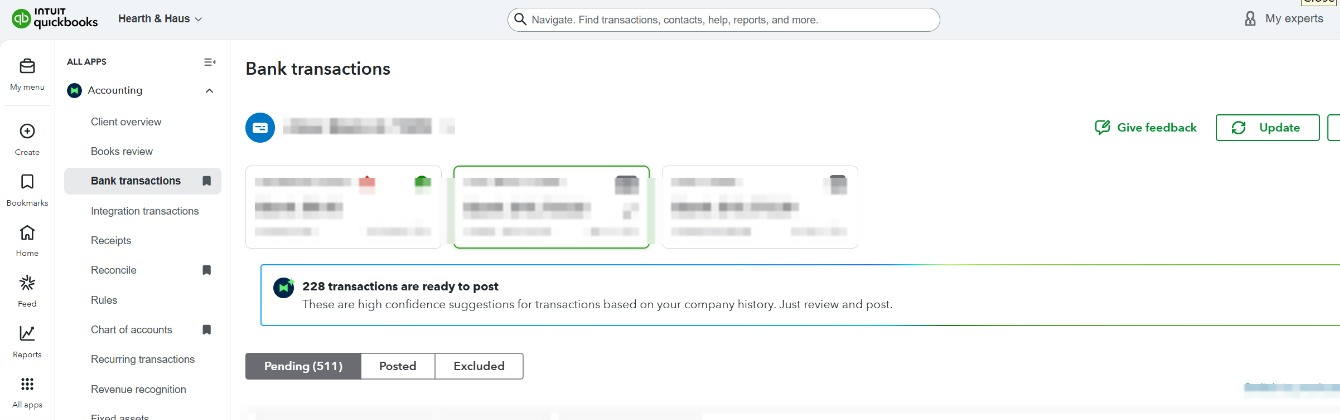
Hundreds of bank transactions sat unreviewed in the feed, 228 of them flagged as ready to post but never actioned.
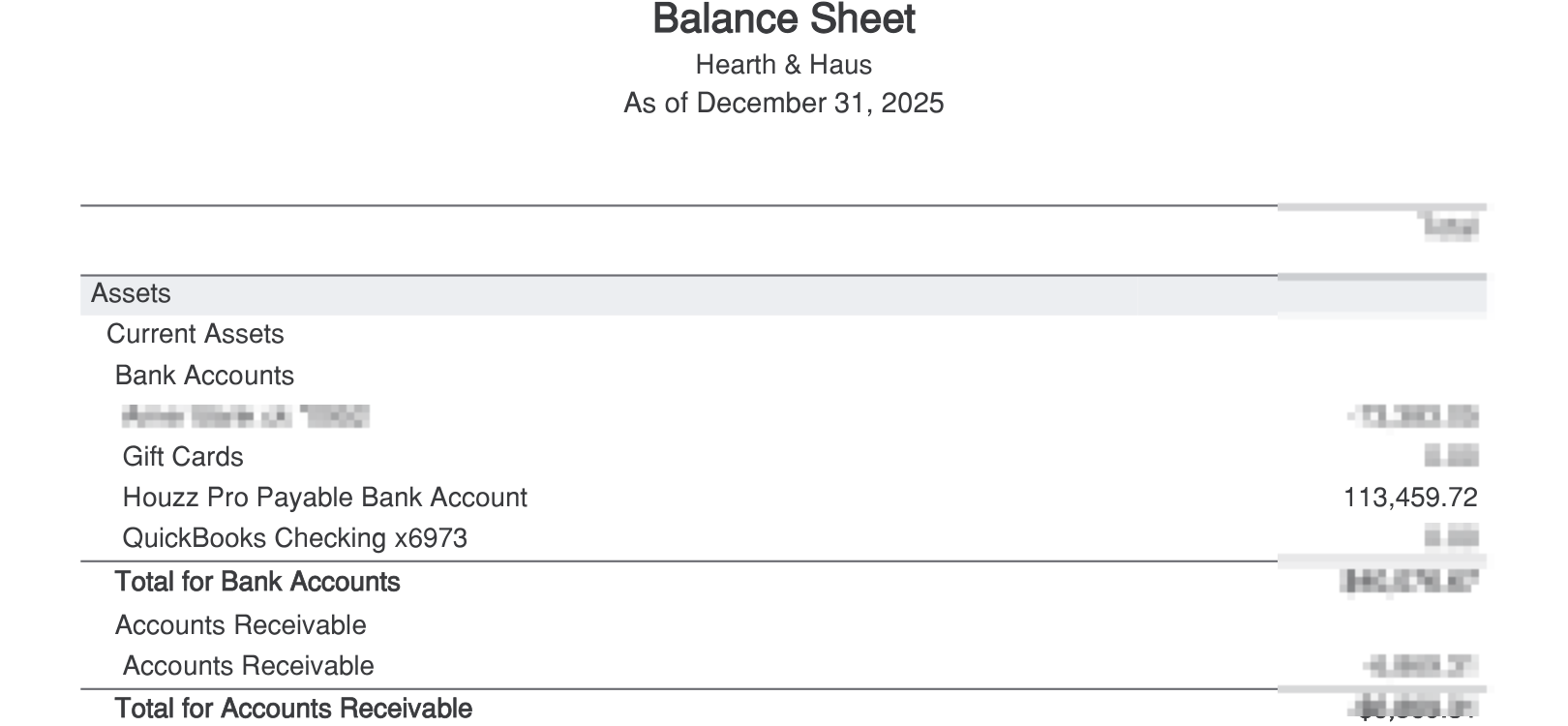
The operating account showed roughly −$73K in QuickBooks against about $19K at the bank, while the payroll account was stuck at $0 with a sync error.
Accounts receivable showed a negative ~$6.9K balance, a clear sign that customer invoicing and payments were tangled.
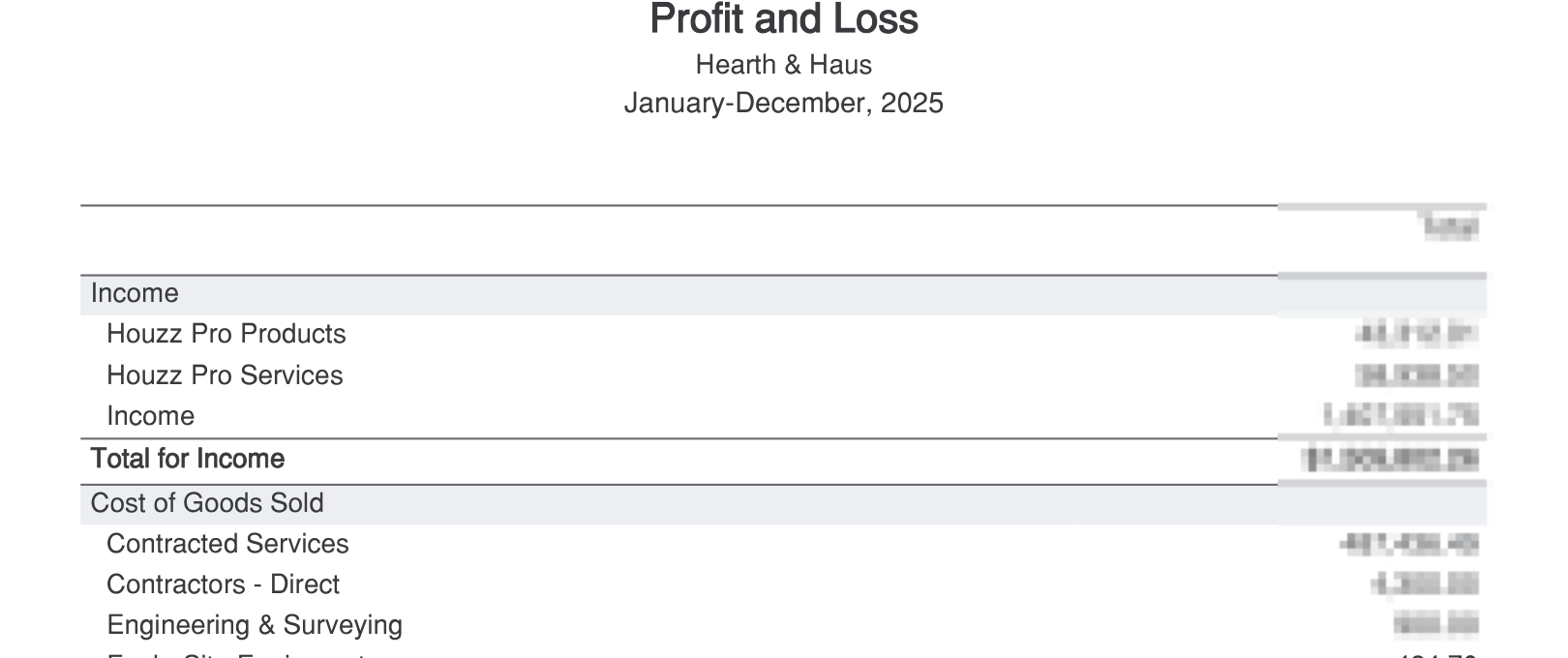
Income was overstated and double-counted, with a six-figure payment-processor clearing account inflating cash on the balance sheet.
Subcontractors and materials were lumped into broad buckets, so there was no way to see which projects or trades were actually profitable.
Several shareholder loans and roughly eight lenders were jumbled together, with interest costs never broken out by facility.
We engineered a true construction chart of accounts, cleared the backlog, and turned a chaotic file into a system the business now runs on every month.
Built around how a builder operates, with work in progress, retainage receivable and payable, over- and under-billings, labor burden, and job-cost categories by trade and material.
Tied the 2024 opening figures back to the real financials so the cleanup began from a correct, defensible starting point.
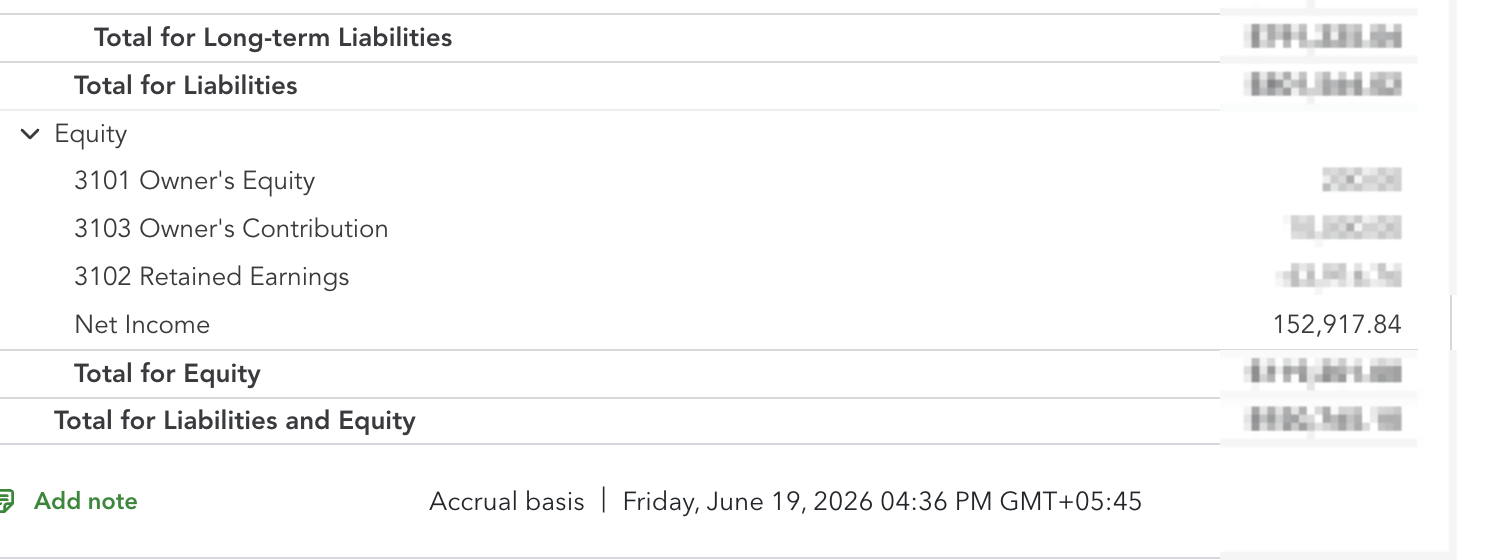
Reviewed and posted all 500+ transactions, reconciled every account to the bank, fixed the negative receivables, and corrected the overstated, double-counted income.
500+ transactions clearedProduced clean, accrual financials with revenue split by line of business, job-costed cost of revenue, and interest broken out by lender.
Walked through the full set of statements together so the owner could read his own margins, costs, and cash position with confidence.
Moved to ongoing monthly bookkeeping with a documented standard operating procedure and a proper document-collection workflow.
OngoingNow managing accounts receivable and payable and scheduling payments to keep cash flow healthy, with project-level job costing being rolled out next.
In progressA generic chart of accounts cannot tell a builder what is really happening on a job. We engineered the accounts a contractor actually needs.
Costs accumulate on each open job until it is billed and closed, so nothing is recognised early.
Tracks the money held back on contracts, both owed to the business and owed out to subs.
Shows whether each job is billed ahead of, or behind, the costs actually incurred.
Captures the true cost of field labor, taxes and comp included, not just the hourly wage.
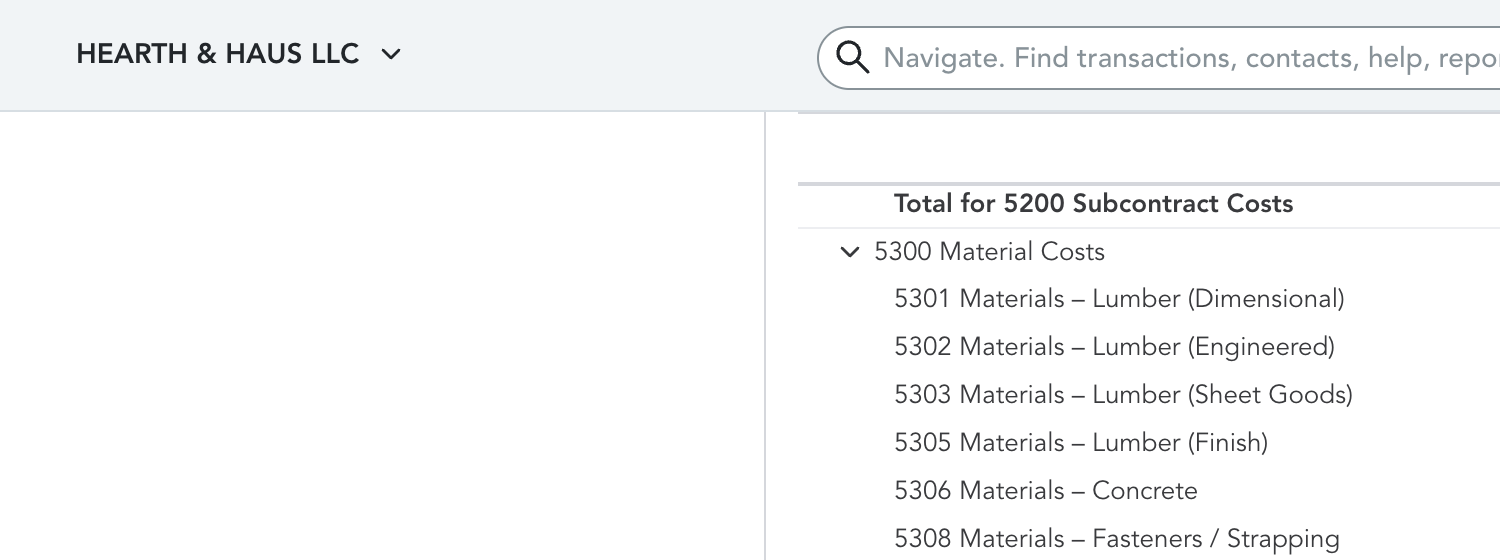
24 subcontractor and 28 material accounts, so the margin on any project is clear.
Keeps wage compliance on public and prevailing-wage jobs clean and auditable.
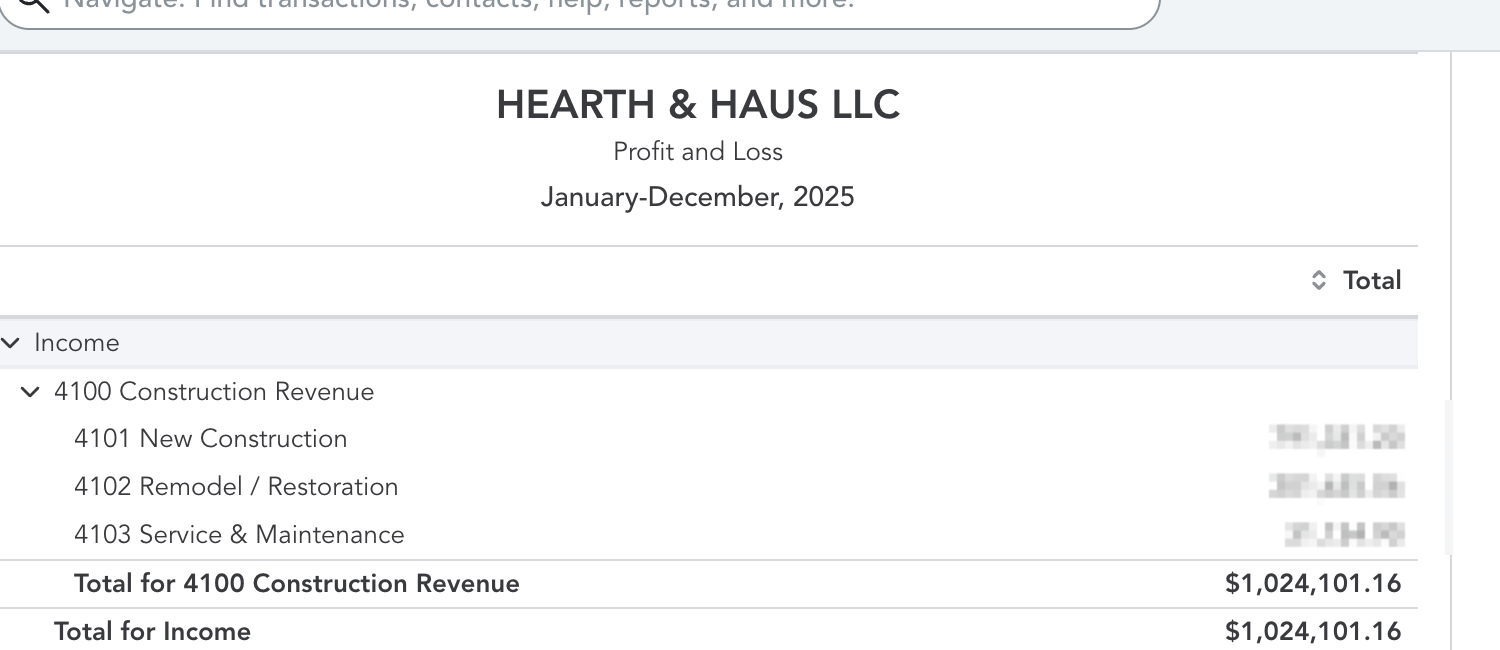
Instead of one undifferentiated "Income" line, revenue now breaks cleanly across the three businesses Hearth & Haus actually runs, totalling $1M+.
The new cost-of-revenue structure separates subcontractors, materials, and other job costs, with enough detail to cost any project line by line.
The rebuild was the foundation. Today the books stay current on a fixed cadence and run off a documented SOP, with project-level job costing being rolled out next.

We build custom homes on the Texas coast, and for a long time our books simply could not keep up with the work. Our bank feed had hundreds of transactions sitting unreviewed, the balances never matched the bank, and I honestly could not tell you which projects were making money.
FinTruction rebuilt the whole thing from the ground up. They designed a chart of accounts around how a builder actually operates, with real job costing, work in progress, and retainage, then cleaned up a full year of history until everything finally tied out. What I appreciate most is that they did not just hand me reports and disappear. They walked me through my numbers until I understood them, and they now handle our monthly bookkeeping and cash flow so I can focus on building.
If you run a construction company and your books are behind or just do not make sense, these are the people to call.
Three more construction businesses, with the same before-and-after numbers straight out of their books.
 Rescue + Monthly
Several years behind, with the books off the bank by nearly $129K and total assets showing negative, rebuilt into a clean, trustworthy bottom line.

"They built a custom chart of accounts around how a remodeling company actually runs."
 Built From Scratch
A first-year contractor whose books sat $39,912 off the bank, with revenue and total assets both reported as negative, rebuilt into a measurable 57% gross margin.

"FinTruction set the accounts up properly first, then cleaned up everything I never entered."
We clear the backlog, reconcile what is broken, and rebuild your chart of accounts around real job costing, so you can finally see which projects make money. Free consultation, zero commitment.