Construction Accounting

Construction Accounting in Rochester, Minnesota

Job costing, WIP and a cost ledger that stands up to an owner audit

In Rochester, Minnesota the biggest jobs are cost reimbursable, and that turns your job cost ledger into a contract deliverable. On a cost-plus or guaranteed maximum price contract the owner is not simply paying an invoice. It has the right to audit what you charged. Every hour, every burden rate, every general conditions item and every allocated cost has to trace to a source document and be allowable under the agreement. If your books cannot substantiate a cost, it gets disallowed and you absorb it, months after the money was spent. We build the job cost to survive that reading.

Aerial view over downtown Rochester, Minnesota at golden hour with the Zumbro River, civic center roofs, downtown towers and a yellow tower crane On the ground Downtown Rochester, Minnesota, along the Zumbro River
Builds the jobs Rochester
Runs the books FinTruction
Why It Matters

Why Rochester, Minnesota Contractors Need Construction-Specific Accounting

When the dominant owners in a market buy construction on an open book basis, bookkeeping stops being an internal function. Your records become evidence, and the standard is set by somebody else.

  • Every reimbursable cost traceable to a source document
  • Labor burden rate documented as a build-up, not a round number
  • General conditions coded separately from home office overhead
  • Self-performed labor and owned equipment billed to the contract rate
  • Buyout savings and contingency draws logged when they happen
  • Certified payroll produced from the same run as job-cost labor
  • Retainage tracked outside receivables with the release trigger date
  • Backlog and receivables reported by owner so concentration is visible
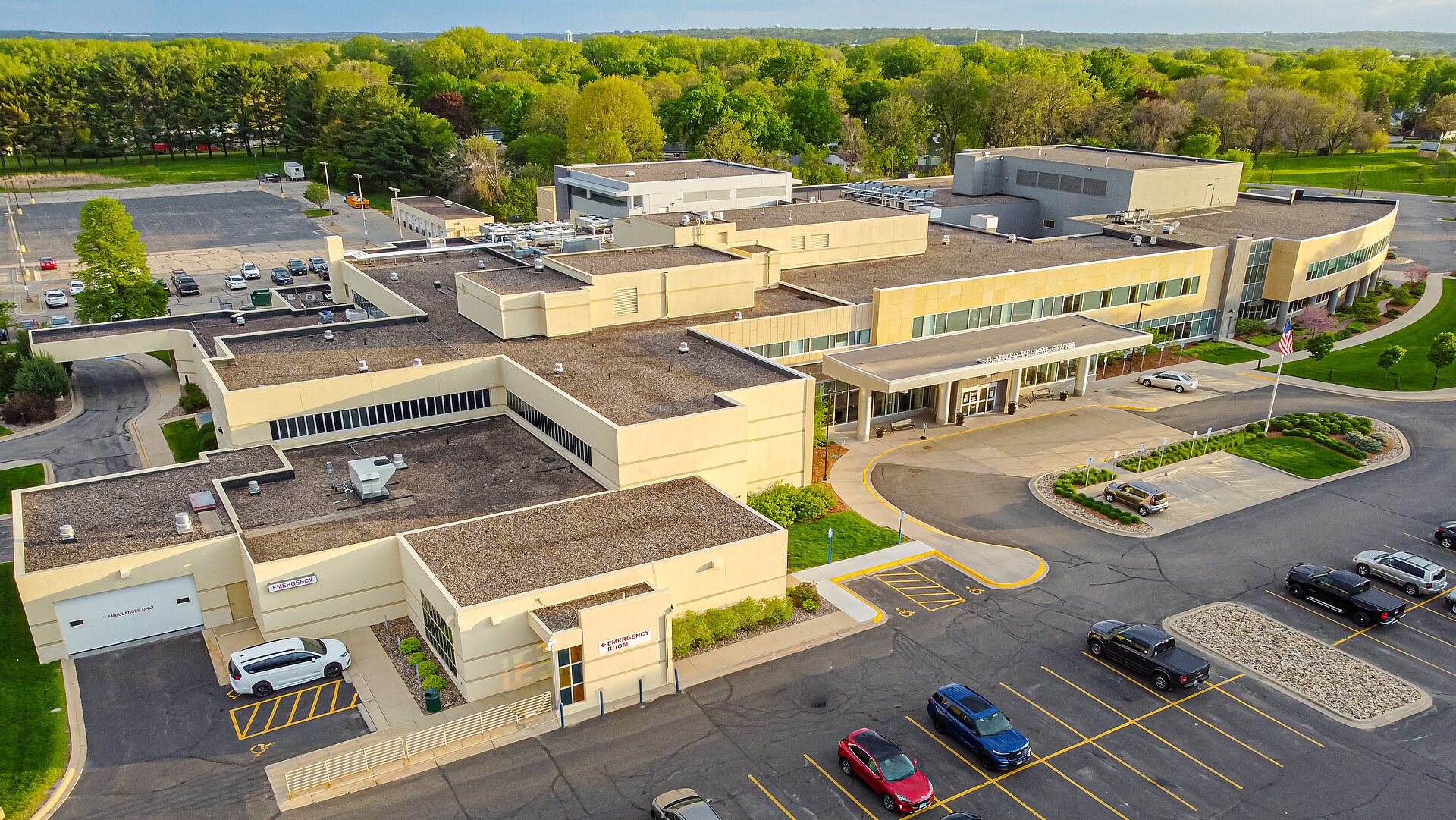
Aerial view of the Olmsted Medical Center campus in Rochester, Minnesota, its low clinic wings, emergency entrance canopy and parking lots ringed by spring trees
Proof

What Construction Owners Say

Rated 5.0 on Google

Trusted by 25+ construction businesses nationwide

Procore logo Listed on theProcore Network

They didn’t just record transactions and call it a day. They built a custom chart of accounts around how a remodeling company actually runs, did a full catch-up on years of bookkeeping inside QuickBooks Online, and now stay on top of my monthly bookkeeping and payroll. Every step, they broke it down in simple terms instead of burying me in accountant talk.

Oniel Campbell, Founder of Moonz Contracting
Oniel Campbell
Moonz Contracting Founder

FinTruction rebuilt the whole thing from the ground up, with real job costing, work in progress, and retainage. They didn’t just hand me reports and disappear; they walked me through my numbers until I understood them.

Carl Moore, Owner of Hearth & Haus
Carl Moore
Hearth & Haus Owner
Dalton Mayberry, Owner of ProperCoat Painting
Sahil and his team handle the bookkeeping and job costing for my painting business. They cleaned up my books and set up integrations that give me accurate, timely job costing with solid weekly data. Reliable, detailed, and genuinely invested in getting the numbers right.
Dalton Mayberry
ProperCoat Painting
Owner

FinTruction is the only bookkeeping team we’ve found that truly understands construction accounting and WIP reporting. They aligned our income and costs across 21 jobs and gave us full, monthly transparency. Fast, accurate, and an indispensable partner.

John Wesley Sebastian, President of B&B Concrete
John Wesley Sebastian
B&B Concrete President

When I came to FinTruction I had no financial structure. No job costing, no WIP tracking, books behind. They did a full cleanup and rebuilt job costing and WIP tracking in QuickBooks. Now I know what’s billed, what’s owed, and where every job stands.

Clay Pearson, Owner of C. Pearson Contracting Corp
Clay Pearson
C. Pearson Contracting Corp Owner
Client testimonial

Hear it straight from a client we work with

A couple of minutes from a contractor we support, sharing what working with FinTruction has been like and what changed once their numbers finally made sense.

  • An owner sharing their honest experience
  • From guessing to numbers they actually trust
  • Why they’d recommend us to other contractors
Read more reviews
FinTruction client video testimonial
What We Do

Our Construction Accounting Services in Rochester, MN

1 Contractor bookkeeping
2 QuickBooks integrations
3 Job costing
4 WIP reporting
5 Retainage management
6 Controller & CFO services

Cost-Plus and GMP Contract Accounting

This is the service most Rochester contractors do not know they are missing. A reimbursable contract has its own definition of what is a cost, what is a fee, and what is not chargeable at all. If your chart of accounts and cost codes were built for lump sum work, you will bill things you cannot support and fail to bill things you were entitled to. We set the file up around the contract rather than around habit.

  • Cost codes mapped to the contract cost of the work definition
  • Reimbursable and non-reimbursable costs separated at entry
  • Labor burden build-up documented and kept current
  • General conditions coded apart from home office overhead
  • Backup assembled with the billing rather than after a query

QuickBooks Integrations for Your Construction Software

Every construction platform claims to have a "QuickBooks integration." Most break the moment your books need to be accurate. Sales tax mismaps, retainage disappears, change orders create duplicates, and job costing reports stop matching project reality. We fix the integration so your software, your books, and your job‑level numbers all tell the same story.

Also work with Foundation, Sage 100, Bill.com, ADP, Gusto, Ramp, and more. See all platforms we integrate →

Audit-Ready Job Cost Records

An owner audit is not a hostile act, it is a clause in the contract you signed. The contractors who come through it cleanly are not the ones with the best explanations. They are the ones whose records already answer the question. That means the trail from the charge back to the time card, the invoice or the rate schedule exists before anybody asks for it.

  • Time capture that ties every hour to a job and a cost code
  • Supplier invoices filed against the job they were charged to
  • Equipment charged at the rate the agreement specifies
  • Allocations documented with the basis used
  • Records retained in the form and period the contract requires

Buyout, Contingency and Shared Savings

Under a guaranteed maximum price the money you keep at the end depends on numbers recorded in the middle. Buyout savings that were never recorded cannot be shared. A contingency draw with no written reason is very hard to defend later. Both are trivial to capture while the job is live and close to impossible to reconstruct once it is closed.

  • Original GMP, current budget and committed cost reported together
  • Buyout savings recorded by trade as subcontracts are awarded
  • Contingency draws logged with reason and approval at the time
  • Owner change orders and allowance reconciliations tracked
  • Final cost package prepared so the savings split is defensible

WIP Reporting and Revenue Recognition

Long campus contracts are where underbillings hide, and an underbilling is money you have already spent and not yet asked for. We prepare a monthly work in progress schedule comparing cost to date against the current estimate, calculate earned revenue on percentage of completion, and show over and underbilling by job while there is still time to act on it.

  • Monthly WIP with an estimate to complete review
  • Percentage of completion earned revenue
  • Over and underbilling analysis by job and in total
  • Backlog reporting for surety and lender review
  • Year-end WIP coordinated with tax planning

Controller and CFO Support

In a city built around one very large institution, customer concentration is not a theoretical risk, it is the normal shape of a Rochester contractor balance sheet. Our controller services and CFO services cover how much of one program you can safely carry, what a pause would do to your cash, and how the statements read to a surety underwriting your next bond.

  • Monthly financial review with a real conversation
  • Backlog and receivables reported by owner and program
  • Bonding capacity strategy and surety reporting
  • Cash flow forecasting across overlapping contracts
  • Fee margin analysis on reimbursable versus lump sum work
  • Equipment purchase versus rent versus lease analysis
The Difference

Generic Local Bookkeeper vs FinTruction

A general bookkeeper can record transactions. Construction accounting is a different job.

What you needGeneric local bookkeeperFinTruction
Job-level costingLumps all jobs into one P&LCost codes and margin per project
WIP & revenue recognitionCash-basis, no WIP scheduleMonthly WIP with over/underbilling
Retainage trackingBuried in AR/AP, often missedTracked receivable & payable by contract
Bonding & lender packagesNot equipped to produce themBonding-ready statements and backlog
Construction softwareQuickBooks set up like a retail shopQuickBooks + integrations tuned for contractors
Local Context

The Rochester, Minnesota Construction Market, and What It Does to Your Books

Rochester metro
Where your jobs run
Accounting built around the local construction market.
Construction only
Not generic bookkeeping
Job costing, WIP, and retainage handled the way contractors need.
Remote-first
Across Minnesota
Full support without an in-house hire, anywhere you build.

Rochester is the rare American city whose construction market is set by a single institution and the development program built around it. Mayo Clinic anchors the downtown, the Destination Medical Center initiative has organized a long public-private development effort around it, and the hotels, housing, parking, labs and street infrastructure all follow from the same source of demand. That is unusual, and it produces an unusual contracting culture.

Sophisticated institutional owners with continuous capital programs tend not to buy construction as a series of hard bids. They buy it through construction management, cost reimbursable agreements and guaranteed maximum price contracts, with prequalification, defined reporting formats and audit rights attached. That is a rational way to buy complex work. It also means the paperwork standard in this market is set by the owner, not by the contractor, and it is considerably higher than in a lump sum town.

The consequence lands squarely on your accounting. On a lump sum job, sloppy coding costs you information. On a reimbursable job, sloppy coding costs you money, because anything you cannot substantiate is anything you cannot bill. Contractors who move up into this work often bring a perfectly functional bookkeeping setup and discover that it was built to satisfy themselves and their tax preparer, and never to satisfy an outside reader working through a cost report line by line.

There is a second consequence worth naming, because it is easy to enjoy your way into trouble. When one owner drives a market, a strong year looks like diversification and is not. A large share of your backlog, your receivables and your retainage can end up with one customer and one capital program. That is a good position and a concentrated one at the same time, and it is only a manageable risk if your reporting shows it before your banker does.


Compliance

Minnesota Rules That Land in a Rochester Contractor Books

1 Prevailing Wage and Certified Payroll

The Minnesota Prevailing Wage Act at Minnesota Statutes sections 177.41 through 177.44 requires contractors and subcontractors on state-funded construction to pay the prevailing basic hourly rate and fringe rate set by the Department of Labor and Industry for the labor class and prevailing wage region, and to file certified payroll with the contracting authority. Federally funded work brings Davis-Bacon obligations as well, and a single project can carry both, with the higher applicable rate governing. Public infrastructure and street work around downtown Rochester is where most local contractors meet this, and it is administered out of payroll and job cost rather than out of a filing cabinet.

2 Retainage Caps and Release

Minnesota caps retainage at five percent on public construction contracts, and a 2019 law extended a five percent cap to private commercial construction together with a requirement that retainage be released within a short window after substantial completion, subject to a limited allowance for the value of remaining punch list work. The statutory protection is only as good as your records. If retainage is buried inside the receivables aging, nobody is chasing it, the release trigger date is not recorded anywhere, and the balance sheet a surety reads is wrong in the contractor unfriendly direction.

3 Sales and Use Tax on Materials Installed Into Real Property

Minnesota generally treats a contractor as the final consumer of materials it furnishes and installs into real property, so sales or use tax is paid at purchase, becomes part of job cost, and is not charged again on the contract. Furnishing and installing something that stays personal property can be a retail sale instead, which is a different treatment. Local sales taxes apply on top of the state rate in a number of jurisdictions, so the delivery address changes the cost of the same pallet of material. On a reimbursable contract that matters twice, because the tax you paid is part of the cost you are billing.

4 Mechanics Liens and Prompt Payment

Minnesota mechanics lien rights sit in Chapter 514, with a pre-lien notice obligation for parties without a direct contract with the owner, a deadline to record the lien statement measured from the last day labor or materials were furnished, and a further deadline to bring the enforcement action. Minnesota Statutes section 337.10 also requires a contractor to pay subcontractors within ten days of receiving payment, with interest running after that. We are not attorneys and we do not file notices. We keep unpaid amounts organized by job, tier and date furnished so your attorney has the backup on the day it is needed.

5 Licensing Through the Department of Labor and Industry

Minnesota licenses residential building contractors and residential remodelers through the Department of Labor and Industry, which also licenses the electrical, plumbing and high pressure piping trades. There is no single statewide commercial general contractor license, so commercial builders deal with city and county registration and permitting that varies by jurisdiction. License renewals, continuing education, bonds and insurance are recurring costs of being allowed to work at all, and they belong in a burden rate your bids recover rather than in a miscellaneous account.

6 State Tax and the Revenue Recognition Lever

Minnesota levies a corporate franchise tax on C corporation net income at 9.8 percent, among the highest state corporate rates in the country, and the top individual rate reaching pass-through owners sits in similar territory. Minnesota also permits a pass-through entity tax election, allowing an S corporation or partnership to pay Minnesota tax at the entity level, which can matter for owners constrained by the federal cap on state and local tax deductions. For a contractor, revenue recognition is the lever that moves the bill, which makes your WIP schedule and your method election tax decisions to review before December rather than in April.

Who We Serve

Rochester Contractors and Trades We Work With

We support contractors across Olmsted County and southeastern Minnesota, from campus and clinical builders to the site, utility and specialty trades feeding them.

General Contractors
Construction Managers
Healthcare & Clinical Builders
Laboratory & Research Fit-Out
Mechanical & HVAC
Electrical Contractors
Plumbing & Medical Gas
Controls & Low Voltage
Concrete Contractors
Steel & Structural
Site & Underground Utilities
Interior Finish Contractors
Hospitality & Multifamily Builders
Commercial Builders
Residential Builders

Running a Construction Company in Rochester, MN?

Get Your Free Audit
Why FinTruction

Why Rochester, MN Contractors Choose FinTruction

A fair question if you already have a bookkeeper or a CPA who does the return. Here is the honest answer.

  • Construction is the only industry we work in, so reimbursable contract accounting is routine here rather than research
  • We build the file to be read by an outside reviewer, because in this market it will be
  • Sahil Ahmad, CPA reviews the work, so you are not relying on a data entry pool
  • Burden rates, allocations and general conditions are documented while the job is live, not defended afterwards
  • We work inside the tools you already run: QuickBooks, Buildertrend, Procore, ServiceTitan and Knowify
  • A flat monthly fee, so asking a question does not start a clock
  • A free Audit first, so you can see what is wrong before committing to anything
Systems

The Software You Already Run, Set Up Properly

Most Rochester contractors do not need new software. They need what they already pay for configured so a cost report can be produced, supported and defended without a week of assembly.

QuickBooks Set Up for a Contractor

Most QuickBooks files we inherit were configured for a business that sells products. For a contractor on reimbursable work that is worse than useless: jobs are customers, cost codes do not exist, general conditions and overhead share an account, and nothing in the file records the burden rate behind a labor charge.

  • Chart of accounts rebuilt for job costing
  • Cost codes mapped to the contract cost of the work definition
  • Reimbursable and non-reimbursable costs separated at entry
  • Burden rate build-up documented and applied consistently
  • Retainage tracked at contract and subcontract level
  • Source documents attached to transactions, not filed elsewhere

Is your QuickBooks file working against you?

Field and Project Management Integrations

If your project managers already hold budgets, commitments and change orders in a construction platform, the office should not be retyping any of it. On reimbursable work the connection matters more than usual, because the billing has to agree with the cost record and the cost record has to agree with the field.

One set of numbers that the field and the office both believe.

Reporting You Can Run the Company On

Once the systems are connected, reporting stops being a history lesson. These are the reports southeastern Minnesota contractors use to decide what to chase and what to walk away from:

  • Job profitability by job and cost code, current not year-end
  • Cost of the work against GMP, with committed cost and contingency
  • WIP with over and underbilling, refreshed monthly
  • Backlog, receivables and retainage by owner, so concentration is visible
  • Fee realization on reimbursable work versus margin on lump sum

See how we have done this for other contractors in our construction accounting case studies.

Answers

Rochester, Minnesota Construction Accounting Questions

What does open book actually mean on a Rochester cost-plus or GMP job?

It means the owner is entitled to look, and the agreement usually says so in an audit rights clause. On a cost reimbursable or guaranteed maximum price contract you are not selling a price, you are selling documented cost plus an agreed fee. So the owner or its auditor can ask for the time cards behind a labor charge, the invoice behind a material charge, the calculation behind a burden rate, and the basis for anything you allocated. Open book is not a philosophy. It is a records requirement, and it is the single reason your job cost file has to be built to be read by someone else.

What gets disallowed most often when an owner audits a contractor?

The same handful of things, over and over. Costs with no source document behind them. Labor charged at a burden rate nobody can reconstruct. Home office expense dressed up as general conditions. Equipment charged at a rate that is not in the contract. Small tools and consumables charged twice, once directly and once inside a markup. Costs from another job that drifted onto this one because the coding was loose. None of those are fraud. They are bookkeeping habits that are perfectly survivable on a lump sum contract and expensive on a reimbursable one.

How should our labor burden rate be built for a cost reimbursable contract?

From components you can show, and in a way that matches what the contract actually permits. That normally means payroll taxes, workers compensation by classification, general liability where it is charged on payroll, union or benefit contributions if applicable, and paid time off, each calculated from real figures rather than a round number someone picked years ago. The burden rate is one of the most audited items on a reimbursable job precisely because so many contractors cannot explain theirs. We document the build-up, keep it current, and keep the supporting calculation with the job file.

Where is the line between general conditions and home office overhead?

The contract draws it, and the accounting has to respect the line the contract drew. Site supervision, the job trailer, temporary utilities, site cleanup and project-specific insurance normally sit as reimbursable general conditions. Estimating, the accounting department, business development, corporate rent and executive time normally do not, and are expected to come out of your fee. Trouble starts when a cost lives in one account and gets billed as another. We map general conditions to their own codes at job setup so what you bill and what you booked are the same thing.

How do we protect shared savings under a guaranteed maximum price?

By keeping the final cost defensible and the contingency history clear. Shared savings only exist if the final documented cost lands below the guaranteed maximum, so every dollar the owner disallows comes straight out of the number you split. Two disciplines matter: buyout savings should be recorded when they happen rather than absorbed quietly, and contingency draws should be logged with a reason at the time they are taken. A contingency that was spent without a written record is very hard to defend two years later, and it is usually the first thing questioned.

Does self-performed work get treated differently?

Yes, and it is worth agreeing the treatment before you start. On a reimbursable contract, work your own crews perform is usually billed at cost plus the contract fee rather than at a market price, and owned equipment is usually charged at a rate defined in the agreement rather than at whatever a rental house would charge. If your accounting cannot separate self-performed cost from subcontracted cost cleanly, you cannot bill either one correctly. We keep self-perform crews, owned equipment and subcontract commitments on separate codes so the billing follows the contract.

Does public infrastructure work around downtown Rochester carry prevailing wage?

State-funded construction in Minnesota falls under the Minnesota Prevailing Wage Act at Minnesota Statutes sections 177.41 through 177.44, which sets a prevailing basic hourly rate and fringe rate by labor class and prevailing wage region and requires certified payroll to be filed with the contracting authority. Public development work downtown and street, utility and transportation projects are where Rochester contractors meet it. Federally funded work adds Davis-Bacon on top, and a single project can carry both regimes, with the higher applicable rate governing. Confirm which regime applies to your specific contract, because that determines what payroll has to produce every week.

How much retainage can be held on our Minnesota contracts?

Minnesota caps retainage at five percent on public construction contracts, and a 2019 law extended a five percent cap to private commercial construction along with a requirement that retainage be released within a short window after substantial completion, subject to a limited allowance for the value of remaining punch list work. That protection only works if you can prove what is owed and when the clock started. Retainage sitting inside your accounts receivable aging is retainage nobody is chasing, and it also misstates the balance sheet your surety is underwriting from.

Most of our backlog is with one owner. Is that a reporting problem?

It is a reporting problem before it is a business problem, and Rochester makes it common rather than unusual. A bank or surety reading your statements wants to know what share of receivables, backlog and retainage sits with a single customer, and whether a pause in one capital program would stop your cash. If your books cannot answer that quickly, someone else will assume the worst. We report backlog and receivables by owner and by program so concentration is a number you manage rather than a risk you discover.

Which parts of southeastern Minnesota do you serve, and how do we start?

We work with contractors across Olmsted County and southeastern Minnesota: Rochester, Byron, Stewartville, Kasson, Pine Island, Zumbrota, Austin, Albert Lea, Owatonna, Winona and Red Wing, and up the corridor toward the Twin Cities. Start with the free Audit. Send your current accounting file and your last job profitability or WIP report and we will tell you what is wrong, what it is costing you, and whether your job cost would stand up to an owner audit. No obligation. After that it is a flat monthly fee based on transaction volume, active jobs and reporting needs. Sahil Ahmad, CPA reviews the work.

Nearby

Cities We Serve in Minnesota

FinTruction provides construction accounting across Minnesota. Select your city below for job costing, WIP and contractor bookkeeping support in your market.

Also available

Just need the monthly books kept?

If the contract side is under control and it is the monthly close that keeps slipping, we also run day-to-day construction bookkeeping: coding to cost codes, reconciliations, AP and AR, payroll runs and job-cost entry.

Construction Bookkeeping Services

Construction Bookkeeping Services in Minnesota

Not Seeing Your City?

We serve contractors across all of Minnesota. View all locations →

Find Out What Your Rochester Books Are Hiding

Send us your current file and your last job profitability report. We will tell you what is wrong with it, what it is costing you, and whether your cost records would stand up if an owner asked to see them. No charge and no obligation for the Audit.

Get Expert Construction Accounting Support in Rochester

Trusted by 25+ Construction Companies
Response Within 24 Hours
Free Consultation, No Obligation

Request a Free Consultation

Looking for professional construction accounting in Rochester? Fill out the short form below and our contractor bookkeeping team will contact you within 24 hours.