Construction Accounting

Construction Accounting in Spokane, WA

Travel, per diem and cross-border payroll costed to the job that caused them

Your crew left Spokane at five for a job past Colville, and the truck, the fuel, the per diem and the lodging all went to overhead because there was nowhere else to put them. Next week half of them are in Post Falls, which means Idaho income tax withholding on hours Washington never asks about. Construction accounting in Spokane has to handle distance: mobilisation and travel costed to the job that caused them, payroll split by the state where the work happened, and sales tax at the job site rate across a dozen small Eastern Washington jurisdictions.

Red brick historic storefronts and street trees on a quiet downtown Spokane block, the Inland Northwest market FinTruction serves with construction accounting On the ground Downtown Spokane, Washington
Builds the jobs Spokane
Runs the books FinTruction
Why It Matters

Why Spokane Contractors Need Construction-Specific Accounting

Spokane serves a rural catchment that reaches across Eastern Washington, North Idaho and into western Montana, so the jobs are spread out and the crews travel. That turns two ordinary things, getting there and crossing a state line, into accounting problems a generalist bookkeeper has no reason to have solved before.

  • Travel, per diem and lodging costed to the job, not to overhead
  • Equipment transport and mobilisation charged to the project that moved it
  • Payroll split by the state each hour was actually worked in
  • Idaho withholding registered before the first job across the line
  • Unemployment insurance wages assigned to one correct state
  • Sales tax at the job site rate across Spokane County districts
  • A cash forecast that models the winter, not just the season
  • Monthly WIP with over and underbilling by job
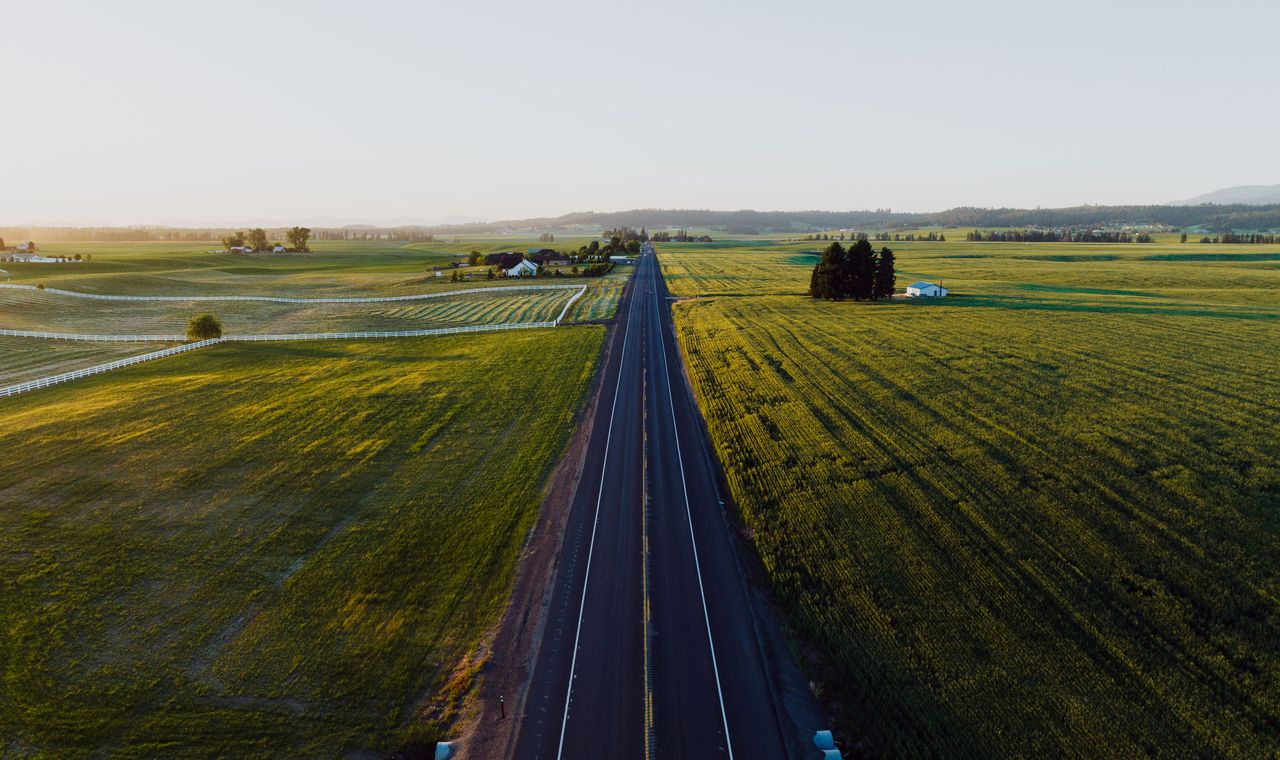
A two-lane highway running straight through farm fields at sunrise outside Spokane, the rural catchment contractors here travel to reach
Proof

What Construction Owners Say

Rated 5.0 on Google

Trusted by 25+ construction businesses nationwide

Procore logo Listed on theProcore Network

They didn’t just record transactions and call it a day. They built a custom chart of accounts around how a remodeling company actually runs, did a full catch-up on years of bookkeeping inside QuickBooks Online, and now stay on top of my monthly bookkeeping and payroll. Every step, they broke it down in simple terms instead of burying me in accountant talk.

Oniel Campbell, Founder of Moonz Contracting
Oniel Campbell
Moonz Contracting Founder

FinTruction rebuilt the whole thing from the ground up, with real job costing, work in progress, and retainage. They didn’t just hand me reports and disappear; they walked me through my numbers until I understood them.

Carl Moore, Owner of Hearth & Haus
Carl Moore
Hearth & Haus Owner
Dalton Mayberry, Owner of ProperCoat Painting
Sahil and his team handle the bookkeeping and job costing for my painting business. They cleaned up my books and set up integrations that give me accurate, timely job costing with solid weekly data. Reliable, detailed, and genuinely invested in getting the numbers right.
Dalton Mayberry
ProperCoat Painting
Owner

FinTruction is the only bookkeeping team we’ve found that truly understands construction accounting and WIP reporting. They aligned our income and costs across 21 jobs and gave us full, monthly transparency. Fast, accurate, and an indispensable partner.

John Wesley Sebastian, President of B&B Concrete
John Wesley Sebastian
B&B Concrete President

When I came to FinTruction I had no financial structure. No job costing, no WIP tracking, books behind. They did a full cleanup and rebuilt job costing and WIP tracking in QuickBooks. Now I know what’s billed, what’s owed, and where every job stands.

Clay Pearson, Owner of C. Pearson Contracting Corp
Clay Pearson
C. Pearson Contracting Corp Owner
Client testimonial

Hear it straight from a client we work with

A couple of minutes from a contractor we support, sharing what working with FinTruction has been like and what changed once their numbers finally made sense.

  • An owner sharing their honest experience
  • From guessing to numbers they actually trust
  • Why they’d recommend us to other contractors
Read more reviews
FinTruction client video testimonial
What We Do

Our Construction Accounting Services in Spokane

1 Contractor bookkeeping
2 QuickBooks integrations
3 Job costing
4 WIP reporting
5 Retainage management
6 Controller & CFO services

Job Costing That Captures the Cost of Getting There

A job two hours out costs more than the same job in the Valley, and if travel sits in overhead your cost report cannot say by how much. We build job costing for Spokane contractors that puts windshield time, fuel, per diem, lodging and the equipment move onto the project that incurred them, so the far jobs stop being subsidised by the near ones.

  • Travel, subsistence and lodging as their own cost codes
  • Per diem run through an accountable plan with the substantiation kept
  • Equipment transport and mobilisation charged to the receiving job
  • Crew truck and fuel allocated by mile rather than by month
  • Committed costs so open POs and subcontracts are visible
  • Budget versus actual reviewed while the job is still open

QuickBooks Integrations for Your Construction Software

Every construction platform claims to have a "QuickBooks integration." Most break the moment your books need to be accurate. Sales tax mismaps, retainage disappears, change orders create duplicates, and job costing reports stop matching project reality. We fix the integration so your software, your books, and your job‑level numbers all tell the same story.

Also work with Foundation, Sage 100, Bill.com, ADP, Gusto, Ramp, and more. See all platforms we integrate →

Multi-State Payroll Across the Idaho Line

Washington has no income tax and Idaho does, so the state line is a live payroll issue for any Spokane contractor taking work around Post Falls, Coeur d'Alene or Sandpoint. We set payroll up so the work state travels with the hours from the timecard onward, which is the only way withholding, unemployment reporting and job cost all end up right.

  • Idaho registration and withholding on hours worked in Idaho
  • Work state recorded on the timecard alongside job and cost code
  • Unemployment insurance wages assigned under the multi-state test
  • Hours tracked by L&I risk class as well as by state
  • Certified payroll in Washington produced from live payroll data
  • Reciprocity and nexus questions answered before the job starts

Sales Tax, Use Tax and B&O Across a Dozen Jurisdictions

Working a wide territory means working a lot of taxing districts. Washington sources construction to the job site, Idaho reverses who pays the tax entirely, and material bought in one state and used in the other creates an accrual nobody makes on their own. Our construction tax planning reads the contract and the map, not just the ledger.

  • Job site address and DOR location code set on every job record
  • Correct rate applied automatically to each progress billing
  • Idaho jobs billed on Idaho rules, not a Washington template
  • Use tax accrued when untaxed material is consumed on a job
  • Revenue coded to its B&O classification at the point of entry
  • Excise returns filed on time so retainage releases are not held up

WIP Reporting, Retainage and Bonding-Ready Statements

Public work around Spokane comes from the county, the city, the school districts, WSDOT and the airport, and all of it holds money back. We produce a monthly work in progress schedule on percentage of completion and keep retainage as its own tracked balance rather than letting it hide inside receivables where nobody is chasing it.

  • Monthly WIP with the estimate to complete genuinely reviewed
  • Over and underbilling shown by job and in total
  • Retainage receivable and payable separated from ordinary AR and AP
  • Release conditions and agency clearances tracked per contract
  • Backlog reporting in a format a surety and a bank will accept
  • Year-end WIP coordinated with federal tax planning

Controller and CFO Support for a Short Season

Spokane builds hard for seven or eight months and then the ground freezes, so the year is really one production window and one cash window and they do not overlap. Our controller services and CFO services answer the questions that season creates: what crew you can carry, what a distant job actually returns, and when the line of credit gets drawn.

  • Cash forecasting by month across the season and the shutdown
  • True margin comparison between local and travel jobs
  • Go or no-go analysis on work outside the immediate market
  • Bonding capacity strategy and surety reporting
  • Bank support on winter lines of credit and renewals
  • Equipment buy, rent or lease analysis for a seasonal workload
The Difference

Generic Local Bookkeeper vs FinTruction

A general bookkeeper can record transactions. Construction accounting is a different job.

What you needGeneric local bookkeeperFinTruction
Job-level costingLumps all jobs into one P&LCost codes and margin per project
WIP & revenue recognitionCash-basis, no WIP scheduleMonthly WIP with over/underbilling
Retainage trackingBuried in AR/AP, often missedTracked receivable & payable by contract
Bonding & lender packagesNot equipped to produce themBonding-ready statements and backlog
Construction softwareQuickBooks set up like a retail shopQuickBooks + integrations tuned for contractors
Local Context

The Spokane Construction Market, and What Distance Does to Your Books

Spokane metro
Where your jobs run
Accounting built around the local construction market.
Construction only
Not generic bookkeeping
Job costing, WIP, and retainage handled the way contractors need.
Remote-first
Across Washington
Full support without an in-house hire, anywhere you build.

Spokane is the service center for a region far larger than the city itself. In town there is a substantial hospital and medical education cluster, Gonzaga and the Washington State University health sciences campus in the University District, aerospace and metals manufacturing, warehouse and distribution space stretching along the I-90 corridor, and a downtown and Riverfront Park that have been steadily rebuilt. Housing keeps growing as people leave the west side for a lower cost of living. That is a healthy local pipeline, and it is also only part of the work a Spokane contractor actually takes.

The rest of it is out of town. Food processing and agricultural facilities in the Palouse, mining-adjacent work in the Silver Valley, school and municipal jobs in Colville, Deer Park, Cheney and Pullman, and a steady flow of work over the line into Post Falls, Coeur d'Alene and Sandpoint. Spokane contractors travel because the catchment is rural and there is not always a local trade capable of the scope. A three hour round trip is a normal Tuesday here, which is simply not true of a contractor working inside the Puget Sound corridor.

Distance is where the money leaks. Fuel, crew truck hours, motel nights, per diem, and moving a machine on a lowboy are all real costs of a specific project, but they are the easiest costs in construction to dump into overhead because they do not arrive with a job number on them. Once they are in overhead, a blended rate spreads them across everything, and the job forty miles out looks as profitable as the one down the street. Contractors here usually know intuitively that some work is not paying, and they cannot prove which. Our guide to job costing in construction covers the mechanics, but the first move is simply giving travel somewhere to go.

Then there is the border, forty minutes east. Idaho has a state income tax and Washington does not, so the moment a crew works over there you have withholding, unemployment reporting and possibly workers compensation questions that a Washington-only payroll setup will never raise on its own. Add a short season that freezes shut in November and retainage that arrives long after the work did, and the year has a predictable cash shape that most Spokane contractors are managing by feel. It is measurable months ahead if the books are actually built for it, and you can see how that has played out for other contractors in our construction accounting case studies.


Compliance

Washington and Idaho Rules a Spokane Contractor Has to Account For

1 Travel and Subsistence as a Job Cost

Per diem, lodging and mileage paid to a crew working away from home are deductible business costs, but only if the reimbursement runs through an accountable plan with time, place and business purpose substantiated, and the meals portion of per diem is subject to the usual limit on deducting business meals. Contractors who reimburse casually and code it to overhead lose the job-level visibility and weaken the documentation at the same time. Some Washington prevailing wage determinations also carry travel and subsistence provisions on top of the base rate, which have to be paid and reported, not absorbed.

2 Idaho Income Tax Withholding on Cross-Border Hours

Idaho imposes a state income tax and Washington does not, so a Spokane employer whose crews work in Idaho generally has to register with the Idaho State Tax Commission and withhold on the wages earned for work physically performed there. There is no reciprocity that makes this go away. The practical difficulty is that nothing in a Washington payroll file prompts the question, so the obligation is usually discovered late. Recording the work state on the timecard alongside the job and the hours is what makes correct withholding possible at all.

3 Unemployment Insurance and Workers Compensation Across State Lines

Unemployment insurance wages for a worker are reported to one state, not apportioned, and the state is determined by a defined sequence: where the work is localised, then the base of operations, then the place of direction and control, then where the worker lives. Workers compensation is a separate question and a sharper one, because Washington is a monopolistic state where coverage comes from the Labor and Industries fund and is priced per hour by risk class, while Idaho uses a private insurance market. Coverage for Idaho hours has to be confirmed rather than assumed.

4 Destination-Based Sales Tax Across Eastern Washington Districts

Washington sources construction to where the work is performed, so the correct combined rate follows the job site and the Department of Revenue location code that goes with it. A contractor working out of Spokane can bill jobs in the City of Spokane, Spokane Valley, Liberty Lake, Airway Heights, Cheney, Millwood, Deer Park and unincorporated county inside a single month, each at its own rate. Idaho then inverts the model: a contractor improving real property there is generally the consumer of the materials, paying tax on purchase rather than charging tax on the contract.

5 Prevailing Wage under RCW 39.12 and Davis-Bacon at Fairchild

Washington public works require prevailing wage rates set by Labor and Industries for the trade and county, a Statement of Intent to Pay Prevailing Wages approved before payment, certified payroll records, and an Affidavit of Wages Paid before final payment and retainage release. Spokane County has its own wage determination. Separately, federally funded work including construction at Fairchild Air Force Base falls under Davis-Bacon with federal wage determinations and weekly certified payroll on a different system entirely. Contractors who run both need one payroll process feeding two compliance regimes.

6 Contractor Registration on Both Sides of the Border

Washington requires contractors to register with the Department of Labor and Industries as a general or specialty contractor, carrying a surety bond and general liability coverage at statutory minimums, with electricians and plumbers licensed separately. Idaho maintains its own contractor registration requirement, so working across the line is not covered by your Washington registration. Registration fees, bond premiums and insurance for two jurisdictions are overhead costs that belong in your burden and your bid rather than in a miscellaneous expense account nobody reads.

7 Lien Rights and the Deadline Calendar

Washington lien law under RCW 60.04 sets a short window to record a claim after you last furnish labor or materials, with an earlier notice requirement for parties who have no direct contract with the owner, and Idaho runs its own separate deadlines that are not the same. A contractor working both sides is running two calendars. We are not attorneys and we do not file notices. What we do is keep unpaid amounts organized by job, tier, state and date furnished so the deadlines run off real data and your attorney has the backup immediately.

Who We Serve

Spokane Contractors and Trades We Work With

We support contractors across the Inland Northwest, from site work and paving crews chasing a short season to mechanical and electrical shops running hospital and campus buildouts in town.

General Contractors
Site Work & Excavation
Heavy Civil & Highway
Concrete & Tilt-Up
Mechanical & HVAC
Electrical Contractors
Plumbing Contractors
Steel & Structural
Millwrights & Industrial
Warehouse & Distribution Builders
Agricultural & Food Processing
Healthcare Buildout Contractors
Roofing & Envelope
Residential Builders & Remodelers
Underground Utilities

Running a Construction Company in Spokane?

Get Your Free Audit
Why FinTruction

Why Spokane Contractors Choose FinTruction

A fair question if you already have a bookkeeper in town and a CPA who does the return. Here is the honest answer.

  • Construction is the only industry we work in, so travel cost allocation, WIP and retainage are routine here rather than a research project
  • We set payroll up for two states before you need it, not after Idaho sends a notice
  • Sahil Ahmad, CPA reviews the work, so a construction CPA has actually read your file instead of a data entry pool
  • Travel, per diem and equipment moves land on the job, so you can finally compare a local job against one three hours out
  • We work inside the tools you already run: QuickBooks, Buildertrend, Procore, ServiceTitan and Knowify
  • A flat monthly fee, so asking a question does not start a clock
  • A free Audit first, so you can see what is wrong before committing to anything
Systems

The Software You Already Run, Configured for a Traveling Crew

Most Spokane contractors do not need new software. They need what they already pay for set up so the field can record the job, the work state and the cost code once, from a truck, without anyone in the office retyping it three days later.

QuickBooks Set Up for a Spokane Contractor

Most QuickBooks files we inherit were configured for a business that sells products off a shelf. For a contractor working a wide territory that means no travel cost codes, one sales tax rate applied to every job regardless of where it was, payroll that cannot tell a Washington hour from an Idaho one, and retainage hiding inside receivables.

  • Chart of accounts rebuilt around job costing
  • Travel, per diem and mobilisation given real cost codes
  • Jobs carrying site address, DOR location code and work state
  • Payroll items mapped to L&I risk classifications
  • Retainage tracked at contract and subcontract level
  • Progress invoicing and AIA G702 and G703 style billing

Is your QuickBooks file working against you?

Field and Time Tracking for Crews That Are Never in the Office

When the crew is ninety miles away, a paper timecard that reaches the office on Friday is already too late to be accurate. We connect field and time tracking to the accounting so hours arrive carrying the job, the cost code, the risk class and the state they were worked in.

Entered once, in the field, already carrying the job and the state.

Reporting You Can Run the Company On

Once the systems are connected, reporting stops being a history lesson. These are the reports Inland Northwest contractors use to decide what to chase and what to leave alone:

  • Job profitability by job and cost code, with travel included
  • Margin on local work against margin on travel work
  • WIP with over and underbilling, refreshed monthly
  • Cash forecast by month across the season and the winter
  • Payroll hours by job, risk class and work state
  • Backlog and bonding capacity in a format a surety will read

If the day-to-day recording is the problem first, start with construction bookkeeping for contractors and add the reporting once the file can be trusted.

Answers

Spokane Construction Accounting Questions

Do I have to withhold Idaho income tax for a Spokane crew working in Coeur d'Alene?

Generally yes, and this is the single most common miss we find in Spokane books. Idaho imposes a state income tax and Washington does not, so a Washington employer sending crews across the line picks up an Idaho withholding obligation on the wages earned for work physically performed in Idaho. That means registering with the Idaho State Tax Commission, withholding on those hours, and filing Idaho returns. Because Washington has no income tax at all, nothing in a Washington-only payroll setup ever prompts the question, and contractors often discover it years later with penalties attached. The fix is structural: the timecard has to record the work state alongside the job and the hours.

How should a Spokane contractor job cost travel, per diem and lodging?

Travel belongs on the job that caused it, not in overhead. A Spokane contractor routinely runs crews to Colville, Pullman, Moses Lake or Sandpoint, and the fuel, the truck hours, the motel nights, the per diem and the lowboy move for a piece of equipment are all real costs of that specific project. Dumped into general overhead they disappear into a blended rate, so the close jobs quietly subsidise the far ones and nobody can tell which is which. We set up travel and mobilisation cost codes, run per diem through an accountable plan so the substantiation exists, and put mileage and equipment transport against the project. Bidding accuracy on distant work improves immediately.

Which sales tax rate applies to a job in Spokane Valley, Airway Heights or Cheney?

The rate follows the job site address, not your office or your yard. Washington sources construction to the place the work is performed, and the Department of Revenue publishes a location code for every taxing district. Around Spokane that means the City of Spokane, Spokane Valley, Liberty Lake, Airway Heights, Cheney, Medical Lake, Millwood, Deer Park and unincorporated Spokane County are separate rates a contractor can hit inside one week. Defaulting every invoice to one rate means under-collecting in some jurisdictions and over-collecting in others at the same time. We capture the site address and location code once, when the job is created, so every progress billing off it picks up the right rate.

How is sales tax on construction different in Idaho than in Washington?

The two states treat a contractor in opposite ways, which is why border work catches people out. On custom construction in Washington the contractor is making a retail sale, so sales tax applies to the whole contract price including labor, and you collect it from the customer. Idaho generally treats a contractor improving real property as the final consumer of the materials, so you pay tax on the materials you buy and you do not charge sales tax on the contract itself. Running Idaho jobs through a Washington billing template therefore charges tax that should not be there, and buying material untaxed in one state for use in the other creates a use tax accrual almost nobody records.

Do I need certified payroll for a Spokane County public works job?

Yes. Public works in Washington fall under RCW 39.12, which requires payment of prevailing wage rates set by Labor and Industries for the trade and the county, a Statement of Intent to Pay Prevailing Wages approved before you can be paid, certified payroll records covering the work, and an Affidavit of Wages Paid approved before final payment. Spokane County rates are their own determination and are not the King County numbers. City of Spokane street and utility work, Spokane Public Schools bond projects, county work, WSDOT highway contracts and Spokane International Airport projects all sit inside this. Every one of those filings comes out of payroll data, which is why we treat it as an accounting job.

Which state gets our unemployment insurance wages when a crew works in two states?

One state gets all of the wages for a given worker, and there is a defined order for deciding which. The multi-state test used by the Washington Employment Security Department and by Idaho looks first at where the work is localised, then at the base of operations, then at the place from which the work is directed and controlled, and finally at the state where the employee lives. It is not a split by hours. A Spokane framer who spends most of the year on Washington jobs and occasional weeks in Idaho is normally reported entirely to Washington. Getting this wrong creates duplicate reporting in one state and a gap in the other.

Does workers compensation coverage follow a Washington crew into Idaho?

Not automatically, and this is a genuine exposure rather than a paperwork detail. Washington is a monopolistic state, so your industrial insurance comes from the Labor and Industries state fund and premiums are assessed per hour worked in each risk class. Idaho runs a private insurance market instead. A Spokane contractor taking work across the line needs to confirm that coverage extends to those hours before the crew arrives, and the answer depends on how long and how regularly they are over there. From an accounting standpoint the hours have to be tracked by state as well as by risk class so both the L&I quarterly report and any Idaho policy audit read off the same records.

Can you handle federal work at Fairchild Air Force Base and other Davis-Bacon jobs?

Yes. Federally funded construction around Spokane, including work at Fairchild Air Force Base, brings Davis-Bacon prevailing wage rates and weekly certified payroll reporting that run on federal rather than state determinations. Contractors who are comfortable with the Washington intent and affidavit process are often surprised that a federal job needs a different wage determination, a different report and a different retention regime, and that the two systems do not talk to each other. We keep federal and state compliance work coming out of the same payroll run so the labor cost in your job report agrees with whatever was filed, on either system.

How do you handle the winter shutdown in a Spokane cash flow forecast?

The Spokane building season is genuinely short. Frozen ground and snow shut down earthwork, paving and exterior trades for months, wildfire smoke can cost outdoor days in late summer, and the result is a compressed production window with revenue concentrated in the middle of the year. The cash problem is the lag behind it: costs are incurred through the season, retainage releases and slow closeouts land afterwards, and payroll for a crew you want to keep runs through a quarter with very little coming in. We forecast that gap by month rather than by year, so the decision about the winter line of credit, the equipment purchase or the crew you carry is made in September rather than in January.

Which parts of the Inland Northwest do you serve, and how do we start?

FinTruction works with contractors across Spokane and the wider Inland Northwest, including Spokane Valley, Liberty Lake, Airway Heights, Cheney, Deer Park and Medical Lake, out to Pullman, Colville, Moses Lake and the Palouse, and across the line into Post Falls, Coeur d'Alene, Hayden and Sandpoint. Our work is fully remote, so you are not paying toward an office. Start with the free Audit: send your accounting file and your most recent job profitability or WIP report and we will tell you what is broken, what it is costing you and what it would take to fix. Pricing after that is a flat monthly fee, and Sahil Ahmad, CPA reviews the work.

Find Out What Your Spokane Books Are Hiding

Send us your accounting file and your last job profitability report. We will tell you where your travel cost is really sitting, whether your Idaho hours are being withheld on correctly, and what your retainage is actually worth. No charge and no obligation for the Audit.

Get Expert Construction Accounting Support in Spokane

Trusted by 25+ Construction Companies
Response Within 24 Hours
Free Consultation, No Obligation

Request a Free Consultation

Looking for professional construction accounting in Spokane? Fill out the short form below and our contractor bookkeeping team will contact you within 24 hours.