Construction Accounting

Construction Accounting in Rochester, NY

Job costing that keeps the historic rehabilitation credit intact

In Rochester, New York, a great deal of the work is rehabilitation of buildings that have been standing for a century. When a job is going for the federal or New York State historic tax credit, the credit is computed on qualified rehabilitation expenditures, and someone has to prove which of your costs qualify. Acquisition, enlargement and site work do not. Interior restoration generally does. If your job cost ledger cannot split the two, it gets reconstructed from invoices a year later, and the number that comes out is always smaller than it should have been. We make the split while the job is open.

The downtown Rochester, New York skyline seen up the Genesee River, office towers behind a white arched road bridge and tree-lined riverbanks On the ground Downtown Rochester, New York
Builds the jobs Rochester
Runs the books FinTruction
Why It Matters

Why Rochester Contractors Need Construction-Specific Accounting

This city builds inside buildings it already has. That single fact turns cost coding into a tax document, and it is why generic small-business bookkeeping fails here in a way it would not fail somewhere newer.

  • Qualifying and non-qualifying rehabilitation costs separated as they are booked
  • Enlargement, site work and furnishings kept out of the credit basis
  • Change orders flagged against the approved Part 2 scope when written
  • Capital improvement calls documented on Form ST-124 inside 90 days
  • Certified payroll for Section 220 public work and Section 224-a covered projects
  • Article 3-A trust receipts and disbursements visible per project
  • Retainage tracked receivable and payable with its release condition
  • Monthly WIP with over and underbilling by job
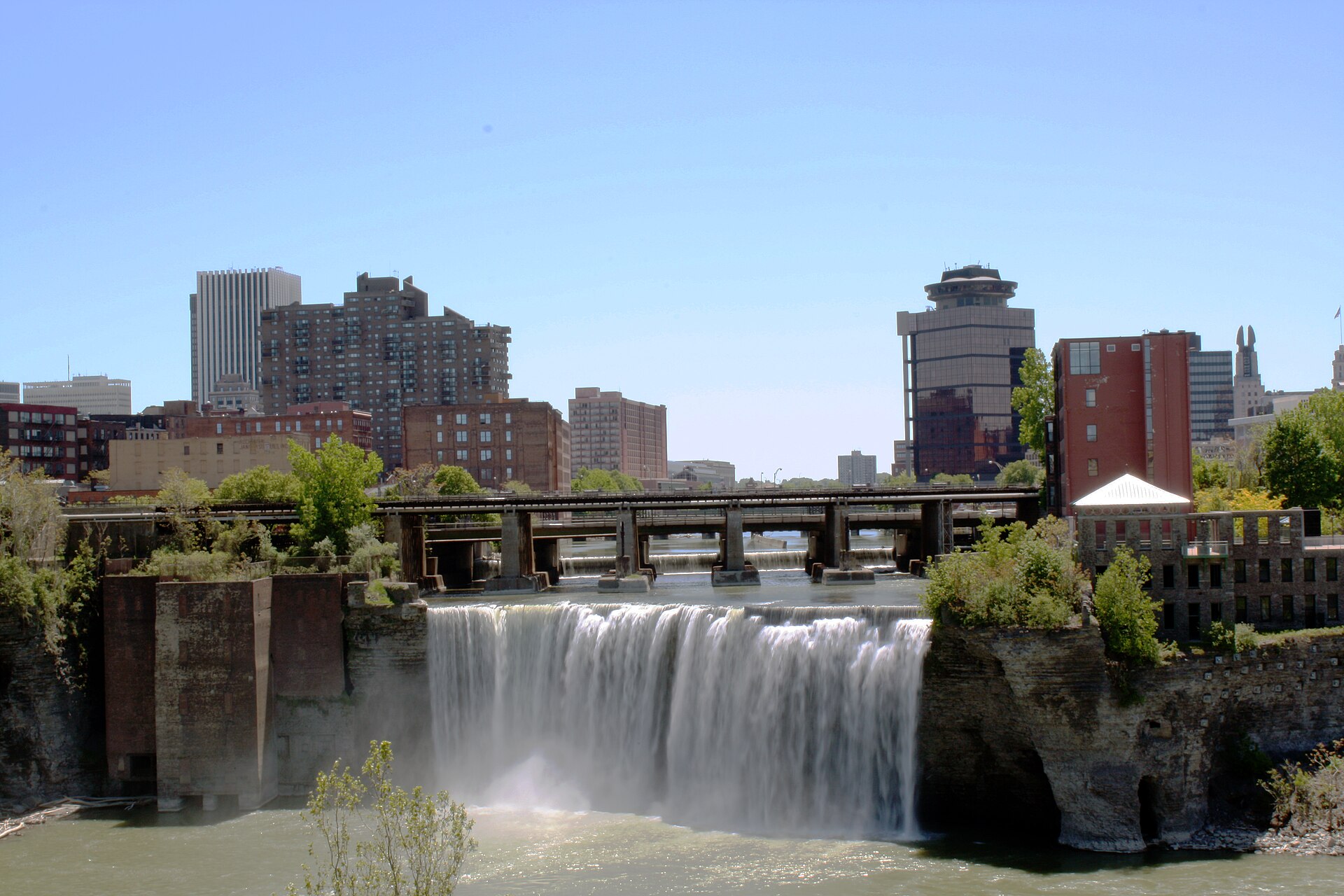
High Falls on the Genesee River in the middle of downtown Rochester, old mill buildings and a truss footbridge above the drop with the city skyline behind
Proof

What Construction Owners Say

Rated 5.0 on Google

Trusted by 25+ construction businesses nationwide

Procore logo Listed on theProcore Network

They didn’t just record transactions and call it a day. They built a custom chart of accounts around how a remodeling company actually runs, did a full catch-up on years of bookkeeping inside QuickBooks Online, and now stay on top of my monthly bookkeeping and payroll. Every step, they broke it down in simple terms instead of burying me in accountant talk.

Oniel Campbell, Founder of Moonz Contracting
Oniel Campbell
Moonz Contracting Founder

FinTruction rebuilt the whole thing from the ground up, with real job costing, work in progress, and retainage. They didn’t just hand me reports and disappear; they walked me through my numbers until I understood them.

Carl Moore, Owner of Hearth & Haus
Carl Moore
Hearth & Haus Owner
Dalton Mayberry, Owner of ProperCoat Painting
Sahil and his team handle the bookkeeping and job costing for my painting business. They cleaned up my books and set up integrations that give me accurate, timely job costing with solid weekly data. Reliable, detailed, and genuinely invested in getting the numbers right.
Dalton Mayberry
ProperCoat Painting
Owner

FinTruction is the only bookkeeping team we’ve found that truly understands construction accounting and WIP reporting. They aligned our income and costs across 21 jobs and gave us full, monthly transparency. Fast, accurate, and an indispensable partner.

John Wesley Sebastian, President of B&B Concrete
John Wesley Sebastian
B&B Concrete President

When I came to FinTruction I had no financial structure. No job costing, no WIP tracking, books behind. They did a full cleanup and rebuilt job costing and WIP tracking in QuickBooks. Now I know what’s billed, what’s owed, and where every job stands.

Clay Pearson, Owner of C. Pearson Contracting Corp
Clay Pearson
C. Pearson Contracting Corp Owner
Client testimonial

Hear it straight from a client we work with

A couple of minutes from a contractor we support, sharing what working with FinTruction has been like and what changed once their numbers finally made sense.

  • An owner sharing their honest experience
  • From guessing to numbers they actually trust
  • Why they’d recommend us to other contractors
Read more reviews
FinTruction client video testimonial
What We Do

Our Construction Accounting Services in Rochester

1 Contractor bookkeeping
2 QuickBooks integrations
3 Job costing
4 WIP reporting
5 Retainage management
6 Controller & CFO services

Qualified Rehabilitation Expenditure Tracking

The credit is calculated on QREs, not on your contract value, and the sorting has to survive review. We set the job up so every dollar lands on the qualifying or non-qualifying side of the line when it is coded, with the backup attached, rather than being argued about after closeout by somebody reading invoices.

  • Cost codes structured around the credit basis from day one
  • Acquisition, enlargement and site work segregated out
  • Architectural, engineering and soft costs allocated properly
  • Change orders tagged qualifying or non-qualifying when written
  • Certified cost report backup assembled as the job runs

QuickBooks Integrations for Your Construction Software

Every construction platform claims to have a "QuickBooks integration." Most break the moment your books need to be accurate. Sales tax mismaps, retainage disappears, change orders create duplicates, and job costing reports stop matching project reality. We fix the integration so your software, your books, and your job‑level numbers all tell the same story.

Also work with Foundation, Sage 100, Bill.com, ADP, Gusto, Ramp, and more. See all platforms we integrate →

Job Costing for Rehabilitation and Adaptive Reuse

Rehab is the least predictable work there is. You cannot see behind a plaster wall until you open it, so the estimate is a hypothesis and the real cost arrives in pieces. Job costing has to keep up with discovery, or you find out the job went sideways at the same time everyone else does.

  • Selective demolition and unforeseen conditions costed separately
  • Abatement and remediation isolated from base rehabilitation scope
  • Restoration trades and specialty subs tracked by scope segment
  • Unpriced and pending change work carried visibly, not buried
  • Labor and burden landing on the job rather than in overhead

New York Sales Tax on Rehabilitation Contracts

A certified rehabilitation is usually a capital improvement. The punch list, the service call and the tenant fit repair alongside it usually are not. New York gives you a 90 day window to get Form ST-124 from the customer, after which the burden of proof is yours, so the paperwork belongs in the job file rather than in someone's memory.

  • Capital improvement versus repair decided at job setup
  • Form ST-124 obtained inside the 90 day window and filed to the job
  • Taxable and non-taxable revenue reported separately
  • Material tax handled correctly and passed through in the price
  • Form ST-120.1 used on exempt organization work such as campuses and hospitals

WIP Reporting and Revenue Recognition

Multi-year rehabilitations are where underbillings hide, and an underbilling is money you have already spent and not yet asked for. We prepare a monthly work in progress schedule comparing cost to date against the current estimate, calculate earned revenue on percentage of completion, and show over and underbilling by job while there is still time to act on it.

  • Monthly WIP with an honest estimate to complete review
  • Percentage of completion earned revenue
  • Over and underbilling analysis by job and in total
  • Backlog reporting for surety and lender review
  • Draw and requisition schedules reconciled to the job cost ledger

Controller and CFO Support

Credit-financed work pays on conditions, not on calendars, and a company can be profitable and still run out of cash waiting on a draw. Our controller services and CFO services cover what you can actually carry across overlapping projects, and what your working capital and bonding position look like to the people deciding.

  • Monthly financial review with a real conversation
  • Cash forecasting across draws, retainage and funding conditions
  • Owner and funding source concentration made visible
  • Bonding capacity strategy and surety reporting
  • Bank and lender reporting support
  • Equipment purchase versus rent versus lease analysis
The Difference

Generic Local Bookkeeper vs FinTruction

A general bookkeeper can record transactions. Construction accounting is a different job.

What you needGeneric local bookkeeperFinTruction
Job-level costingLumps all jobs into one P&LCost codes and margin per project
WIP & revenue recognitionCash-basis, no WIP scheduleMonthly WIP with over/underbilling
Retainage trackingBuried in AR/AP, often missedTracked receivable & payable by contract
Bonding & lender packagesNot equipped to produce themBonding-ready statements and backlog
Construction softwareQuickBooks set up like a retail shopQuickBooks + integrations tuned for contractors
Local Context

The Rochester Construction Market, and What It Does to Your Books

Rochester metro
Where your jobs run
Accounting built around the local construction market.
Construction only
Not generic bookkeeping
Job costing, WIP, and retainage handled the way contractors need.
Remote-first
Across New York
Full support without an in-house hire, anywhere you build.

Rochester built itself on optics, imaging and precision manufacturing, and the companies that did it, Eastman Kodak and Bausch and Lomb above all, put up an extraordinary amount of building in the process. Much of that stock is still standing: mill and factory blocks along the Genesee, department store buildings on Main Street, warehouses, schools, churches and institutional halls, most of it built well before the Second World War. The optics and photonics cluster that grew out of that history is still here, and so are the buildings.

That is why so much construction work in this city is rehabilitation rather than greenfield. When a building is on or eligible for the National Register and someone wants to put apartments, offices, labs or a food hall inside it, the numbers usually only work with historic tax credits attached. The Sibley Building on Main Street, listed on the National Register in 1984 and redeveloped as Sibley Square, is the scale example, but the same structure of deal repeats at a fraction of the size across the East End, the High Falls area and the neighborhoods around them.

The second half of the market is institutional. The University of Rochester, its medical center, and Rochester Institute of Technology are among the largest employers in the region, and campus construction here is a steady mixture of new buildings and renovation inside old ones. Institutional owners are exempt organizations, which changes how you buy materials, and their projects frequently carry public funding, which can change how you pay your crews. Neither of those is a construction problem. Both are accounting problems.

Put those together and the Rochester contractor's real difficulty is not finding work. It is that the same company, in the same month, may be running a certified rehabilitation where cost coding determines a tax credit, a campus job where sales tax rules are different, a private commercial job that is straightforwardly taxable, and a residential remodel in Pittsford or Penfield. One chart of accounts has to answer four different questions, and most of the ones we inherit cannot answer any of them.


Compliance

New York Compliance That Lands in Your Accounting

1 The Federal Rehabilitation Credit, Internal Revenue Code Section 47

A certified rehabilitation of a certified historic structure earns a credit equal to 20 percent of qualified rehabilitation expenditures. Since the 2017 tax law that credit is claimed ratably over five years beginning in the year the building is placed in service, and the older 10 percent credit for pre-1936 non-historic buildings was repealed. To qualify, the building has to pass the substantial rehabilitation test: QREs during a 24-month measuring period selected by the owner must exceed the greater of the adjusted basis of the building and its structural components, or 5,000 dollars, with a 60-month period available for phased work under an approved architectural plan.

2 The New York State Historic Commercial Properties Tax Credit

New York adds a state credit on top of the federal one, at 20 percent of QREs, or 30 percent where the project is placed in service after January 1, 2022 and total QREs do not exceed 2.5 million dollars. The state credit cannot exceed 5 million dollars per structure, the project has to receive the federal credit, and the property generally has to be in a qualifying census tract, with the tract data refreshed each April 1. Beginning with tax year 2026 an affordable housing project meeting the exemption conditions no longer needs to sit in a qualifying tract. Large parts of Rochester fall inside eligible tract, which is why so many downtown deals are built around this credit.

3 Certification Through SHPO, and the Five-Year Tail

Certification is a three-part application filed with the New York State Historic Preservation Office through the CRIS system, with the National Park Service granting final approval. Part 1 establishes historic significance, Part 2 puts the proposed work up against the Secretary of the Interior Standards for Rehabilitation, and Part 3 requests certification of the completed work. The owner then has to hold the building and maintain it in line with the Standards for five years after completion or face recapture. We are not preservation consultants and we do not decide what the Standards permit. What we do is make sure the cost record supporting Part 3 exists before anyone asks for it, and still exists in year four.

4 Sales Tax: Capital Improvement Versus Repair

In New York, a capital improvement to real property is not subject to sales tax on the labor, while repair, maintenance and installation services are taxable. Form ST-124, the Certificate of Capital Improvement, is the substantiation, and the timing rule matters: obtain a properly completed certificate from the customer within 90 days of rendering the service and the burden of proof sits with the customer, miss it and the burden is yours. Separately, building materials bought for capital improvement work are taxable to the contractor and recovered in the contract price, except on work for an exempt organization where Form ST-120.1 applies. The combined state and local rate in Monroe County is 8 percent.

5 Prevailing Wage and Article 3-A Trust Funds

Public works under Labor Law Article 8 carry prevailing wage under Section 220, with rates set by trade and locality by the New York State Department of Labor and certified payroll filed each pay period. Labor Law Section 224-a extends prevailing wage to certain privately contracted projects where public funds total at least 30 percent of construction project costs and those costs exceed 5 million dollars, administered through a Public Subsidy Board, so a heavily subsidized rehabilitation deserves a look before you bid it. Separately, Lien Law Article 3-A treats funds received for an improvement to real property as trust assets held for that project's beneficiaries, which is a rule about how money moves between jobs, and therefore a rule your bookkeeping either honors or quietly breaks.

Who We Serve

Rochester Contractors and Trades We Work With

We support contractors across Monroe County and the Finger Lakes, from restoration specialists working certified rehabilitations downtown to the commercial, institutional and residential builders working the suburbs.

General Contractors
Restoration & Preservation Trades
Masonry & Stone Contractors
Window & Millwork Restoration
Roofing Companies
Mechanical & HVAC
Electrical Contractors
Plumbing Contractors
Demolition & Abatement
Concrete & Structural
Interior Finish Contractors
Institutional & Campus Builders
Industrial & Plant Contractors
Commercial Builders
Residential Builders & Remodelers

Running a Construction Company in Rochester?

Get Your Free Audit
Why FinTruction

Why Rochester Contractors Choose FinTruction

A fair question if you already have a bookkeeper, or a CPA who does the return every spring. Here is the honest answer.

  • Construction is the only industry we work in, so qualified rehabilitation expenditures are routine here rather than something to go and research
  • Sahil Ahmad, CPA reviews the work, so you are not relying on a data entry pool
  • The credit basis and the sales tax call are decided at job setup and documented while the job is live, not reconstructed at certification
  • We work inside the tools you already run: QuickBooks, Procore, Buildertrend, ServiceTitan and Knowify
  • A flat monthly fee, so asking a question does not start a clock
  • A free Audit first, so you can see what is wrong before you commit to anything
Systems

The Software You Already Run, Set Up Properly

Most Rochester contractors do not need new software. They need what they already pay for configured for construction, so the credit basis and the job margin are both visible without keeping a second set of numbers in a spreadsheet.

QuickBooks Set Up for a Contractor

Most QuickBooks files we inherit were configured for a business that sells products. For a contractor that means jobs are customers, cost codes do not exist, retainage hides inside receivables, and there is nothing anywhere in the file recording whether a cost belongs in a credit basis or a taxable service.

  • Chart of accounts rebuilt for job costing
  • Cost codes structured for qualifying and non-qualifying rehabilitation work
  • Capital improvement status recorded at the job level
  • Taxable and non-taxable revenue reported separately
  • Retainage tracked at contract and subcontract level
  • Payroll connected so labor and burden land on the job

Is your QuickBooks file working against you?

Field and Project Management Integrations

If your project managers already track budgets, commitments and change orders in a construction platform, the office should not be typing it in again. We connect the field system to the accounting so the numbers agree, and so a change order carries its cost and its credit flag from the moment it is written.

One set of numbers that the field and the office both believe.

Reporting You Can Run the Company On

Once the systems are connected, reporting stops being a history lesson. These are the reports Rochester contractors use to decide what to chase and what to walk away from:

  • Job profitability by job and cost code, current rather than year-end
  • Qualifying versus non-qualifying cost to date on every rehabilitation
  • WIP with over and underbilling, refreshed monthly
  • Taxable versus non-taxable revenue for the sales tax return
  • Cash forecast across draws, retainage releases and funding conditions

See how we have done this for other contractors in our construction accounting case studies.

Answers

Rochester Construction Accounting Questions

What is a qualified rehabilitation expenditure, and why does my job costing decide it?

The historic rehabilitation credits are not calculated on the contract value. They are calculated on qualified rehabilitation expenditures, or QREs: the costs of work on the existing building and its structural components. The owner claims the credit, but the owner claims it off your numbers. Whoever prepares the certified cost report has to take your job cost detail and sort every dollar into qualifying and non-qualifying. If your cost codes were set up to answer a different question, that sorting happens months after the fact, from invoices, by someone who was never on the site. Every cost that cannot be defended gets dropped, and a dropped cost is a smaller credit.

Which of my costs do not count as QREs?

The exclusions are where Rochester rehab jobs lose credit. Acquisition of the building is not a QRE. Enlargement is not: an addition or new construction beyond the existing footprint and volume falls outside the credit. Site work does not qualify, which sweeps in landscaping, sidewalks, parking areas, paving and most exterior work away from the building envelope. Furnishings, appliances, and personal property that is not a structural component are out. Meanwhile architectural and engineering fees, and construction period interest and taxes tied to the qualifying work, generally do count. This is a fine line, and it is drawn through cost codes most contractors never created.

How do the federal and New York State credits work together on a Rochester project?

The federal rehabilitation credit under Internal Revenue Code Section 47 is 20 percent of QREs on a certified historic structure, and since the 2017 tax law it is claimed ratably over five years starting when the building is placed in service. New York adds its own credit on top for commercial properties, at 20 percent of QREs, or 30 percent where the project is placed in service after January 1, 2022 and total QREs do not exceed 2.5 million dollars. The state credit is capped at 5 million dollars per structure, the property generally has to sit in a qualifying census tract, and the project has to receive the federal credit to get the state one. Rochester has a lot of qualifying tract, which is exactly why so much downtown work is structured this way.

What is the substantial rehabilitation test?

It is the threshold that decides whether the building qualifies at all. Within a 24-month measuring period the owner selects, QREs have to exceed the greater of the adjusted basis of the building and its structural components, or 5,000 dollars. A phased project can use a 60-month period under an approved architectural plan. The practical consequence for you is that the test is a race against a clock that is measured in dollars of qualifying spend. If non-qualifying work is sitting inside the same cost codes as qualifying work, nobody can tell where the project actually stands against the test until it is too late to influence it.

What are Parts 1, 2 and 3, and where does my paperwork land?

Certification runs in three parts through the New York State Historic Preservation Office, submitted in the CRIS system, with the National Park Service issuing the final approval. Part 1 establishes that the building is a certified historic structure. Part 2 describes the proposed work and is reviewed against the Secretary of the Interior Standards for Rehabilitation. Part 3 is the request for certification of completed work, and it is the one that needs your cost detail. There is also a five-year tail: the owner has to hold the building and treat it in line with the Standards for five years after completion, or the credit can be recaptured. Records that were good enough for a closeout are not automatically good enough for year four.

A change order altered approved work. Does that affect the credit?

It can, and this is the part contractors get blamed for. Part 2 approval is granted for a described scope reviewed against the Secretary of the Interior Standards. Field conditions then force substitutions: a window profile, a masonry repair method, a mechanical route through a historic ceiling. If the change is not run back through the review, the completed work may not match what was approved when Part 3 is filed. Our job is not to make preservation decisions. It is to make sure every change order carries the approval reference, the cost, and the qualifying or non-qualifying flag at the moment it is written, so the owner and the consultant find out now rather than at certification.

Half our Rochester job is certified rehab and half is ordinary repair. What about sales tax?

New York taxes the two differently. A capital improvement to real property is not subject to sales tax on the labor portion, while repair, maintenance and installation services are taxable. The proof is Form ST-124, the Certificate of Capital Improvement. If you obtain a properly completed ST-124 from the customer within 90 days of rendering the service, the burden of proving the job was a capital improvement shifts to the customer. Miss the 90 days and it is yours. Separately, materials you buy for capital improvement work are taxable to you and get passed through in the price, unless you are working for an exempt organization and use Form ST-120.1. In Monroe County the combined rate is 8 percent, so on a large rehab the difference is real money.

Does prevailing wage apply to a privately owned rehabilitation in Rochester?

Sometimes, and the tax credit itself is not what triggers it. Public works under Labor Law Article 8, including City of Rochester, Monroe County and state-funded work, carries prevailing wage under Section 220 with certified payroll filed each pay period. On top of that, Section 224-a extends prevailing wage to certain privately contracted projects where public funds make up at least 30 percent of total construction project costs and those costs exceed 5 million dollars, with a Public Subsidy Board set up to administer it. Rehab projects here are often stacked with grants, subsidized loans and other public assistance, so the funding sources belong in the accounting file, not just the developer drawer.

Do you only work on historic projects, and which areas do you cover?

No. Most of our Rochester clients run a mixed book: some certified rehab work, plenty of ordinary commercial, institutional, industrial and residential jobs. The rehab work is simply the hardest thing on the schedule, so we build the system to carry it. We serve contractors across Monroe, Ontario, Wayne, Livingston and Genesee counties, including Rochester, Brighton, Irondequoit, Greece, Henrietta, Webster, Pittsford, Penfield, Fairport, Victor and Canandaigua. Everything is remote, so you are not paying toward an office you would never walk into.

How do we start, and what does it cost?

Start with the free Audit. Send your current accounting file and your last job profitability or WIP report. We will tell you what is wrong with it, what it is costing you, and whether your cost detail on any rehabilitation job would stand up to a certified cost report. No charge and no obligation. After that it is a flat monthly fee based on transaction volume, active jobs and reporting needs, so asking a question does not start a clock. Sahil Ahmad, CPA reviews the work.

Nearby

Cities We Serve in New York

FinTruction provides construction accounting across New York State. Select your city below for job costing, WIP and contractor bookkeeping support in your market.

Also available

Just need someone to keep the books current?

If the credit documentation is already handled and the problem is that the month never closes, we also run day-to-day construction bookkeeping for Rochester contractors: coding, reconciliations, AP and AR, and job-cost entry.

Construction Bookkeeping in Rochester

Construction Bookkeeping Services in New York

Not Seeing Your City?

We serve contractors across all of New York State. View all locations →

Find Out What Your Rochester Books Are Hiding

Send us your current accounting file and your last job profitability report. We will tell you what is wrong with it, what it is costing you, and whether your cost detail on a rehabilitation job would hold up at certification. No charge and no obligation for the Audit.

Get Expert Construction Accounting Support in Rochester

Trusted by 25+ Construction Companies
Response Within 24 Hours
Free Consultation, No Obligation

Request a Free Consultation

Looking for professional construction accounting in Rochester? Fill out the short form below and our contractor bookkeeping team will contact you within 24 hours.