Construction Accounting

Construction Accounting in Stockton, CA

Job costing and WIP built for a permit window and a flood-season deadline

A Delta levee job runs on a clock nobody negotiates. Permits confine in-water work to a short window, flood season shuts the levee down again, and the funding arrives from a reclamation district, the state and the Army Corps, each wanting its costs reported a different way. Miss the window and you carry the crew through a wet winter with nothing to bill. Construction accounting in Stockton has to work on that calendar: cost codes that keep funding sources separate on one job, certified payroll produced from live payroll data, and a WIP schedule that tells you what you have earned before the season closes.

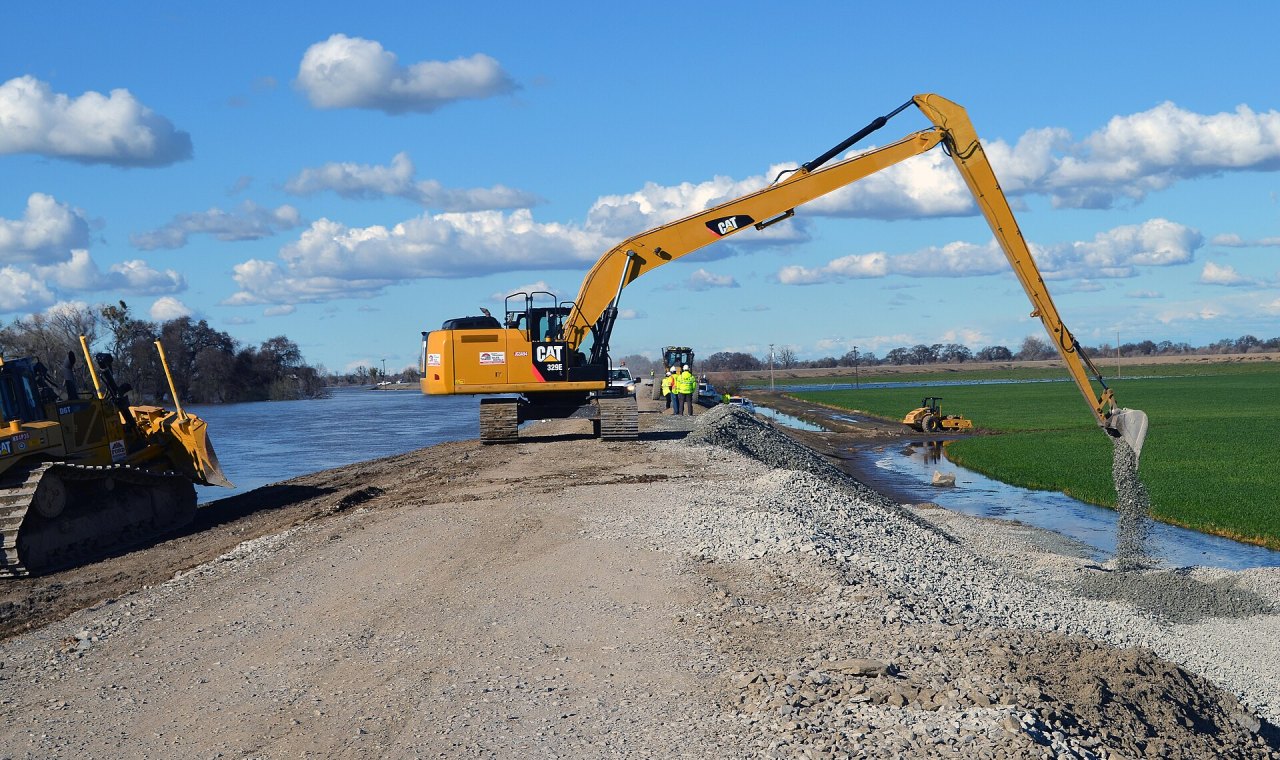
A long-reach excavator placing rock on a San Joaquin River levee bank while a dozer and crew work the crown, the heavy civil work Stockton contractors job cost On the ground San Joaquin River levee repair, San Joaquin County, California
Builds the jobs Stockton
Runs the books FinTruction
Local Context

The Stockton Construction Market, and What It Does to Your Books

Stockton metro
Where your jobs run
Accounting built around the local construction market.
Construction only
Not generic bookkeeping
Job costing, WIP, and retainage handled the way contractors need.
Remote-first
Across California
Full support without an in-house hire, anywhere you build.

Stockton is a water city that most of California thinks of as a road city. The Port of Stockton is an inland deepwater port, reached from San Francisco Bay through a dredged ship channel that runs the length of the Sacramento San Joaquin Delta, and it is surrounded by the largest engineered flood control system in the state. Hundreds of miles of levee protect farmland and towns that in many places sit below the water beside them, because the peat soils of the Delta islands have subsided steadily since they were first drained. Keeping that system standing is permanent construction work, and it is the most distinctive thing about contracting here.

The second engine is logistics. Stockton sits where Interstate 5 meets Highway 99, with Interstate 205 running west to the Altamont Pass and two Class I railroads crossing the county. Land here costs a fraction of what it does over the hill, so distribution and manufacturing demand that the Bay Area cannot house lands in Stockton, Lathrop, Tracy and Manteca instead. The buildings are enormous, the schedules are driven by a tenant occupancy date rather than by a construction logic, and one of them can represent most of a mid-sized contractor's revenue for a year. Alongside that runs steady agricultural processing work, hospital and clinic construction, projects at the University of the Pacific and San Joaquin Delta College, and residential growth aimed at people who commute to jobs they could never afford to live near.

The financial shape of this market is set by two things: a calendar and a funding stack. In-water and levee work is confined by permit conditions to a limited part of the year, and the levee has to be back to full section before flood season, so a heavy civil contractor concentrates most of a year of revenue into a handful of months and then carries payroll, insurance and equipment notes through months when there is very little to bill. At the same time, the money behind public water and flood work usually arrives from several places at once, which means the same job has to report to a reclamation district, a state program and a federal agency, each on its own terms. Contractors who cost that job as one undifferentiated bucket end up rebuilding their records every time a funder asks a question.

There is one more local fact worth naming, because it changes cash rather than profit. Stockton went through a municipal bankruptcy last decade, and public agencies across San Joaquin County have stayed careful with contingency and deliberate about approving change orders ever since. Work still gets paid, but unpriced change order work sits longer here than a contractor arriving from a faster market expects. All of this is manageable once job costing, compliance reporting and the cash forecast are built as one system rather than three. Most contractors already capture the underlying data in the field; it simply never reaches the accounting, which is what our Procore and QuickBooks integration work exists to fix. You can see the effect of that on real companies in our contractor case studies, and compare notes with the rest of the state on our California construction accounting page.

Proof

What Construction Owners Say

Rated 5.0 on Google

Trusted by 25+ construction businesses nationwide

Procore logo Listed on theProcore Network

They didn’t just record transactions and call it a day. They built a custom chart of accounts around how a remodeling company actually runs, did a full catch-up on years of bookkeeping inside QuickBooks Online, and now stay on top of my monthly bookkeeping and payroll. Every step, they broke it down in simple terms instead of burying me in accountant talk.

Oniel Campbell, Founder of Moonz Contracting
Oniel Campbell
Moonz Contracting Founder

FinTruction rebuilt the whole thing from the ground up, with real job costing, work in progress, and retainage. They didn’t just hand me reports and disappear; they walked me through my numbers until I understood them.

Carl Moore, Owner of Hearth & Haus
Carl Moore
Hearth & Haus Owner
Dalton Mayberry, Owner of ProperCoat Painting
Sahil and his team handle the bookkeeping and job costing for my painting business. They cleaned up my books and set up integrations that give me accurate, timely job costing with solid weekly data. Reliable, detailed, and genuinely invested in getting the numbers right.
Dalton Mayberry
ProperCoat Painting
Owner

FinTruction is the only bookkeeping team we’ve found that truly understands construction accounting and WIP reporting. They aligned our income and costs across 21 jobs and gave us full, monthly transparency. Fast, accurate, and an indispensable partner.

John Wesley Sebastian, President of B&B Concrete
John Wesley Sebastian
B&B Concrete President

When I came to FinTruction I had no financial structure. No job costing, no WIP tracking, books behind. They did a full cleanup and rebuilt job costing and WIP tracking in QuickBooks. Now I know what’s billed, what’s owed, and where every job stands.

Clay Pearson, Owner of C. Pearson Contracting Corp
Clay Pearson
C. Pearson Contracting Corp Owner
Client testimonial

Hear it straight from a client we work with

A couple of minutes from a contractor we support, sharing what working with FinTruction has been like and what changed once their numbers finally made sense.

  • An owner sharing their honest experience
  • From guessing to numbers they actually trust
  • Why they’d recommend us to other contractors
Read more reviews
FinTruction client video testimonial
What We Do

Our Construction Accounting Services in Stockton

1 Contractor bookkeeping
2 QuickBooks integrations
3 Job costing
4 WIP reporting
5 Retainage management
6 Controller & CFO services

Job Costing for Levee, Flood Control and Water Infrastructure Work

Heavy civil work in the Delta is rarely funded from one place. A single levee or channel project can carry reclamation district assessments, state program money and a federal share, and each of those wants to see its own costs on its own terms. If the job is costed as one bucket, every reporting request becomes a rebuild. We structure the job so the split already exists.

  • Cost codes carrying both your structure and the funder's
  • Costs tagged by funding source on one job, not split across three
  • Permit, mitigation and environmental monitoring costs kept on the project
  • Equipment rates that carry fuel, maintenance, mobilization and fleet compliance
  • Budget versus actual with variance flagged while the window is still open

QuickBooks Integrations for Your Construction Software

Every construction platform claims to have a "QuickBooks integration." Most break the moment your books need to be accurate. Sales tax mismaps, retainage disappears, change orders create duplicates, and job costing reports stop matching project reality. We fix the integration so your software, your books, and your job‑level numbers all tell the same story.

Also work with Foundation, Sage 100, Bill.com, ADP, Gusto, Ramp, and more. See all platforms we integrate →

Certified Payroll for Public Works and Federally Funded Jobs

A Stockton contractor can easily be running open shop private warehouse work and a prevailing wage levee contract in the same week, which means two payroll realities inside one company. The certified payroll you file through the DIR eCPR system and the labor cost sitting in your job report have to be the same numbers, and drift between them is exactly what an audit is designed to find.

  • Wage determination tracked per contract, craft and county
  • Certified payroll prepared from live payroll rather than rebuilt weekly
  • Davis-Bacon handled alongside state requirements on federally funded work
  • Apprenticeship documentation kept with the job file
  • Subcontractor compliance documents collected before the payment goes out

Warehouse and Distribution Build-Out Cost Control

The distribution buildings going up along Interstate 5, Interstate 205 and Highway 99 are large enough that one of them can be most of a contractor's year. That is a concentration risk before it is anything else, and it is made worse by long-lead equipment ordered months before it is installed and a completion date tied to a tenant moving in.

  • Site, shell and equipment packages costed separately
  • Stored materials, deposits and long-lead commitments tracked
  • Committed cost reporting so open purchase orders and subcontracts are visible
  • Change order log covering approved, pending and unpriced work
  • Schedule exposure priced before liquidated damages become real

WIP, Retention and the Flood-Season Cash Gap

A San Joaquin County civil contractor can finish the best production quarter of the year and then face four months with almost nothing to bill. Retention holds back part of what was earned, agencies here take their time approving backup, and payroll and equipment notes keep running through the quiet months. That gap should be a planned number rather than a surprise.

  • Monthly WIP with estimate to complete review
  • Percentage of completion earned revenue against amounts billed
  • Over and underbilling by job and in total
  • Retention receivable and payable tracked with release conditions attached
  • Cash forecast built around the season you actually work
  • Backlog reporting for surety and lender review

Controller and CFO Support for Bonded Civil Work

Public levee and infrastructure work is bonded work, and your bonding capacity decides which jobs you are allowed to want. Our controller services and CFO services put numbers behind that: what the surety needs to see, how much working capital a seasonal contract will consume before it returns anything, and whether the next size up is survivable.

  • Monthly financial review as a conversation, not a PDF
  • Bonding capacity strategy and surety reporting packages
  • Cash flow forecasting across overlapping seasonal contracts
  • Bank and lender support during renewals and equipment financing
  • Go or no-go analysis on larger public and industrial work
  • Equipment purchase versus rent versus lease on a seasonal utilization profile
Why It Matters

Why Stockton Contractors Need Construction-Specific Accounting

San Joaquin County work is seasonal, permit-heavy and frequently paid from a stack of public sources. That combination breaks generic bookkeeping, which can tell you what you spent but not which funding source it belonged to or whether you will still be billing in December.

  • Costs split by funding source on a single job
  • Permit, mitigation and monitoring costs kept on the project
  • eCPR certified payroll produced from live payroll data
  • Work-window overtime costed to the deadline that caused it
  • Floating plant and heavy equipment carried at a real rate
  • Stored materials and long-lead deposits tracked, not expensed
  • Approved, pending and unpriced changes shown separately
  • Cash forecast that survives the months you cannot build
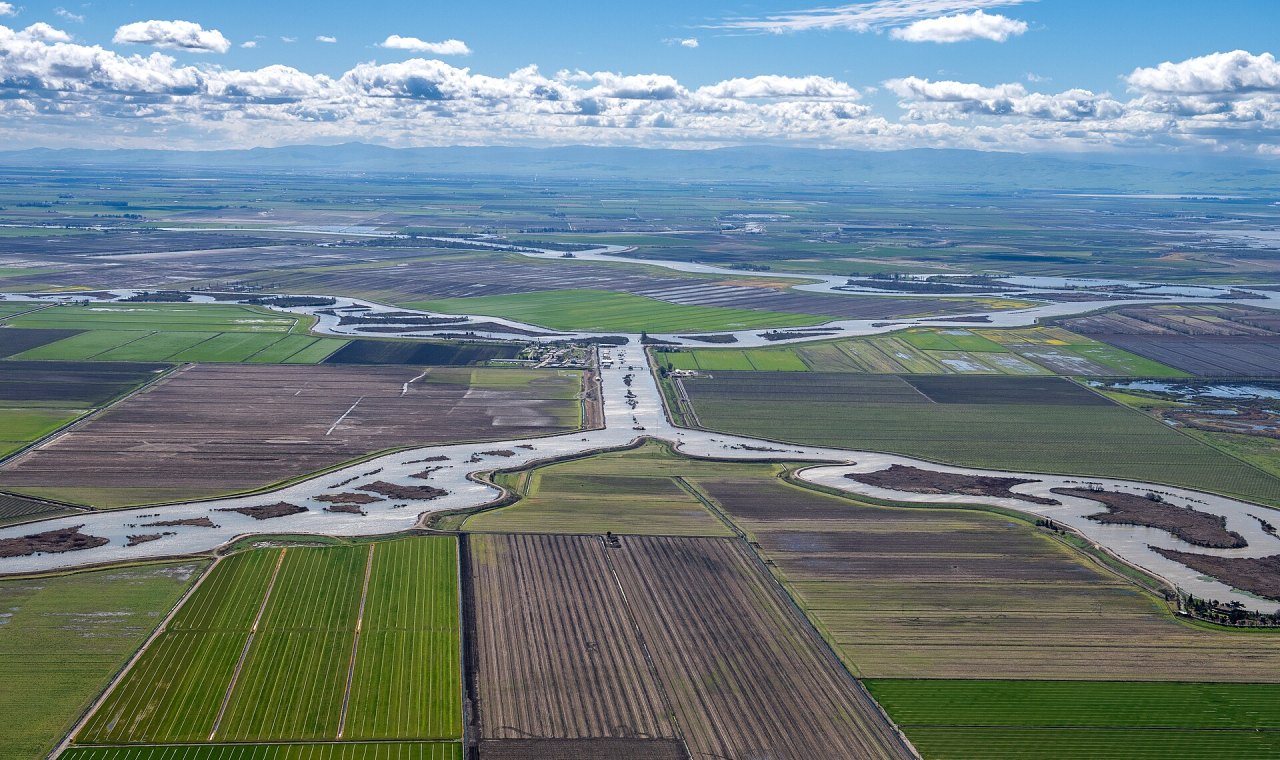
Aerial view over leveed Delta farmland and sloughs in San Joaquin County, the flood control and water infrastructure market we support with job costing
The Difference

Generic Local Bookkeeper vs FinTruction

A general bookkeeper can record transactions. Construction accounting is a different job.

What you needGeneric local bookkeeperFinTruction
Job-level costingLumps all jobs into one P&LCost codes and margin per project
WIP & revenue recognitionCash-basis, no WIP scheduleMonthly WIP with over/underbilling
Retainage trackingBuried in AR/AP, often missedTracked receivable & payable by contract
Bonding & lender packagesNot equipped to produce themBonding-ready statements and backlog
Construction softwareQuickBooks set up like a retail shopQuickBooks + integrations tuned for contractors
Who We Serve

Stockton Contractors and Trades We Work With

We support contractors across San Joaquin County, from levee and dredging crews working the Delta to the tilt-up and utility contractors putting distribution buildings along the Interstate 5 and Highway 99 corridors.

General Contractors
Heavy Civil & Levee Contractors
Marine, Dredging & Pile Driving
Site Work & Grading
Underground Utilities
Concrete & Tilt-Up
Steel & Structural
Warehouse & Distribution Builders
Paving & Asphalt
Electrical Contractors
Mechanical & HVAC
Plumbing Contractors
Roofing Companies
Agricultural Facility Builders
Residential Builders

Running a Construction Company in Stockton?

Get Your Free Audit
Compliance

California and San Joaquin County Compliance That Lands in Your Accounting

1 CSLB Licensing, Bonding and Classification

California contractors are licensed by the Contractors State License Board, and a license is required for work valued at five hundred dollars or more including labor and materials. Licensure carries a contractor bond, workers compensation obligations, and classification limits governing which scopes you may legally perform. Classification matters on Delta work, where a single contract can mix earthwork, structures, pile driving and mechanical scopes. Licensing, bond and insurance costs are genuine costs of doing business and belong in a calculated overhead rate rather than sitting as unclassified expenses, otherwise every bid you write starts short.

2 DIR Registration, Prevailing Wage and eCPR Certified Payroll

Most California public works require the contractor and each subcontractor to be registered with the Department of Industrial Relations, to pay the prevailing wage determination applicable to the craft and to San Joaquin County, and to submit certified payroll records electronically through the DIR eCPR system. Apprenticeship obligations add contract award and request documentation plus ratio requirements. In this county that reaches reclamation district and flood agency contracts, city and county infrastructure, school bond programs and transit work, with Davis-Bacon layered on wherever federal funding appears. It is administered out of payroll and job cost, which is why we treat it as an accounting function rather than paperwork.

3 Retention and Prompt Payment on Public Works

California limits retention on most public works prime contracts to five percent, sets deadlines for releasing retention after completion, and requires public agencies to pay undisputed progress payments within a defined period, with penalties for wrongful withholding. Private contracts carry no equivalent statutory ceiling, so a private warehouse or industrial job can hold ten percent until final acceptance. The statutory protection only works if you can show what is owed and when the release condition was satisfied. We keep retention separate from ordinary receivables and payables, aged by contract, with its release condition recorded.

4 Delta and Waterway Permits as a Project Cost

Levee, channel and shoreline work in the Delta typically needs a Central Valley Flood Protection Board encroachment permit, U.S. Army Corps of Engineers authorisation, water quality certification from the Regional Water Quality Control Board, and a streambed alteration agreement from the California Department of Fish and Wildlife, with consultation over listed species on top. Those permits carry conditions: restricted work windows, biological monitoring, turbidity control, revegetation and reporting. Every one of those conditions has a cost and a labor component. Contractors who treat permit compliance as office overhead are systematically underbidding water work, because the compliance is a large part of what the job actually is.

5 Sales and Use Tax on Materials, Fixtures and Equipment

California treats a contractor as the consumer of the materials it furnishes and installs, with tax paid on the purchase, while for fixtures the contractor is generally the retailer and tax applies to the fixture price. On a distribution building, where racking, dock levelers, switchgear and refrigeration can rival the shell in value, that distinction moves serious money. District tax rates also differ across Stockton, Lodi, Tracy, Manteca, Lathrop and the unincorporated county, so where material is delivered and used affects what is owed. We make the treatment visible on the job rather than leaving it to be reconstructed under audit.

6 Flood Protection Standards and Development Approvals

California requires urban and urbanising areas in the Sacramento San Joaquin Valley to make findings about an urban level of flood protection before certain development approvals can go forward. For Stockton, Lathrop and Manteca that ties residential and commercial entitlement directly to the condition of the levee system, which is why local flood agencies keep a continuous improvement program running. For a builder it means schedules can move for reasons that have nothing to do with construction, so preconstruction and carrying costs need somewhere sensible to sit rather than being absorbed silently into overhead.

7 Stacked Funding and Multi-Agency Reporting

Public water and flood work in the Delta is commonly paid from a combination of reclamation district assessments, state program funds, bond measures and federal cost shares. Each source has its own eligible cost rules, its own documentation standard and its own reporting format, and an ineligible cost discovered late is a cost you absorb. This is an accounting design problem, not a filing problem. We build the cost structure so a funder-specific report is produced from the records rather than assembled by hand every time somebody asks.

Why FinTruction

Why Stockton Contractors Choose FinTruction

A fair question if you already have a bookkeeper, a payroll service and a CPA who files the return. Here is why San Joaquin County contractors add a construction accountant on top of all three.

  • Construction is the only industry we work in, so WIP, retention and certified payroll are routine rather than research
  • Sahil Ahmad, CPA reviews the work, so your file is not being run by a data entry pool
  • We design the cost structure so multi-agency funding reports come out of the records, not out of a weekend
  • We work inside the tools you already run: QuickBooks, Buildertrend, Procore, ServiceTitan and Knowify
  • Statements a surety or a bank can read without a translation layer
  • A flat monthly fee, so asking a question does not start a clock
  • A free Audit first, so you see what is wrong before committing to anything
Systems

The Software You Already Pay For, Configured for Construction

Very few Stockton contractors need to buy new software. They need what is already installed to be set up for job costing and connected to the accounting, so compliance reporting falls out of the work rather than becoming a second job.

QuickBooks Rebuilt Around Your Jobs

Most files we inherit were set up competently for a business that sells things. For a contractor that shows up as jobs recorded as customers, no cost codes, retention hidden inside receivables, and a payroll configuration that cannot produce a certified payroll report without a manual rebuild every week.

  • Chart of accounts rebuilt for job costing
  • Cost codes structured around the scopes you actually sell
  • Progress invoicing and AIA G702 and G703 style billing
  • Retention tracked at contract and subcontract level
  • Payroll connected so labor and burden land on the job
  • Materials, fixtures and equipment separated for sales tax

Is your QuickBooks file telling you the truth about your jobs?

Field and Project Management Integrations

If your superintendents already track budgets, commitments and change orders in a platform, the office should not be entering it a second time. We connect the field system to the accounting so both sides read the same number, which matters most on a job where a funder can ask for backup a year after the crew left.

One set of numbers the field and the office both trust.

Reporting That Decides What You Bid Next Season

Once the systems talk to each other, reporting stops being a record of what already happened. These are the reports San Joaquin County contractors use to choose next season's work and walk away from the wrong job:

  • Job profitability by job and cost code, current rather than year-end
  • WIP with over and underbilling, refreshed monthly
  • Cash forecast that spans the months you cannot build
  • Funding source reporting produced straight from the job records
  • Backlog and bonding capacity position

Start with a free Audit of your current file and we will show you what your reporting is hiding.

Answers

Stockton Construction Accounting Questions

Why do Stockton contractors need construction-specific accounting?

Because the work here is unusually deadline-bound and unusually documented at the same time. Levee and flood control jobs have to fit a permitted work window and be off the levee before flood season. Port and warehouse jobs run against a tenant occupancy date. And a large share of the money is public, arriving from reclamation districts, state programs and federal agencies that each want costs reported their own way. A general bookkeeper can record all of that accurately and still be unable to tell you which of your open jobs is behind. Job costing to the code, a monthly WIP schedule and separate tracking by funding source are what make it visible in time to act.

How does Delta levee and flood control work change the way a job is costed?

It compresses everything into a season and it splits the money. Permits from the U.S. Army Corps of Engineers, the Central Valley Flood Protection Board, the Regional Water Quality Control Board and the California Department of Fish and Wildlife commonly restrict in-water work to a limited summer and autumn window to protect migrating salmon and other listed species, and the levee generally has to be restored to full section before flood season. So mobilization, dewatering, environmental monitoring and overtime all land inside a few months. We cost the window itself, keep permit and mitigation costs on the job rather than in overhead, and forecast cash across the dead months that follow.

Do I need DIR registration and certified payroll for a public works job in San Joaquin County?

Most California public works require the contractor and every subcontractor to be registered with the Department of Industrial Relations before bidding or performing, to pay the prevailing wage determination for the craft and for San Joaquin County, and to file certified payroll records electronically through the DIR eCPR system. Apprenticeship obligations add contract award and request paperwork plus ratio requirements. Reclamation districts, flood control agencies, the city, the county and the school districts are all public agencies for this purpose, and Davis-Bacon sits on top wherever federal levee or transportation money is involved. We produce certified payroll and job cost labor from one payroll process so the filing and the job report cannot disagree.

How is sales tax handled on construction contracts in California?

California separates materials from fixtures. A contractor is generally treated as the consumer of the materials it furnishes and installs, so tax is paid on the purchase, while for fixtures the contractor is generally treated as the retailer and tax applies to the fixture price. San Joaquin County adds a second wrinkle, because district tax rates differ between Stockton, Lodi, Tracy, Manteca, Lathrop and the unincorporated county, so where material is delivered and used affects what is owed. On a distribution building with racking, dock equipment and switchgear, that split moves real money. We set purchasing up so the treatment is visible at the job instead of being reconstructed from invoices years later.

How much retention can be held on a California public works contract?

On most California public works, retention on the prime contract is limited by statute to five percent, with rules governing how it flows down to subcontractors and when it must be released after completion. Private contracts have no equivalent statutory ceiling, so on a private warehouse or industrial job the holdback is whatever you signed for, and ten percent until final acceptance is common. California also sets deadlines for releasing retention after completion and for paying undisputed progress payments. None of that helps if retention is buried inside accounts receivable. We track it separately, receivable and payable, by contract, with the release condition and an aging attached.

We build warehouse and distribution projects around Stockton, Lathrop and Tracy. What changes in the accounting?

Scale and concentration change it. A single large distribution building can be most of your revenue for the year, which means one job going three points the wrong way is the whole result, and it also means your billing and your cash are tied to one developer schedule. Long-lead items such as switchgear, dock equipment and roofing packages get ordered and deposited on months ahead of installation, so stored materials and deposits need tracking rather than expensing. Liquidated damages are usually tied to a tenant occupancy date. We separate the shell, the site and the equipment packages so you can see where the margin actually came from.

Stockton went through a municipal bankruptcy. Does that still affect getting paid?

Not in the sense that public agencies here fail to pay. Stockton filed for Chapter 9 protection in 2012 and exited in 2015, and the lasting effect is cultural rather than financial. Agencies across San Joaquin County are careful with contingency, deliberate about approving change orders, and thorough about backup before a progress payment is released. That is a cash flow fact, not a credit risk. It means unpriced change order work sits longer here than a contractor from a faster market expects. We keep approved, pending and unpriced changes as three separate visible numbers so you know how much of the job is being built on a promise.

Do you work with contractors on Port of Stockton and marine work?

Yes. The Port of Stockton is an inland deepwater port reached from San Francisco Bay through the Sacramento San Joaquin Delta ship channel, and the work around it covers wharf and dock structures, pile driving, dredging, rail and yard paving, warehouses and bulk handling facilities. Marine work brings its own cost problems: floating plant and specialized equipment that need a properly calculated rate, tide and channel restrictions that cost productive hours, and environmental permits with monitoring attached. We build equipment rates that carry those costs and keep permit compliance effort on the job that caused it.

Which areas around Stockton do you serve?

We work with contractors across San Joaquin County and the northern Central Valley, including Stockton, Lodi, Manteca, Lathrop, Tracy, Ripon, Escalon, French Camp, Mountain House, Galt, Modesto and the Delta communities out toward Thornton and Terminous. Plenty of our clients here also chase work over the Altamont into the Bay Area or up Highway 99, and multi-market work is normal for us. Everything we do is remote, so you get construction-specific accounting without paying for an office you would never visit. Our address of record is in Coppell, Texas.

How much does construction accounting cost in Stockton, and how do we start?

Start with the free Audit. Send your current accounting file and your most recent job profitability or WIP report, and we will come back with what is wrong, what it is costing you and what fixing it would involve. No charge and no obligation for that. Pricing after that is a flat monthly fee based on transaction volume, active job count and reporting needs, so asking a question does not start an hourly clock. Sahil Ahmad, CPA reviews the work, which means a construction CPA is on your file rather than a data entry pool.

Nearby

Cities We Serve in California

FinTruction provides construction accounting across California. Select your city below for job costing, WIP and contractor bookkeeping support in your market.

Construction Bookkeeping Services in California

Not Seeing Your City?

We serve contractors across all of California. View all locations →

Find Out What Your Stockton Job Costing Is Missing

Send us your accounting file and your last job profitability or WIP report. We will tell you which jobs are actually earning, whether your certified payroll and job cost agree, and what it would take to fix. No charge and no obligation for the Audit.

Get Expert Construction Accounting Support in Stockton

Trusted by 25+ Construction Companies
Response Within 24 Hours
Free Consultation, No Obligation

Request a Free Consultation

Looking for professional construction accounting in Stockton? Fill out the short form below and our contractor bookkeeping team will contact you within 24 hours.