Construction Accounting

Construction Accounting in Winston-Salem, NC

Job costing built for old buildings, rehab credits and change orders

Winston-Salem contractors bid old buildings. Tobacco warehouses, textile mills and pre-war masonry around the Innovation Quarter and the West End, where the scope changes the day the walls come open and abatement was never in the estimate. Then the owner asks for qualified rehabilitation expenditures separated from everything else, because the federal and North Carolina historic credits depend on it, and nobody coded the job that way. Construction accounting in Winston-Salem has to carry that. We split qualified from non-qualified cost from day one, keep change orders visible before they are signed, and give you a monthly WIP a bank will accept.

Brick smokestack lettered TOB. Co. above old factory buildings in downtown Winston-Salem, the district contractors now rebuild On the ground Downtown Winston-Salem, North Carolina
Builds the jobs Winston-Salem
Runs the books FinTruction
Why It Matters

Why Winston-Salem Contractors Need Construction-Specific Accounting

Winston-Salem builds inside existing buildings more than it builds on empty ground, and rehabilitation carries accounting obligations that ordinary bookkeeping never sees: tax credit expenditure segregation, abatement that arrives mid-job, and a North Carolina sales tax rule that turns on what kind of work you performed.

  • Qualified rehabilitation expenditures segregated from day one
  • Enlargement, site and acquisition cost coded out of the credit basis
  • Abatement and unforeseen conditions carried as their own cost codes
  • Change orders and unpriced work visible before they are signed
  • Real property contracts separated from taxable repair and installation work
  • Davis-Bacon certified payroll produced from live payroll data
  • Financial statements shaped for your NCLBGC limitation tier
  • Monthly WIP with over and underbilling by job
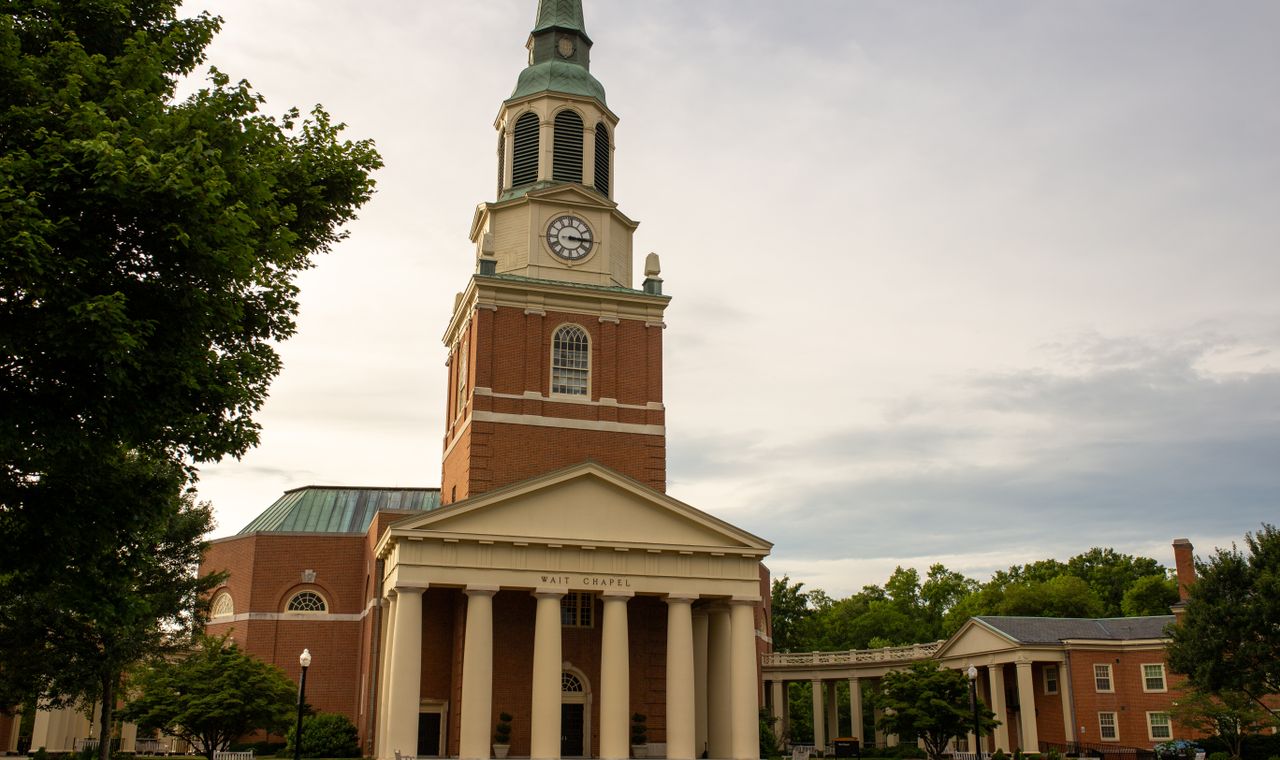
Wait Chapel and the red brick campus buildings at Wake Forest University in Winston-Salem, institutional work FinTruction job costs
Proof

What Construction Owners Say

Rated 5.0 on Google

Trusted by 25+ construction businesses nationwide

Procore logo Listed on theProcore Network

They didn’t just record transactions and call it a day. They built a custom chart of accounts around how a remodeling company actually runs, did a full catch-up on years of bookkeeping inside QuickBooks Online, and now stay on top of my monthly bookkeeping and payroll. Every step, they broke it down in simple terms instead of burying me in accountant talk.

Oniel Campbell, Founder of Moonz Contracting
Oniel Campbell
Moonz Contracting Founder

FinTruction rebuilt the whole thing from the ground up, with real job costing, work in progress, and retainage. They didn’t just hand me reports and disappear; they walked me through my numbers until I understood them.

Carl Moore, Owner of Hearth & Haus
Carl Moore
Hearth & Haus Owner
Dalton Mayberry, Owner of ProperCoat Painting
Sahil and his team handle the bookkeeping and job costing for my painting business. They cleaned up my books and set up integrations that give me accurate, timely job costing with solid weekly data. Reliable, detailed, and genuinely invested in getting the numbers right.
Dalton Mayberry
ProperCoat Painting
Owner

FinTruction is the only bookkeeping team we’ve found that truly understands construction accounting and WIP reporting. They aligned our income and costs across 21 jobs and gave us full, monthly transparency. Fast, accurate, and an indispensable partner.

John Wesley Sebastian, President of B&B Concrete
John Wesley Sebastian
B&B Concrete President

When I came to FinTruction I had no financial structure. No job costing, no WIP tracking, books behind. They did a full cleanup and rebuilt job costing and WIP tracking in QuickBooks. Now I know what’s billed, what’s owed, and where every job stands.

Clay Pearson, Owner of C. Pearson Contracting Corp
Clay Pearson
C. Pearson Contracting Corp Owner
Client testimonial

Hear it straight from a client we work with

A couple of minutes from a contractor we support, sharing what working with FinTruction has been like and what changed once their numbers finally made sense.

  • An owner sharing their honest experience
  • From guessing to numbers they actually trust
  • Why they’d recommend us to other contractors
Read more reviews
FinTruction client video testimonial
Local Context

The Winston-Salem Construction Market, and What It Does to Your Books

Winston-Salem metro
Where your jobs run
Accounting built around the local construction market.
Construction only
Not generic bookkeeping
Job costing, WIP, and retainage handled the way contractors need.
Remote-first
Across North Carolina
Full support without an in-house hire, anywhere you build.

Winston-Salem is the older, quieter member of the Piedmont Triad, and its construction economy reflects a city that already had its industrial century. Tobacco and textiles built the place, and when that base contracted it left behind something most cities of this size do not have: an enormous stock of solid, well-made industrial buildings on land close to downtown. The defining project of modern Winston-Salem is what happened to those buildings. The former R.J. Reynolds manufacturing district became the Innovation Quarter, a research and biotech campus that grew out of factory shells rather than replacing them, with Wake Forest University and its medical school anchoring it.

That history sets the accounting problem for contractors here. This is a renovation market. Beyond the Innovation Quarter there is Old Salem, the West End, the mill and warehouse stock around the rail corridor, and a large inventory of pre-war housing. Work inside an existing building behaves differently from work on a green site: the estimate is made through a wall, the scope moves once demolition starts, hazardous material shows up as a matter of routine rather than exception, and structural conditions force changes that were never drawn. Every one of those events is a cost that needs somewhere honest to live.

Around the renovation core sit steadier markets. Atrium Health Wake Forest Baptist and Wake Forest University keep institutional and healthcare work moving. Advanced manufacturing continues to reoccupy and modernise industrial sites, including former tobacco plant campuses. The I-40 and I-85 corridors through the Triad pull distribution and warehouse construction, which is fast, thin-margin, high-volume work with a completely different cost profile from a rehabilitation job. Plenty of Winston-Salem contractors run both at once, and one set of cost codes rarely serves both well.

The last factor is price. Winston-Salem's cost base sits well below Charlotte and the Research Triangle, which is why the city keeps attracting reinvestment, and also why local contract prices leave less cushion. A job that absorbs its own surprises quietly in a higher-priced market can take the year here. If you want the wider picture, our North Carolina construction accounting overview covers the state, and there is a companion page for contractors across the Triad in Greensboro.


What We Do

Our Construction Accounting Services in Winston-Salem

Historic Rehabilitation Cost Tracking and QRE Segregation

Historic tax credits are calculated on qualified rehabilitation expenditures, and the owner's accountant cannot invent that split at year end. It has to exist in the cost detail while the job is running. We set the chart of accounts and cost codes so qualified work, excluded work and enlargement sit apart from the first invoice, and so the contractor who can hand over that detail becomes the one the developer calls next time.

  • Qualified and non-qualified cost separated at code level
  • Acquisition, site work, paving and landscaping excluded from credit basis
  • Addition and enlargement scope tracked as its own contract segment
  • Cost detail packaged to support Part 3 certification of completed work
  • Supporting invoices retained against the cost they belong to

QuickBooks Integrations for Your Construction Software

Every construction platform claims to have a "QuickBooks integration." Most break the moment your books need to be accurate. Sales tax mismaps, retainage disappears, change orders create duplicates, and job costing reports stop matching project reality. We fix the integration so your software, your books, and your job‑level numbers all tell the same story.

Also work with Foundation, Sage 100, Bill.com, ADP, Gusto, Ramp, and more. See all platforms we integrate →

Job Costing for Adaptive Reuse and Renovation

Renovation is where estimates go to die, because the estimate was made through a wall. Job costing Winston-Salem contractors can actually use has to show, mid-job, how much of the work being performed is base contract, how much is approved change and how much is being built on the promise of a change order nobody has signed. We keep those three as separate visible numbers.

  • Cost codes structured for demolition, abatement and structural repair
  • Base contract, approved changes and unpriced work tracked apart
  • Committed cost so open purchase orders and subcontracts are visible
  • Labor and burden allocated by job, code and day
  • Budget versus actual with variance flagged while the job is still open

North Carolina Sales and Use Tax on Real Property Contracts

This is the single most misapplied tax rule we see in North Carolina contractor files. A real property contract and a repair, maintenance and installation service are taxed in opposite directions, and a renovation job frequently contains both. Getting it wrong means either paying tax you did not owe or failing to collect tax you did, and neither shows up until an assessment arrives.

  • Contracts classified as capital improvement or taxable service before billing
  • Form E-589CI affidavits issued and retained with the job file
  • Mixed contracts allocated and documented rather than guessed
  • Use tax accrued on materials bought outside North Carolina
  • Material tax landing on the job it was purchased for

WIP Reporting, Bonding and Your License Tier

In North Carolina your financial statements set the size of the project you are allowed to take, because the licensing board reads working capital to assign your limitation tier. A surety reads the same statements for a different reason. We prepare a monthly work in progress schedule that earns revenue on percentage of completion, shows over and underbilling by job, and leaves the balance sheet telling the truth.

  • Monthly WIP with estimate to complete review
  • Percentage of completion earned revenue
  • Over and underbilling analysis by job and in total
  • Retainage receivable and payable held out of ordinary AR and AP
  • Statements prepared for licensing board and surety review
  • Backlog reporting to support a move to a higher tier

Controller and CFO Support

Winston-Salem is cheaper to operate in than Charlotte or Raleigh, and contractors here often price accordingly, which leaves less room for a job to go wrong. Deciding whether to take a rehabilitation contract is a financial judgement about how much unpriced risk you can absorb. Our controller services and CFO services put numbers behind that call before you sign.

  • Monthly financial review with an actual conversation
  • Cash flow forecasting across overlapping renovation contracts
  • Bonding capacity strategy and surety reporting
  • Bank and lender support during renewals and construction draws
  • Go or no-go analysis on rehabilitation and adaptive reuse work
  • Equipment purchase versus rent versus lease analysis
Who We Serve

Winston-Salem Contractors and Trades We Work With

We support contractors across Forsyth County and the Piedmont Triad, from restoration crews working inside century-old masonry to industrial and logistics builders along the I-40 corridor.

General Contractors
Historic Restoration Contractors
Masonry & Restoration Trades
Abatement & Environmental Remediation
Demolition Contractors
Structural Steel & Shoring
Concrete Contractors
Millwork & Finish Carpentry
Electrical Contractors
Mechanical & HVAC
Plumbing Contractors
Roofing & Sheet Metal
Glazing & Window Restoration
Industrial & Manufacturing Builders
Warehouse & Distribution Builders
Multifamily & Loft Conversion
Site Work & Excavation
Residential Builders & Remodelers

Running a Construction Company in Winston-Salem?

Get Your Free Audit
The Difference

Generic Local Bookkeeper vs FinTruction

A general bookkeeper can record transactions. Construction accounting is a different job.

What you needGeneric local bookkeeperFinTruction
Job-level costingLumps all jobs into one P&LCost codes and margin per project
WIP & revenue recognitionCash-basis, no WIP scheduleMonthly WIP with over/underbilling
Retainage trackingBuried in AR/AP, often missedTracked receivable & payable by contract
Bonding & lender packagesNot equipped to produce themBonding-ready statements and backlog
Construction softwareQuickBooks set up like a retail shopQuickBooks + integrations tuned for contractors
Compliance

North Carolina Rules That Land in a Winston-Salem Contractor Ledger

1 NCLBGC Licensing and Limitation Tiers

The North Carolina Licensing Board for General Contractors requires a license for construction work valued at 30,000 dollars or more and issues limited, intermediate and unlimited classifications. The classification is set from working capital and financial condition shown on financial statements prepared by an accountant, and it caps the value of any single project the licensee may undertake. For a Winston-Salem contractor that makes the accounting a business constraint rather than an administrative one: unbilled cost recorded as a loss, retainage buried inside receivables and a WIP schedule that has not been updated all understate the position the board reads. We keep the statements in a condition that reflects real financial strength.

2 Federal and North Carolina Historic Rehabilitation Credits

The federal rehabilitation credit under Internal Revenue Code section 47 provides 20 percent of qualified rehabilitation expenditures on a certified historic structure, claimed ratably over five years, and North Carolina layers its own credit through Article 3L of Chapter 105 of the General Statutes. Certification runs through the State Historic Preservation Office within the North Carolina Department of Natural and Cultural Resources and the National Park Service, using the Historic Preservation Certification Application in three parts, and the rehabilitation must meet the Secretary of the Interior's Standards. The project must also pass a substantial rehabilitation test, with qualified expenditures exceeding the greater of the building's adjusted basis or 5,000 dollars within the measuring period. The credit belongs to the building owner, but the cost detail behind it comes from the contractor.

3 What Actually Counts as a Qualified Rehabilitation Expenditure

Qualified rehabilitation expenditures are generally the hard costs of rehabilitating the existing structure. Acquisition of the building, enlargements and new additions, site work, landscaping, paving, parking areas, sidewalks and moveable furniture and equipment are excluded from the credit basis. That distinction is a cost-coding discipline, and it is the one most contractors and most bookkeepers get wrong, because a single subcontractor invoice can span both sides of the line. Segregating it while the job runs is straightforward. Reconstructing it eighteen months later from a pile of invoices is expensive, disputable and sometimes impossible.

4 Sales and Use Tax: Real Property Contracts Versus Repair and Installation Services

Under General Statute 105-164.4H, a real property contract, meaning work that becomes a capital improvement to real property, is treated as a purchase by the contractor. You pay sales or use tax on materials at purchase and do not charge tax on the contract price. Repair, maintenance and installation services to real property are taxed on the full amount charged to the customer. Contractors document the capital improvement position by issuing Form E-589CI, the Affidavit of Capital Improvement. Where a contract mixes both and the taxable service portion is a small enough share of the contract price, the whole contract is treated as a real property contract. Renovation contractors sit on this line constantly, and we set purchasing and billing up so the classification is decided before the invoice goes out.

5 Davis-Bacon Prevailing Wage on Federally Funded Work

North Carolina has no state prevailing wage act, so a Winston-Salem contractor's prevailing wage exposure is federal. Work carrying federal funds falls under the Davis-Bacon Act and the related acts that extend it, requiring payment of the applicable wage determination and submission of certified payroll each pay period. Federally assisted housing, transit and institutional projects appear regularly in the Triad. Certified payroll and job cost labor must be produced from the same payroll process, because a compliance review compares them and any drift between the two is what turns a routine check into a problem.

6 Retainage, Prompt Payment and Lien Rights

On North Carolina public construction contracts at or above the statutory threshold, General Statute 143-134.1 caps retainage at five percent and stops further withholding once the project reaches fifty percent completion with satisfactory progress. Chapter 22C requires a contractor who has been paid to pay its subcontractors within seven days, with interest on late amounts. On most private projects of 30,000 dollars or more the owner designates a lien agent through the LiensNC system, and a subcontractor or supplier must serve notice to that agent to protect priority, with a claim of lien on real property filed within 120 days of last furnishing and enforced by suit within 180 days. We are not attorneys and we do not file notices. We keep unpaid amounts organized by job, tier and date of last furnishing so the deadline calendar runs off real data.

7 Abatement, Demolition and Local Historic Review

Renovation of pre-war and industrial buildings in Winston-Salem routinely involves asbestos-containing material and lead paint. Asbestos notification and accreditation requirements are administered through the Health Hazards Control Unit at the North Carolina Department of Health and Human Services, and lead work in pre-1978 residential and child-occupied buildings falls under the federal renovation, repair and painting rule. Work in locally designated historic districts also passes through the Winston-Salem and Forsyth County Historic Resources Commission, which can attach conditions to a certificate of appropriateness that constrain how the work is performed and therefore what it costs. We code these obligations to the project that incurred them instead of letting them disappear into general conditions.

Why FinTruction

Why Winston-Salem Contractors Choose FinTruction

A fair question if you already have a bookkeeper or a local firm. Here is the honest answer, including the part where we are not local.

  • Construction is the only industry we work in, so WIP, retainage and rehabilitation cost segregation are routine rather than research
  • Sahil Ahmad, CPA reviews the work, so it is not an offshore data-entry pool signing off on your numbers
  • We set up qualified expenditure coding before the job starts, which is the only point at which it is cheap
  • We work inside the tools you already run: QuickBooks, Buildertrend, Procore, ServiceTitan and Knowify
  • Financial statements built to hold up in front of the licensing board and a surety, not just a tax return
  • A flat monthly fee, so asking a question does not start a clock
  • A free Audit first, so you see what is wrong before you commit to anything
Systems

The Software You Already Run, Set Up Properly

Most Winston-Salem contractors do not need new software. They need what they already pay for configured for construction and connected to the accounting, so the cost detail a rehabilitation project demands is a by-product of normal work rather than a second job.

QuickBooks Set Up for a Contractor

Most QuickBooks files we inherit were configured for a business that sells products off a shelf. For a contractor that means jobs are set up as customers, cost codes do not exist, retainage hides inside receivables, and there is nowhere to record whether a cost is qualified rehabilitation work or excluded from the credit basis.

  • Chart of accounts rebuilt for job costing
  • Cost codes structured for renovation and rehabilitation scope
  • Qualified and non-qualified expenditure flagged at entry
  • Progress invoicing and AIA G702 and G703 style billing
  • Retainage tracked at contract and subcontract level
  • Payroll connected so labor and burden land on the job

Is your QuickBooks file working against you?

Field and Project Management Integrations

If your project managers already track budgets, commitments and change orders in a construction platform, the office should not be typing it again. On a renovation job that duplication is worse than wasteful, because change orders arrive faster than anyone can rekey them and the accounting falls a month behind the site.

One set of numbers that the field and the office both believe.

Reporting You Can Run the Company On

Once the systems are connected, reporting stops being a history lesson. These are the reports Triad contractors use to decide what to chase and what to hand to somebody else:

  • Job profitability by job and cost code, current rather than at year end
  • WIP with over and underbilling, refreshed monthly
  • Change order log including unpriced and pending work
  • Qualified rehabilitation expenditure summary by project
  • Cash forecast across overlapping contracts and retainage releases
  • Backlog and bonding capacity position

See how we have done this for other contractors in our construction accounting case studies.

Answers

Winston-Salem Construction Accounting Questions

Why do Winston-Salem contractors need construction-specific accounting?

Because a large share of Winston-Salem work is renovation of old buildings rather than construction on open ground, and renovation is the hardest thing to cost accurately. Tobacco warehouses, textile mills and pre-war masonry hold surprises behind the finishes, so scope moves once demolition starts, abatement appears that nobody priced, and structural conditions force redesign mid-job. On top of that, rehabilitation projects carry tax credit conditions that dictate how the costs must be recorded. A general bookkeeper posts those invoices to Materials and Subcontractors, and by the time anyone needs the detail it cannot be rebuilt.

How do federal and North Carolina historic tax credits change how a rehab job is coded?

The credits are calculated on qualified rehabilitation expenditures, so the books have to separate qualified from non-qualified cost while the job is running. The federal rehabilitation credit under Internal Revenue Code section 47 is 20 percent of qualified expenditures on a certified historic structure, claimed ratably over five years. North Carolina adds its own credit under Article 3L of Chapter 105 of the General Statutes. Qualified expenditures are generally hard costs of rehabilitating the existing structure. Acquisition cost, enlargements and new additions, site work, landscaping, paving, parking and moveable furniture and equipment are excluded. If the cost codes do not draw that line, someone reconstructs it later from invoices, badly.

How is sales tax handled on construction contracts in North Carolina?

North Carolina taxes construction work two different ways and which one applies decides who owes the tax. Under General Statute 105-164.4H, a real property contract, meaning work that becomes a capital improvement to real property, is treated as a purchase by the contractor: you pay sales or use tax on the materials you buy and you do not charge tax on the contract price. Repair, maintenance and installation services to real property are taxed on the full amount you charge the customer. Contractors substantiate a capital improvement by issuing Form E-589CI, the Affidavit of Capital Improvement. Renovation contractors run into this constantly because one job can contain both.

Does North Carolina have a state prevailing wage law, or is it only Davis-Bacon?

North Carolina has no state prevailing wage act. Your prevailing wage exposure is federal, through the Davis-Bacon Act and the related acts that extend it to federally funded work, which means wage determinations published by the US Department of Labor and certified payroll filed every pay period. That matters in Winston-Salem because federally assisted housing, transit and institutional projects appear regularly in the Triad. The accounting requirement is that certified payroll and job cost labor come out of one payroll process, so the numbers agree if a compliance officer compares them.

How does the NCLBGC license limitation tier depend on my financial statements?

The North Carolina Licensing Board for General Contractors requires a license for construction work valued at 30,000 dollars or more, and it issues limited, intermediate and unlimited classifications. The classification you receive is driven by working capital and financial condition shown on financial statements prepared by an accountant, and it caps the value of a single project you may legally undertake. So your bookkeeping is not just record keeping, it is the ceiling on the work you can bid. Sloppy WIP, retainage buried inside receivables and unbilled cost sitting as a loss all understate the position the board is reading.

How much retainage can be held on a North Carolina public project?

On North Carolina public construction contracts at or above the statutory threshold, General Statute 143-134.1 caps retainage at five percent, and once the project reaches fifty percent completion with satisfactory progress no further retainage may be withheld. The same statute carries prompt payment obligations, and separately Chapter 22C requires a contractor who receives payment to pay its subcontractors within seven days, with interest running on late amounts. None of that helps if retainage is sitting inside accounts receivable where nobody is chasing it. We track retainage receivable and payable by contract, with release conditions and an aging.

How do you handle abatement and unforeseen conditions on old industrial buildings?

We give them their own cost codes before the job starts rather than after the surprise. Adaptive reuse of tobacco and textile stock in Winston-Salem routinely turns up asbestos-containing material, lead paint, buried tanks, rotted structure and floor loading that will not carry the new use. Asbestos notification and accreditation requirements are administered through the Health Hazards Control Unit at the North Carolina Department of Health and Human Services, and lead work in pre-1978 buildings falls under the federal renovation, repair and painting rule. Coded separately, that work is a documented change order. Coded to general conditions, it is a margin loss you discover at closeout.

Do you work with contractors across Forsyth County and the Piedmont Triad?

Yes. We work with contractors in Winston-Salem and across Forsyth County, including Kernersville, Clemmons, Lewisville, Rural Hall, Walkertown and Tobaccoville, and throughout the wider Piedmont Triad including Greensboro, High Point, Mocksville and Mount Airy. Our work is entirely remote, so a contractor here gets construction-specific accounting without paying toward an office. We are not a local firm and we do not claim to be. Our only office is in Coppell, Texas.

Will you work with our existing CPA?

Yes, and it usually works better that way. Most contractors already have a CPA who prepares the return and perhaps the reviewed statements the licensing board wants, but who is not in the file month to month. We keep the ledger, the job costing and the WIP schedule in a condition your CPA can work from directly, which shortens their engagement and cuts down what they have to come back and ask you for. On rehabilitation work we also hand over the qualified expenditure detail the owner side needs. Sahil Ahmad, CPA reviews our work.

How do we start, and what does it cost?

Start with the free Audit. Send your current accounting file and your most recent job profitability or WIP report. We will tell you what is wrong, what it is costing you, and what it would take to fix, with no obligation to go further. If you decide to work with us it is a flat monthly fee based on transaction volume, number of active jobs and the reporting you need, so asking a question never starts a clock.

Find Out What Your Winston-Salem Books Are Hiding

Send us your accounting file and your last job profitability report. We will tell you what is wrong with it, what it is costing you, and whether a rehabilitation job in your file could still produce the cost detail a tax credit needs. No charge and no obligation for the Audit.

Get Expert Construction Accounting Support in Winston-Salem

Trusted by 25+ Construction Companies
Response Within 24 Hours
Free Consultation, No Obligation

Request a Free Consultation

Looking for professional construction accounting in Winston-Salem? Fill out the short form below and our contractor bookkeeping team will contact you within 24 hours.