








Construction Bookkeeping

Construction Bookkeeping in Greensboro, NC

Clean job-cost coding, a close that lands, and payables that do not create exposure

It is Friday in a Greensboro back office, twenty subcontractor payments are ready to release, and nobody has time to ask which of those vendors is actually registered in North Carolina. That is the moment the exposure gets created. This state makes the payer withhold 4 percent from a nonresident or ITIN contractor, and it can make a contractor stand behind an uninsured subcontractor injured employee unless a coverage certificate was obtained first. Both are accounts payable controls, not tax-season chores. We run that desk for Triad contractors alongside the daily coding, the reconciliations and a month-end close that lands on a fixed date.

Downtown Greensboro skyline seen from the depot, the green-roofed Jefferson Standard tower rising over lower brick blocks under a clear sky On the ground Downtown Greensboro from the Depot, Guilford County
Builds the jobs Greensboro
Runs the books FinTruction
Local Context

Why Greensboro Contractors Lose Control of the Vendor File

Greensboro metro
Where your jobs run
Accounting built around the local construction market.
Construction only
Not generic bookkeeping
Job costing, WIP, and retainage handled the way contractors need.
Remote-first
Across North Carolina
Full support without an in-house hire, anywhere you build.

The thing that has changed most for a Greensboro contractor in the last few years is not the volume of work. It is the number of vendors. A campus-scale industrial project or a large distribution build pulls in tiered subcontracts, specialty crews that exist for one scope, equipment suppliers from three states, and travelling labor that arrives for six weeks and leaves. A company that used to pay the same forty vendors every month can find itself paying two hundred, half of whom it had never heard of a year earlier.

That is a bookkeeping problem long before it is an accounting one. Every one of those new vendors needs a W-9, an entity determination for North Carolina withholding, a certificate of insurance, a job to be coded against and a payment term somebody honors. In a company with one office person who also answers the phone and orders material, the vendor file is the first thing to go. Nobody notices, because the checks still clear.

It surfaces later, and rarely at a convenient time. A subcontractor employee gets hurt and nobody can find the coverage certificate. An out-of-state crew is paid gross for a year and the withholding was never taken. A general contractor asks for a sworn breakdown by scope and the costs are pooled in one expense account. None of these are hard problems on the day the vendor is set up. All of them are expensive eighteen months later.

The second pressure is the shape of Triad work itself. Plant, retrofit and maintenance jobs sit alongside new construction, often for the same customer in the same month, and the two are treated differently for sales tax. That split has to be made as invoices are raised, by whoever is doing the entry, not reconstructed at the end of a quarter. Our construction bookkeeping case studies show what a rebuilt file looks like on the other side.

Proof

What Construction Owners Say

Rated 5.0 on Google

Trusted by 25+ construction businesses nationwide

Procore logo Listed on theProcore Network

They didn’t just record transactions and call it a day. They built a custom chart of accounts around how a remodeling company actually runs, did a full catch-up on years of bookkeeping inside QuickBooks Online, and now stay on top of my monthly bookkeeping and payroll. Every step, they broke it down in simple terms instead of burying me in accountant talk.


Oniel Campbell, Founder of Moonz Contracting
Oniel Campbell
Moonz Contracting Founder

FinTruction rebuilt the whole thing from the ground up, with real job costing, work in progress, and retainage. They didn’t just hand me reports and disappear; they walked me through my numbers until I understood them.

Carl Moore, Owner of Hearth & Haus
Carl Moore
Hearth & Haus Owner
Dalton Mayberry, Owner of ProperCoat Painting
Sahil and his team handle the bookkeeping and job costing for my painting business. They cleaned up my books and set up integrations that give me accurate, timely job costing with solid weekly data. Reliable, detailed, and genuinely invested in getting the numbers right.
Dalton Mayberry
ProperCoat Painting
Owner

FinTruction is the only bookkeeping team we’ve found that truly understands construction accounting and WIP reporting. They aligned our income and costs across 21 jobs and gave us full, monthly transparency. Fast, accurate, and an indispensable partner.

John Wesley Sebastian, President of B&B Concrete
John Wesley Sebastian
B&B Concrete President

When I came to FinTruction I had no financial structure. No job costing, no WIP tracking, books behind. They did a full cleanup and rebuilt job costing and WIP tracking in QuickBooks. Now I know what’s billed, what’s owed, and where every job stands.

Clay Pearson, Owner of C. Pearson Contracting Corp
Clay Pearson
C. Pearson Contracting Corp Owner
Client testimonial

Hear it straight from a client we work with

A couple of minutes from a contractor we support, sharing what working with FinTruction has been like and what changed once their numbers finally made sense.

  • An owner sharing their honest experience
  • From guessing to numbers they actually trust
  • Why they’d recommend us to other contractors
Read more reviews
FinTruction client video testimonial
What We Do

Our Construction Bookkeeping Services in Greensboro

1 Contractor bookkeeping
2 QuickBooks integrations
3 Job costing
4 WIP reporting
5 Retainage management
6 Controller & CFO services

Subcontractor Payment Controls, Run Before the Check Releases

This is the service most Triad contractors do not know they are buying. In North Carolina a subcontractor payment carries three separate decisions, and all three have to be settled before the money moves. Afterwards you are negotiating, not complying.

  • W-9 and entity status captured before the first payment is released
  • Nonresident and ITIN vendors flagged for 4 percent state withholding
  • Certificate of authority numbers stored for exempt out-of-state entities
  • Workers compensation certificates collected, filed and expiry-tracked
  • Withheld tax remitted on the correct NC-5 cycle instead of discovered later

QuickBooks Integrations for Your Construction Software

Every construction platform claims to have a "QuickBooks integration." Most break the moment your books need to be accurate. Sales tax mismaps, retainage disappears, change orders create duplicates, and job costing reports stop matching project reality. We fix the integration so your software, your books, and your job‑level numbers all tell the same story.

Also work with Foundation, Sage 100, Bill.com, ADP, Gusto, Ramp, and more. See all platforms we integrate →

Daily Coding: Tickets, Bills, Cards and Cost Codes

Job costing does not fail because the theory is hard. It fails at the keyboard, one lumber run at a time. A supply house ticket posted with no job attached, a rental billed to last month's project, a change order billed but never costed: individually trivial, collectively a profitability report nobody trusts.

  • Supplier tickets and vendor bills coded to job, phase and cost code daily
  • Card charges and fuel matched to the crew and the project that spent it
  • Equipment rental and yard time allocated instead of pooled in overhead
  • Change order costs captured against the change, not the base contract
  • Travel, per diem and lodging costed to plant and out-of-town work

Payroll Entry, Labor Burden and Certified Payroll Records

North Carolina is a largely open-shop market, so nobody hands you a fringe schedule and the burden rate is yours to build. Labor is the largest number in the file and the one most often coded to the wrong job, which is how a job that felt good on site comes back flat.

  • Timesheets entered with hours against job, phase and cost code
  • Burden built from real workers compensation, tax and benefit cost
  • Weekly certified payroll records kept in step with job-cost labor
  • Overtime and shift premium visible at the job level, not buried
  • Quarterly wage and withholding filings reconciled back to the ledger

Billing, Receivables and the Dates Your Job Records Hold

Your books are the only place the dates live: when you first furnished on a job, what has been billed, what was retained, what is genuinely owed. When those dates are current, a deadline calendar runs off real data and your attorney gets the backup the same day rather than a fortnight later.

  • Progress billings and AIA G702 and G703 applications recorded accurately
  • Retainage receivable posted at billing rather than found at year end
  • First furnishing and lien agent details captured at job setup
  • Taxable and non-taxable revenue coded separately for the E-500 return
  • AR aging reviewed and chased while collection is still realistic

Catch-Up, QuickBooks Cleanup and the Monthly Close

Most contractors reach us mid-backlog rather than shopping for a bookkeeper. Catch-up is scoped work with a finish date. After that the close is the product: a reconciled file and a construction-formatted package on a date you can plan around. Contractors who then need WIP and bonding-ready statements move up to construction accounting in Greensboro.

  • Bank, card and line of credit accounts reconciled forward to today
  • Unentered subcontractor and supplier bills recovered and posted
  • Chart of accounts rebuilt around direct cost, overhead and cost codes
  • Owner draws and personal charges separated out of job cost
  • Profit and loss, balance sheet and job profitability by a fixed date
Why It Matters

Why the AP Run Is Where North Carolina Compliance Actually Happens

Most of what goes wrong in a Triad contractor file is not an accounting judgment call. It is a document that was never collected, a vendor that was never classified, and a date that nobody wrote down, all of which had to happen before a payment went out the door.

  • Vendors classified for the 4 percent withholding at setup, not at year end
  • Workers compensation certificates held and expiry-tracked per subcontractor
  • First furnishing dates captured so the 15-day notice window is visible
  • Every ticket, bill and card charge coded to a job and a cost code
  • Taxable and non-taxable revenue split as invoices are raised
  • Retainage posted to its own account on the day you bill it
  • Travel, per diem and lodging landed on the job that incurred them
  • A close that lands on the same date every month, busy season or not
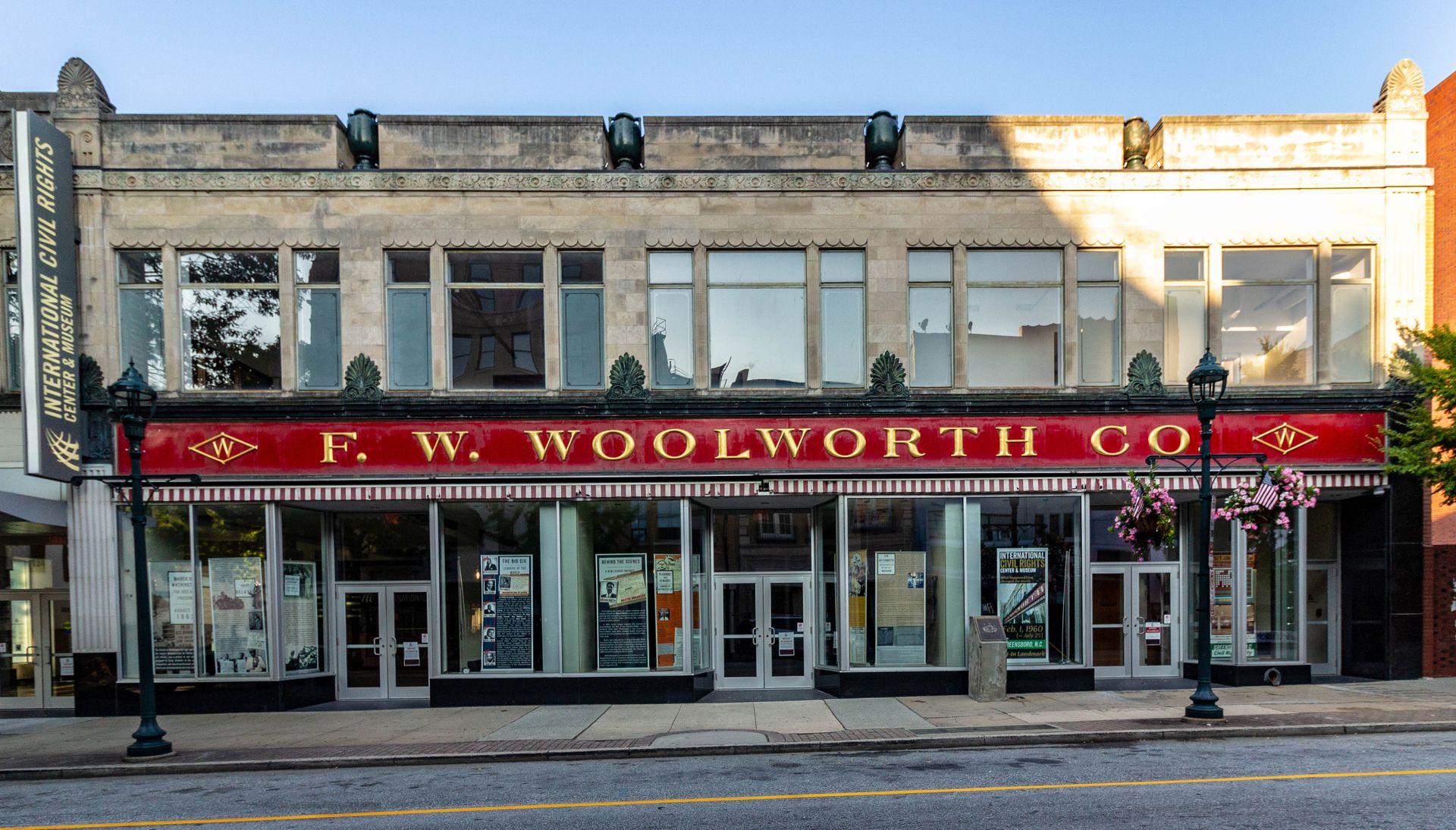
The restored F. W. Woolworth storefront on South Elm Street in downtown Greensboro, now the International Civil Rights Center and Museum, red sign and striped awnings in early light
The Difference

Generic Local Bookkeeper vs FinTruction

A general bookkeeper can record transactions. Construction accounting is a different job.

What you needGeneric local bookkeeperFinTruction
Job-level costingLumps all jobs into one P&LCost codes and margin per project
WIP & revenue recognitionCash-basis, no WIP scheduleMonthly WIP with over/underbilling
Retainage trackingBuried in AR/AP, often missedTracked receivable & payable by contract
Bonding & lender packagesNot equipped to produce themBonding-ready statements and backlog
Construction softwareQuickBooks set up like a retail shopQuickBooks + integrations tuned for contractors
Who We Serve

Greensboro Trades Whose Books We Keep

We handle the day-to-day books for contractors across Guilford and Randolph counties, from plant and process crews working the megasite corridor to the warehouse builders along I-40 and I-85 and the finish trades filling downtown.

General Contractors
Industrial & Plant Contractors
Process & Piping
Millwrights & Rigging
Electrical Contractors
Mechanical & HVAC
Plumbing Contractors
Concrete & Flatwork
Steel & Structural
Site & Underground Utilities
Warehouse & Distribution Builders
Roofing Companies
Interior Finish & Drywall
Residential Builders
Multifamily Contractors

Behind on the Books in Greensboro?

Get Your Free Audit
Compliance

North Carolina Rules That Land on the Bookkeeper, Not the Accountant

1 Withholding on Nonresident and ITIN Contractors

Under G.S. 105-163.3, a payer who pays more than 1,500 dollars during a calendar year to a nonresident contractor or an ITIN contractor for services performed in North Carolina must withhold 4 percent state income tax. A nonresident corporation or LLC holding a certificate of authority from the Secretary of State is excluded, provided the payer obtains and retains its identification number. The obligation sits on you, the payer, which is why this is an accounts payable control. Withheld amounts are remitted on your NC-5 or NC-5Q cycle, reported to the payee on Form NC-1099M, and reconciled annually on Form NC-3.

2 Workers Compensation Certificates Before You Sublet

North Carolina generally requires employers with three or more employees to carry workers compensation coverage, administered by the North Carolina Industrial Commission. More importantly for your payables process, G.S. 97-19 makes a principal, intermediate or subcontractor who sublets work without obtaining a certificate that the subcontractor has complied liable to the same extent as that subcontractor for an injured employee. Obtaining the certificate at the time of subletting is what removes that liability, so it is a document your vendor file has to hold before the first payment, with an expiry date somebody watches.

3 Lien Agent Designation and the 15-Day Notice

For improvements to real property above the statutory cost threshold, North Carolina requires the owner to designate a lien agent under G.S. 44A-11.1, with an exception for an existing owner-occupied single-family dwelling. A potential lien claimant must get its Notice to Lien Agent to that agent no later than 15 days after first furnishing labor or materials in order to perfect a claim of lien. Fifteen days is a bookkeeping cadence. We are not attorneys and we do not file notices, but the lien agent details and the first furnishing date are captured at job setup so the window is visible while it is still open.

4 The 40,000 Dollar Licensing Threshold and Creeping Contract Values

House Bill 488, enacted as Session Law 2023-108, raised the general contractor licensing threshold in North Carolina from 30,000 to 40,000 dollars effective 1 October 2023. The test is the cost of the undertaking rather than the figure on the original contract, so approved change orders can move a job across the line after it starts. Your books are the only record of the running total. We keep the base contract, approved changes and revised value on a single job record so the current position is a number rather than a recollection.

5 Capital Improvement Evidence and Revenue Coding

The tax position on a North Carolina real property contract is an accounting judgment, but the evidence and the revenue split are data-entry work that only functions in real time. Form E-589CI, the Affidavit of Capital Improvement, has to be captured while the job is live and filed against the job record, and taxable repair, maintenance and installation revenue has to be coded separately from non-taxable real property contract revenue as invoices are raised, so the E-500 sales and use tax return is printed instead of rebuilt. The treatment itself is argued on our Greensboro construction accounting page.

6 Certified Payroll on Federally Funded Work

North Carolina has no state prevailing wage law, so state and locally funded public work carries no state wage determination and no state certified payroll requirement. Federally funded or federally assisted contracts above 2,000 dollars fall under the Davis-Bacon Act, which requires the applicable wage determination and a weekly certified payroll, generally on US Department of Labor Form WH-347. Contractors here often meet that requirement for the first time on a single job. The bookkeeping demand is the weekly rhythm and the requirement that the filed payroll and the job-cost labor agree, so we produce both from one payroll run.

7 W-9 Collection, 1099-NEC and Worker Classification

A contractor paying a subcontractor 600 dollars or more in a year has to file a 1099-NEC, and in an open-shop market the line between a subcontractor and an employee gets tested by insurers and auditors rather than by you. The control is the same document in both cases. Collect the W-9 and the insurance certificate before the first payment, code every payment to the vendor and the job as it happens, and track certificate expiry against the vendor list. Done that way, January is a print run rather than a hunt for addresses.

Why FinTruction

Why Greensboro Contractors Move Their Books to FinTruction

A fair question when you already have a bookkeeper, a family member doing the entry, or a local firm that has always filed the return. Here is the honest answer.

  • Construction is the only industry we work in, so cost codes, retainage and subcontractor compliance are routine here rather than research
  • Sahil Ahmad, CPA reviews the work, so a CPA has eyes on the file instead of a data-entry pool
  • Compliance documents are collected before payment, which is the only point at which they are still worth anything
  • We work inside the tools you already run, including QuickBooks, Buildertrend, Procore, ServiceTitan, Knowify and Sage
  • Catch-up and cleanup are scoped with a finish date, not an open invoice that runs until somebody stops it
  • A free Audit first, so you see the real state of the file before committing to anything
Systems

The Bookkeeping Stack, Configured Once and Kept Working

Most Greensboro contractors already pay for the right software. The problem is that it was configured by somebody who was not thinking about job costing or about who has to be classified before they are paid.

QuickBooks Built for a Contractor, Then Maintained

We work in QuickBooks Online and QuickBooks Desktop daily and we know what a construction file should look like. Setup is the first week. The value shows up in month fourteen, when the file is still clean because somebody has been maintaining it on purpose.

  • Chart of accounts split between direct cost and overhead
  • Jobs, sub-jobs and cost code items matching how you bid work
  • Vendor records carrying W-9, entity type and withholding status
  • Retainage held in its own account on both sides of the ledger
  • Taxable and non-taxable revenue separated in the item list
  • Bank feed rules so routine coding is automatic and consistent

Not sure what shape your file is really in?

Field Systems Feeding the Books Without Retyping

If your project managers already track budgets, commitments and change orders in a construction platform, the office should not be entering them a second time. Double entry is where coding errors are born and where a month quietly disappears.

One set of numbers the field and the office both recognize.

What You Actually Receive Each Month

Current books only matter if they arrive in a usable form on a predictable date. This is the package a Greensboro contractor gets from us, and it lands on the same date in July as it does in January.

  • All bank, credit card and loan accounts reconciled
  • Profit and loss company-wide plus job profitability by project
  • Balance sheet showing retainage receivable and payable separately
  • AP and AR aging with what to chase and what to schedule
  • Vendor exceptions: missing W-9s, lapsed certificates, unclassified payees
  • A file your CPA can work from without rebuilding it

Need WIP, over and underbilling and bonding-ready statements on top? That is our Greensboro construction accounting service.

Answers

Greensboro Construction Bookkeeping Questions

We pay out-of-state subcontractors on Triad jobs. What do we have to withhold?

North Carolina requires the payer to withhold 4 percent state income tax from non-wage compensation of more than 1,500 dollars paid in a calendar year to a nonresident contractor or an ITIN contractor for services performed in the state, under G.S. 105-163.3. There is an important carve-out: a nonresident corporation or LLC that holds a certificate of authority from the North Carolina Secretary of State is not subject to it, provided you obtain and keep its identification number. So the question your accounts payable desk has to answer, before the check leaves, is what that vendor actually is. We answer it once at vendor setup and store the evidence against the vendor record.

What happens if we miss the withholding on a sub we already paid?

The obligation sits on the payer, not the subcontractor, which is what makes this a bookkeeping problem rather than a tax-season problem. Once the payment is gone, you are trying to recover 4 percent from a vendor who has already been paid in full and may have finished the job and left the state. In practice, contractors either eat it or spend months chasing it. The fix is entirely preventive: a W-9 and an entity check before the first payment is released, a withholding flag on the vendor record, and a payment run that will not release a flagged vendor without the deduction.

Why does our bookkeeper need the workers compensation certificate before we pay a sub?

Because in North Carolina the certificate is what protects you. Under G.S. 97-19, a contractor who sublets work without obtaining a certificate showing the subcontractor carries workers compensation coverage can be held liable to the same extent as that subcontractor for an injured employee of theirs. Obtaining the certificate at the time of subletting is the shield. That means the document has to be collected and dated before work starts, not chased after an accident. We hold certificate expiry dates against the vendor list and flag a sub whose coverage lapses mid-job, which is the case that catches people.

What is the Notice to Lien Agent and why is it a bookkeeping deadline?

North Carolina requires an owner to designate a lien agent for improvements to real property above the statutory cost threshold, and a potential lien claimant must get its Notice to Lien Agent to that agent within 15 days of first furnishing labor or materials to preserve its lien position. Fifteen days is a bookkeeping cadence, not a legal one. The date of first furnishing is a fact your job records hold, and nobody else in the company is tracking it. We are not attorneys and we do not file notices. We capture the lien agent details and the first furnishing date at job setup so the clock is visible while it still matters.

How far behind can we be before catch-up stops being realistic?

We have never met a file that was past saving, only files that got more expensive to fix. Catch-up runs forward from the last month that genuinely reconciled to the bank, not from the last month somebody clicked reconcile. We pull statements forward, recover the subcontractor and supplier bills that were never entered, recode transactions to jobs and cost codes, separate owner draws from job cost, move retainage out of ordinary receivables, and reconcile through to the current month. A Greensboro contractor six to nine months behind is usually current inside two to four weeks, and it is scoped work with an end date rather than an open invoice.

Does the capital improvement question affect day-to-day data entry?

It affects it constantly, which is the part that gets missed. The tax position is an accounting decision, but the evidence for it and the revenue split are bookkeeping tasks that only work if they happen at the time. The Form E-589CI affidavit has to be captured while the job is live and filed against the job record, and taxable repair, maintenance and installation revenue has to be coded separately from non-taxable real property contract revenue as invoices are raised, so the sales and use tax return is printed rather than reconstructed. If you want the treatment itself argued and defended, that is on our Greensboro construction accounting page.

Do we need certified payroll on Guilford County public work?

North Carolina has no state prevailing wage law, so state and locally funded work carries no state wage determination or state certified payroll requirement, and many Triad contractors have never produced one. Federally funded or federally assisted contracts above 2,000 dollars are different: the Davis-Bacon Act applies, with a wage determination and a weekly certified payroll, generally on US Department of Labor Form WH-347. The bookkeeping burden is the weekly cadence and the requirement that the filed payroll agrees with the labor in your job cost. We produce both from one payroll run so they cannot disagree.

Our jobs keep creeping past the license threshold. Does that show up in the books?

It should. North Carolina raised the general contractor licensing threshold from 30,000 to 40,000 dollars effective 1 October 2023, and the test is the cost of the undertaking, not the amount of the original signed contract. A 36,000 dollar job with two approved change orders is a different job in the eyes of that rule. Your books are the only place the running contract value plus approved changes actually lives. We keep the contract, the approved change orders and the revised total on one job record so nobody has to guess where a project currently stands.

How do you track subcontractor 1099s and W-9s during the year?

During the year, not in January. We collect the W-9 before the first payment is released, because that same form is where the entity type and the taxpayer identification number for the North Carolina withholding decision come from. Every subcontractor payment is coded to the vendor and to the job as it happens, and anyone crossing the 600 dollar threshold is flagged for 1099-NEC filing. Where state tax was withheld, the payee also needs Form NC-1099M and the withholding is reconciled annually on Form NC-3. Doing it in one pass in January is how the wrong names and stale addresses get filed.

Which parts of the Piedmont Triad do you cover, and what does it cost?

We keep books for contractors across Guilford, Randolph, Forsyth, Alamance, Rockingham and Davidson counties, including Greensboro, High Point, Winston-Salem, Burlington, Kernersville, Liberty, Asheboro and Thomasville. Everything is remote, so you get construction-specific bookkeeping without paying toward an office you would never visit, and the file is open to you and your CPA at the same time. Start with the free Audit: send the file and your last bank reconciliation and we will tell you how far out it really is. After that it is a flat monthly fee based on transaction volume, active jobs and payroll. Sahil Ahmad, CPA reviews the work.

Nearby

Cities We Serve in North Carolina

FinTruction keeps the books for contractors across North Carolina. Choose your city for coding, payables, payroll entry and monthly close support in your market.

Also available

Books already current and you need the layer above them?

Bookkeeping is the coding, the payables, the payroll and the close. When you need WIP schedules, over and underbilling, statements a surety will lend against and the capital improvement versus RMI position argued properly, that is our construction accounting service for Greensboro contractors.

Construction Accounting in Greensboro

Not Seeing Your City?

We serve contractors across all of North Carolina

Find Out What Your Vendor File Is Hiding

Send us your QuickBooks file and your last bank reconciliation. We will tell you how many months are genuinely out, which subcontractors have no W-9 or no coverage certificate on record, and what it would take to get current. No charge and no obligation for the Audit.

Get Expert Construction Accounting Support in Greensboro

Trusted by 25+ Construction Companies
Response Within 24 Hours
Free Consultation, No Obligation

Request a Free Consultation

Looking for professional construction accounting in Greensboro? Fill out the short form below and our contractor bookkeeping team will contact you within 24 hours.