Construction Bookkeeping

Construction Bookkeeping in Buffalo, NY

Catch-up, union fringe entry, and a monthly close that actually lands

You are behind, and it started with the fringe reports. Each Buffalo trust fund wants its own remittance in its own format every month, certified payroll goes out weekly on the public jobs, and the coding waits. By February the QuickBooks file no longer matches reality, nobody can say which job made money, and the CPA will not file until someone cleans it up. Construction bookkeeping in Buffalo is the only work we take. We catch you up first, then close every month on a fixed date with each cost landing on the right job and cost code.

Buffalo City Hall and its Art Deco tower above Niagara Square in daylight, the Western New York market FinTruction supports with contractor bookkeeping On the ground Buffalo City Hall at Niagara Square, Buffalo, New York
Builds the jobs Buffalo
Runs the books FinTruction
What We Do

Our Construction Bookkeeping Services in Buffalo

Catch-Up Bookkeeping and QuickBooks Cleanup

If you are reading this in the middle of a backlog, start here. We work forward from the last month that genuinely reconciles, rebuild the transaction history, and re-code it to the jobs it belonged to. Buffalo contractors usually arrive with one lump materials account, subcontractor costs mixed with employee wages, and a year of undeposited funds. That gets fixed before anything else.

  • Bank, credit card and line of credit history rebuilt and reconciled
  • Chart of accounts restructured for a contractor
  • Cost codes built around the work you actually take
  • Retainage pulled out of receivables and tracked separately
  • Undeposited funds, duplicates and stale entries cleared
  • Opening balances agreed with your CPA before go-live

QuickBooks Integrations for Your Construction Software

Every construction platform claims to have a "QuickBooks integration." Most break the moment your books need to be accurate. Sales tax mismaps, retainage disappears, change orders create duplicates, and job costing reports stop matching project reality. We fix the integration so your software, your books, and your job‑level numbers all tell the same story.

Also work with Foundation, Sage 100, Bill.com, ADP, Gusto, Ramp, and more. See all platforms we integrate →

Daily Transaction Coding to Job and Cost Code

Job costing in Buffalo lives or dies on data entry, not on analysis. A pallet of block, a rental hammer, an abatement invoice and a permit fee each have to land on one job and one code the week they happen, because nobody remembers in March which Elmwood job the lumber run was for. We do that entry so the profitability report is built rather than reconstructed.

  • Supplier bills and card charges coded by job, code and phase
  • Bank feed rules written so auto-coding is right, not just fast
  • Equipment rental and internal equipment charges allocated by job
  • Change order costs kept visible instead of folded into base contract
  • Permit, inspection and abatement costs coded to the project
  • Receipt and document capture attached to the transaction

Union Payroll Processing and Fringe Remittance Entry

This is the single biggest monthly grind for a signatory contractor in Western New York, and it is the reason most Buffalo books fall behind. Every trust fund wants its own report, on its own form or portal, at its own rate per hour, on its own due date. We run it as one process out of payroll so the reports agree with the paychecks and the fringes land on the job.

  • Payroll entered and reconciled weekly, hours coded by job and classification
  • Fringe remittance reports prepared per pension, welfare, annuity and training fund
  • Remitted totals reconciled back to hours paid, fund by fund
  • Fringes and burden costed to the job, not to a general payroll account
  • Certified payroll records maintained for Article 8 public work
  • Records kept in the shape a fund payroll auditor asks for

Accounts Payable, Subcontractor Documents and 1099s

In New York a general contractor can be left holding a subcontractor unpaid wage claim, so the paperwork you collect before you cut the check is a control, not an errand. We run AP with the documents attached: W-9 on file, certificate of insurance current, payroll records where the contract requires them, and the payment coded to the right job before it ever leaves.

  • Subcontractor invoices entered and coded by job and tier
  • W-9 and certificate of insurance collection tracked before first payment
  • Insurance expiry monitored so no sub gets paid on a lapsed certificate
  • Lien waiver status tracked alongside the payment record
  • Payments tagged by MWBE certification where a project requires it
  • 1099-NEC tracking maintained all year rather than rebuilt in January

Draws, Retainage Entry and the Monthly Close

Every progress draw creates two entries most bookkeepers make into one: the amount billed and the amount held back. Recording retainage as an ordinary receivable is how Buffalo contractors lose track of five figures on a finished job. We enter the draw properly, keep retainage on its own line by contract, and deliver a reconciled statement package on the same date every month.

  • Progress draw and AIA G702 and G703 pay application entry
  • Retainage receivable and payable recorded at billing, tracked to release
  • Deposits matched and applied against the correct job
  • AR aging reviewed monthly with follow-up on stalled draws
  • Profit and loss by job, balance sheet, and AR and AP aging delivered monthly
  • Close delivered on a fixed date and reviewed by Sahil Ahmad, CPA
Proof

What Construction Owners Say

Rated 5.0 on Google

Trusted by 25+ construction businesses nationwide

Procore logo Listed on theProcore Network

They didn’t just record transactions and call it a day. They built a custom chart of accounts around how a remodeling company actually runs, did a full catch-up on years of bookkeeping inside QuickBooks Online, and now stay on top of my monthly bookkeeping and payroll. Every step, they broke it down in simple terms instead of burying me in accountant talk.

Oniel Campbell, Founder of Moonz Contracting
Oniel Campbell
Moonz Contracting Founder

FinTruction rebuilt the whole thing from the ground up, with real job costing, work in progress, and retainage. They didn’t just hand me reports and disappear; they walked me through my numbers until I understood them.

Carl Moore, Owner of Hearth & Haus
Carl Moore
Hearth & Haus Owner
Dalton Mayberry, Owner of ProperCoat Painting
Sahil and his team handle the bookkeeping and job costing for my painting business. They cleaned up my books and set up integrations that give me accurate, timely job costing with solid weekly data. Reliable, detailed, and genuinely invested in getting the numbers right.
Dalton Mayberry
ProperCoat Painting
Owner

FinTruction is the only bookkeeping team we’ve found that truly understands construction accounting and WIP reporting. They aligned our income and costs across 21 jobs and gave us full, monthly transparency. Fast, accurate, and an indispensable partner.

John Wesley Sebastian, President of B&B Concrete
John Wesley Sebastian
B&B Concrete President

When I came to FinTruction I had no financial structure. No job costing, no WIP tracking, books behind. They did a full cleanup and rebuilt job costing and WIP tracking in QuickBooks. Now I know what’s billed, what’s owed, and where every job stands.

Clay Pearson, Owner of C. Pearson Contracting Corp
Clay Pearson
C. Pearson Contracting Corp Owner
Client testimonial

Hear it straight from a client we work with

A couple of minutes from a contractor we support, sharing what working with FinTruction has been like and what changed once their numbers finally made sense.

  • An owner sharing their honest experience
  • From guessing to numbers they actually trust
  • Why they’d recommend us to other contractors
Read more reviews
FinTruction client video testimonial
Why It Matters

Why Buffalo Contractors Need Construction-Specific Bookkeeping

A Buffalo contractor generates more compliance paperwork per payroll than almost any other small business in the region. Multiple union trust funds, weekly certified payroll on public work, capital improvement certificates to collect and subcontractor records to hold before payment all land on the same desk that is supposed to be closing the books. A general bookkeeper codes it into the wrong accounts and nobody finds out until the CPA asks.

  • Catch-up from months behind to a current, reconciled file
  • Every bill coded to the job and cost code the week it arrives
  • Fringe remittances prepared per trust fund and tied back to payroll
  • Certified payroll records kept equal to the labor in job cost
  • ST-124 capital improvement certificates collected at job setup
  • Retainage entered as its own receivable, not found months later
  • W-9s, insurance certificates and sub payroll records held before payment
  • A monthly close on a fixed date, reconciled and ready for your CPA
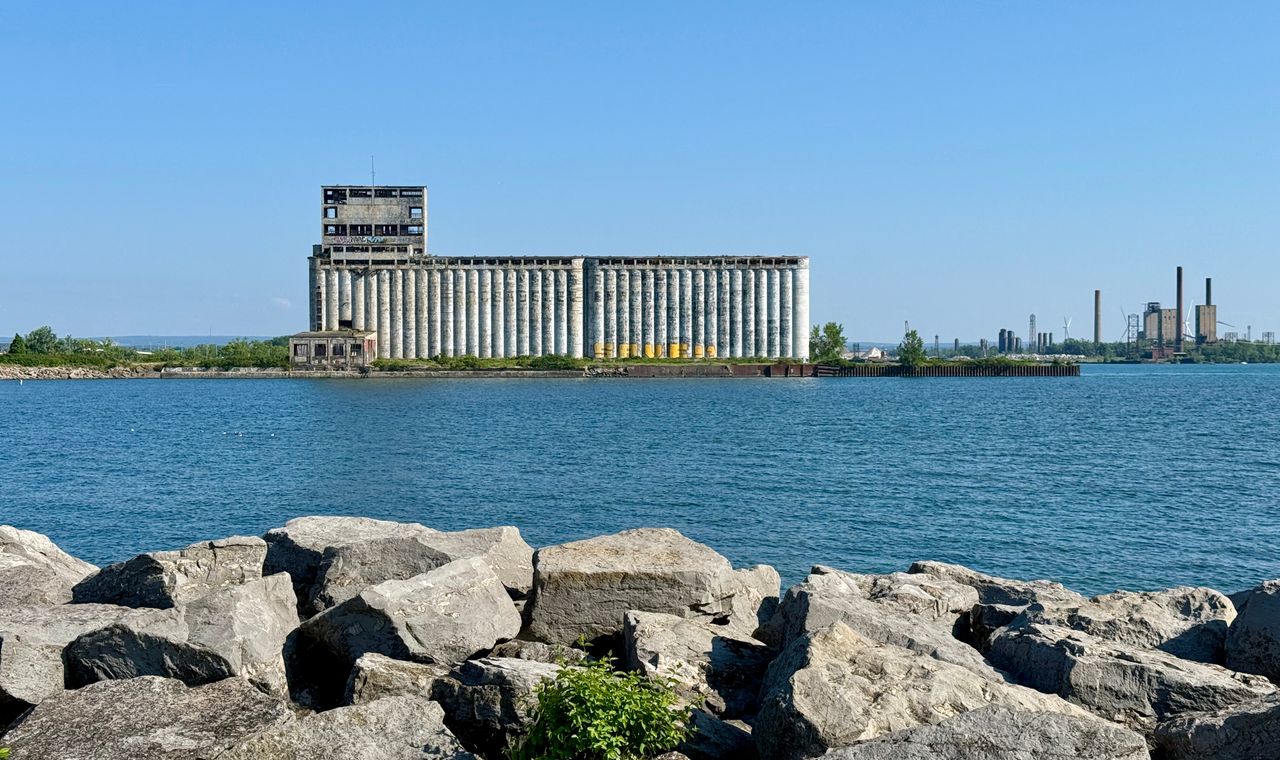
A disused concrete grain elevator on the Buffalo waterfront seen across the water, the adaptive-reuse stock behind Western New York job-cost coding
Local Context

Why the Books Fall Behind in the Buffalo Market

Buffalo metro
Where your jobs run
Accounting built around the local construction market.
Construction only
Not generic bookkeeping
Job costing, WIP, and retainage handled the way contractors need.
Remote-first
Across New York
Full support without an in-house hire, anywhere you build.

The Western New York building year is compressed into roughly eight months, and that single fact shapes a Buffalo contractor's bookkeeping more than anything else. Lake-effect winters push most outdoor work between the spring thaw and the first hard freeze, so the invoices, the payroll, the draws and the compliance reporting all arrive at once. The office is busiest exactly when there is least time to code anything, and by the time the season winds down the ledger is a season behind.

Union density is the second reason. Buffalo remains a strongly organized construction market, and a contractor signatory to two or three locals is filing separate monthly reports to a pension fund, a health and welfare fund, an annuity, an apprenticeship and training fund and usually an industry fund on top. Each one has its own hourly rate, its own form or web portal, its own deadline and its own periodic payroll audit. That is pure data entry, it is unavoidable, and it consumes the hours that were supposed to go to reconciling the bank.

Then there is what Buffalo actually builds. A city with this much century-old commercial and industrial fabric does a lot of rehabilitation and adaptive reuse, from downtown office conversions to work in the Larkin District and around the grain elevators on the waterfront, alongside steady institutional work on the Buffalo Niagara Medical Campus. Rehab work generates unforeseen conditions, abatement invoices and change orders, and where historic tax credits are in play the ledger has to separate qualified rehabilitation expenditures from everything else at the moment of coding. New York also makes the contractor collect a capital improvement certificate to get the sales tax treatment right, which is a document-collection habit rather than a year-end calculation.

None of that is difficult work. It is relentless work, and it is why Buffalo contractors end up months behind holding a QuickBooks file nobody trusts. We take the recurring load off the desk, get the file current, and keep a fixed monthly close so January is a filing month rather than a rescue operation. If you want to see what that looks like on a real engagement, read our construction accounting case studies.

The Difference

Generic Local Bookkeeper vs FinTruction

A general bookkeeper can record transactions. Construction accounting is a different job.

What you needGeneric local bookkeeperFinTruction
Job-level costingLumps all jobs into one P&LCost codes and margin per project
WIP & revenue recognitionCash-basis, no WIP scheduleMonthly WIP with over/underbilling
Retainage trackingBuried in AR/AP, often missedTracked receivable & payable by contract
Bonding & lender packagesNot equipped to produce themBonding-ready statements and backlog
Construction softwareQuickBooks set up like a retail shopQuickBooks + integrations tuned for contractors
Who We Serve

Buffalo Trades We Keep Books For

We handle contractor bookkeeping across Erie and Niagara counties, from restoration crews working century-old brick downtown to mechanical trades on the Medical Campus and site contractors in the southtowns.

General Contractors
Concrete & Foundations
Masonry & Restoration
Historic Rehab & Adaptive Reuse
Steel & Structural
Mechanical & HVAC
Electrical Contractors
Plumbing Contractors
Roofing Companies
Site Work & Excavation
Abatement & Environmental
Glazing & Curtain Wall
Interior Finish & Drywall
Insulation & Weatherization
Multifamily & Residential Builders

Behind on Your Books in Buffalo?

Get Your Free Audit
Compliance

New York Rules That Change How Your Transactions Get Coded

Capital Improvement vs Repair and Form ST-124: New York treats a capital improvement differently from a repair or maintenance job, and the difference is decided at coding, hundreds of times a month, not at year end. On a capital improvement the contractor generally pays sales tax on the materials it purchases and does not charge tax on the customer invoice, provided the customer supplies a properly completed Form ST-124, Certificate of Capital Improvement. Repair, maintenance and installation charges are generally taxable in full. Form ST-120.1 covers contractor exempt purchases where they apply. We tag each job with its treatment and hold the certificate against the job file, so the purchasing side is coded correctly from the first delivery ticket.

Prevailing Wage and Certified Payroll under Labor Law Article 8: Public works in Erie County and the City of Buffalo require payment of the prevailing wage and supplement rate published by the New York State Department of Labor for each trade and county, and the submission of certified payroll records to the contracting agency each payroll period. Labor Law section 224-a can extend prevailing wage to certain substantially publicly funded private projects. The recurring work this creates is weekly payroll processing: hours captured by worker, classification and job, supplements documented, and the certified payroll kept equal to the labor sitting in job cost. We produce both out of the same payroll run.

Union Trust Fund Remittance and Fund Payroll Audits: Signatory contractors in Buffalo remit fringe benefit contributions monthly to several separate trust funds, typically pension, health and welfare, annuity, apprenticeship and training, and an industry fund, each on its own form and schedule. Trust funds periodically audit a contractor's payroll records, and the audit reconciles reported hours to your actual payroll registers and job records. We prepare each remittance from payroll data rather than by hand, reconcile contributions to hours, and cost the fringes to the job so labor burden in your job report reflects what the work truly cost.

Lien Law Article 3-A Trust Funds Are a Recordkeeping Duty: New York Lien Law Article 3-A treats construction payments a Buffalo contractor receives as trust assets to be applied to project costs, and section 75 of the Lien Law requires the trustee to keep books and records of those trust funds. That is a bookkeeping obligation on its face. We maintain receipts and disbursements at the project level so the trust record can be produced from the accounting system on request rather than assembled after a dispute has already started. This is recordkeeping support, not legal advice.

Worker Classification and Subcontractor Records: The New York Construction Industry Fair Play Act, in Labor Law Article 25-B, presumes a person performing construction services is an employee unless a defined independent contractor or separate business entity test is met, which makes 1099 versus W-2 a genuine exposure here rather than a preference. Labor Law section 198-e can also leave a general contractor liable for wages an unpaid subcontractor owed. Both are managed through the books: W-9 and certificate of insurance collected before the first payment, payroll records obtained where the contract requires them, every subcontractor payment tracked by vendor and job, and 1099-NEC filing prepared from records kept all year.

Historic Rehabilitation Cost Segregation on Adaptive Reuse: Buffalo does an unusual volume of historic rehabilitation, and where federal or New York State historic rehabilitation tax credits are being claimed through the State Historic Preservation Office, the cost certification is assembled directly from the contractor's ledger. Qualified rehabilitation expenditures must be distinguishable from acquisition, enlargement, site work, landscaping and furnishings. If those costs were coded into one construction expense account, someone rebuilds the entire job from invoices later. We set the cost code structure so the segregation is a by-product of ordinary coding.

Licensing, Permits, Insurance and MWBE Tagging: New York has no single statewide general contractor license, so registration and permitting run through the City of Buffalo and each Erie County town, and the fees, inspection charges, bonds and insurance premiums are real recurring costs. Coded into a vague administrative account they quietly understate your burden rate and every bid built on it. We code project-specific permits and inspections to the job and the rest to overhead deliberately, and where a publicly funded project carries Article 15-A minority and women-owned business participation goals, we tag subcontractor payments by certification status so the compliance report matches the ledger.


Why FinTruction

Why Buffalo Contractors Choose FinTruction for Bookkeeping

A fair question if you already have a bookkeeper, a payroll service, or a nephew who is good with spreadsheets. Here is the straight answer.

  • Construction is the only industry we serve, so fringe remittances, certified payroll and retainage entries are routine here rather than research
  • We take catch-up work, which most bookkeepers quietly decline
  • Sahil Ahmad, CPA reviews the close, so a qualified person has looked at your file before you do
  • We work inside the systems you already run: QuickBooks, Buildertrend, Procore, ServiceTitan and Knowify
  • A flat monthly fee, so a question in the middle of a job does not start a clock
  • A free Audit first, so you find out what is actually wrong before you commit to anything
Systems

The Systems Your Books Run On

Most Buffalo contractors do not need another subscription. They need the software they already pay for configured for construction and wired to the ledger, so entering a cost once is enough.

QuickBooks Rebuilt for a Buffalo Contractor

Almost every file we take over was set up for a business that sells things off a shelf. For a contractor that means jobs entered as customers, no cost codes, retainage hiding inside receivables, and payroll that cannot produce a certified payroll report or a fringe remittance without a full week of rework.

  • Chart of accounts and items rebuilt around job costing
  • Cost code structure matched to your trade and contract mix
  • Progress invoicing and AIA style billing templates configured
  • Retainage receivable and payable split out at contract level
  • Payroll connected so wages and fringes land on the job
  • Bank feed rules written so auto-coding lands on the right job

Is your QuickBooks file telling you anything useful?

Field Software Wired Into the Ledger

If your project managers already log commitments, purchase orders and change orders in a construction platform, the office should not be retyping any of it into QuickBooks. Double entry is where coding errors come from, and it is the first thing we remove.

Cost entered once in the field, coded once in the books.

What Lands in Your Inbox Every Month

Once the file is current and the systems talk to each other, the close stops being an event. This is the package a Buffalo contractor gets on the same date each month:

  • Every bank, card and loan account reconciled
  • Profit and loss company-wide and by job, with cost code detail
  • Balance sheet showing retainage receivable and payable correctly
  • AR and AP aging with stalled draws flagged
  • Fringe remittance and certified payroll status by fund and job
  • Subcontractor document status: W-9, insurance, 1099 position

Not sure where the file stands right now? The free construction books Audit tells you in writing.

Answers

Buffalo Construction Bookkeeping Questions

We are months behind. Can you catch up our Buffalo construction books?

Catch-up is the most common way Buffalo contractors start with us. We work forward from the last month that actually reconciles, rebuild the bank and credit card history, re-code transactions to the correct job and cost code, sort out subcontractor and supplier payments that were posted to a single lump expense account, and correct retainage that was recorded as ordinary receivables. Most contractors who are three to nine months behind are current inside two to four weeks, and we do it without pulling anyone off the field. From there you get a fixed monthly close date so it never happens again.

How do you handle union fringe benefit remittances for Buffalo contractors?

Union fringe remittance is a monthly data-entry job before it is anything else. Buffalo is a heavily organized market, and a contractor signatory to two or three locals is reporting separately to a pension fund, a health and welfare fund, an annuity, an apprenticeship and training fund and often an industry or labor management fund, each with its own hours-based rate, its own form or portal, and its own due date. We prepare each remittance from the same payroll run that produced the paychecks, reconcile the total remitted back to hours paid, and cost the fringes to the job rather than parking them in a general payroll account. That keeps a fund payroll audit routine.

Do I need certified payroll for a New York public works job, and who keeps the records?

Yes. New York Labor Law Article 8 requires contractors and subcontractors on public works to pay the prevailing wage and supplement rate set by the New York State Department of Labor for the trade and county, and to submit certified payroll records to the contracting agency for each payroll period. Public funding of a large private project can pull it in as well under Labor Law section 224-a. The bookkeeping burden is weekly, not annual: hours have to be captured by worker, classification and job, the supplement portion has to be documented, and the payroll you certify has to equal the labor sitting in job cost. We produce both from one payroll process so they cannot disagree.

How is sales tax handled on construction contracts in New York, and what is form ST-124?

New York splits construction work into capital improvements on one side and repair, maintenance and installation on the other, and the split changes what you charge. On a capital improvement the contractor generally pays sales tax on the materials it buys and does not charge tax on the customer invoice, provided the customer gives you a properly completed Form ST-124, Certificate of Capital Improvement. On repair and maintenance work the whole charge is generally taxable. Practically this is a document-collection problem: the certificate has to be collected and filed at the time of the job, not found later. We track which jobs are capital improvement, which certificate is on file, and code purchases accordingly, using Form ST-120.1 where a contractor exempt purchase applies.

Can you clean up a QuickBooks file that has no real job costing?

Yes, and it is usually the first thing we do. The files we inherit from Western New York contractors normally have jobs entered as plain customers, no cost codes, materials and subcontractor costs sitting in one or two catch-all expense accounts, retainage buried inside accounts receivable, and undeposited funds that have been open for a year. We rebuild the chart of accounts for a contractor, add a cost code structure that matches the work you actually take, split retainage receivable and payable out on their own, clear the duplicates, and re-reconcile. After that the job profitability report means something.

How do you code costs on a Buffalo historic rehabilitation or adaptive-reuse project?

Carefully, and from the first invoice. Buffalo has an unusually deep stock of older commercial and industrial buildings, and a lot of the work here is rehabilitation rather than new build. Where a project is pursuing federal or New York State historic rehabilitation tax credits through the State Historic Preservation Office, the cost certification is assembled straight out of the ledger, so qualified rehabilitation expenditures have to be separated from acquisition, site work, enlargement, landscaping and furnishings at the moment each bill is coded. Reconstructing that split a year later from a lump-sum expense account is painful and expensive. We set the cost codes up so the split happens automatically.

Is a crew member a 1099 subcontractor or a W-2 employee under New York rules?

New York applies a stricter test to construction than to most industries. Under the Construction Industry Fair Play Act, in Labor Law Article 25-B, a person performing construction services is presumed to be an employee unless a specific independent contractor or separate business entity test is met, and the penalties for getting it wrong are real. Separately, New York Labor Law section 198-e makes a general contractor liable for wages a subcontractor fails to pay, which is why GCs here now demand payroll records from their subs. Both of those are bookkeeping controls. We collect W-9s and certificates of insurance before the first payment, track every subcontractor payment by vendor and job, and flag anyone paid at or above the IRS reporting threshold for 1099-NEC filing.

What happens to our bookkeeping during the Buffalo winter shutdown?

The Western New York building year is compressed, and that shapes the whole bookkeeping rhythm. Most outdoor work is crammed between the spring thaw and the first hard freeze, so the transaction volume, the payroll, the draws and the fringe reporting all pile into the same eight months, which is exactly when nobody in the office has time to code any of it. Then January arrives with a catch-up scramble landing on top of 1099 and W-2 season. We flatten that curve by closing every month on schedule through the busy season, and we use the slower months for cost code cleanup and vendor file work rather than emergency catch-up.

Which Western New York areas do you serve?

We work with contractors across Erie and Niagara counties and the wider Western New York region, including the City of Buffalo, Amherst, Cheektowaga, Tonawanda, West Seneca, Hamburg, Orchard Park, Clarence, Lancaster, Niagara Falls and Lockport. Our bookkeeping is fully remote, which means you get a construction-only bookkeeping team without paying toward an office you will never visit. Work in Rochester or Syracuse as well and we handle those jobs in the same file rather than treating them as a separate engagement.

What is the difference between construction bookkeeping and construction accounting in Buffalo?

Bookkeeping is the daily and monthly ledger work: coding every transaction to a job and cost code, reconciling banks and cards, running AP and subcontractor compliance, entering draws and retainage, processing payroll and fringes, and closing the month. Accounting sits on top of clean books and adds the WIP schedule, percentage of completion, over and underbilling analysis, bonding support and tax planning. Most Buffalo contractors who are behind need bookkeeping first, because a WIP schedule built on unreconciled data is just a confident-looking guess. When the ledger is current, see our page on construction accounting in Buffalo for what comes next.

Nearby

Cities We Serve in New York

FinTruction keeps the books for contractors across New York State. Pick your city below for construction bookkeeping, job-cost coding and monthly close support in your market.

Also available

Books already current and you need the next level up?

This page is about the day-to-day ledger: catch-up, coding, reconciliations, payroll entry and the monthly close. If what you actually need is a WIP schedule, over and underbilling analysis, bonding support or tax planning, that lives on the accounting page.

Construction Accounting in Buffalo

Not Seeing Your City?

We serve contractors across all of New York State

Find Out How Far Behind Your Buffalo Books Really Are

Send us access to your current QuickBooks file and your last fringe remittance. We will tell you where the coding is wrong, how many months of catch-up it needs, and what it would take to close on time every month. The Audit is free and there is no obligation.

Get Expert Construction Accounting Support in Buffalo

Trusted by 25+ Construction Companies
Response Within 24 Hours
Free Consultation, No Obligation

Request a Free Consultation

Looking for professional construction accounting in Buffalo? Fill out the short form below and our contractor bookkeeping team will contact you within 24 hours.