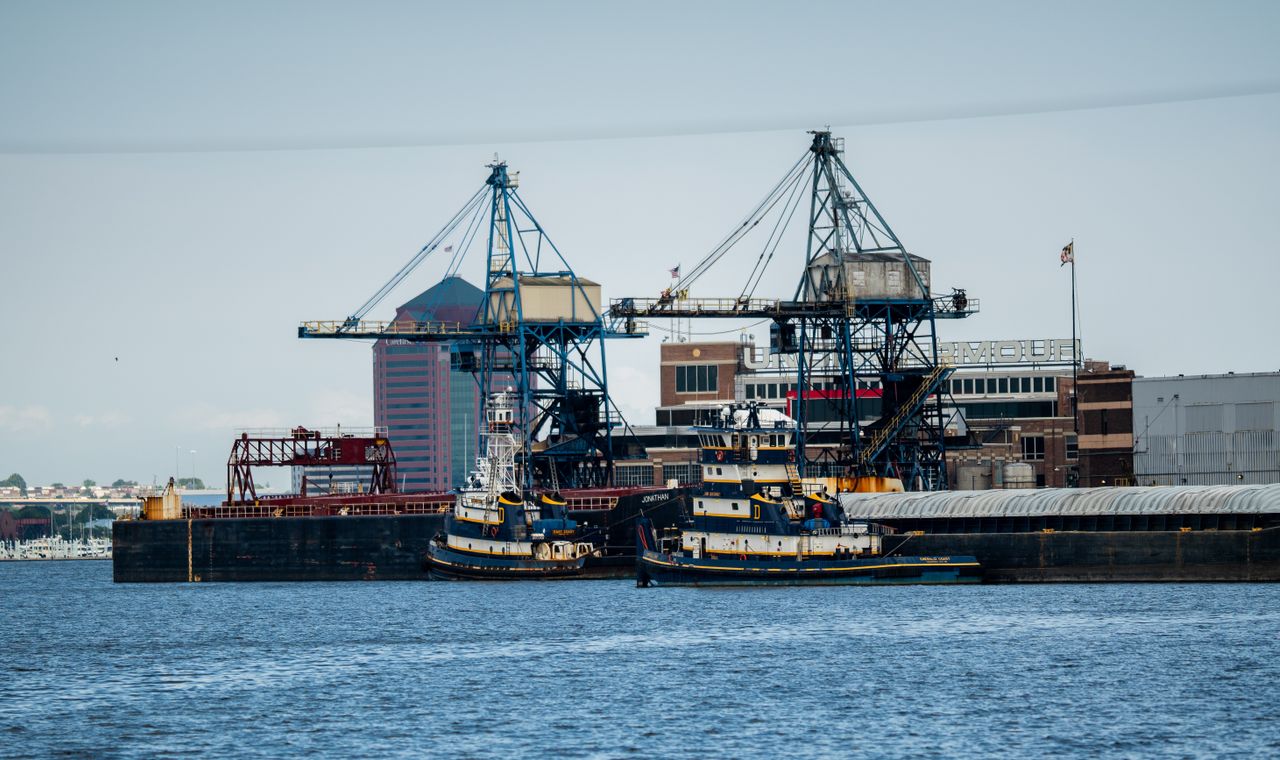
Baltimore contractors carry an unusually mixed portfolio for a city this size, and the mix is what makes the entry work hard. A single company can be repointing brick on a nineteenth century rowhouse in Federal Hill, running a mechanical crew inside a Johns Hopkins research building, and feeding a marine subcontract at the port in the same week. Those three jobs bill differently, buy materials differently and sit under different wage rules, so the transactions arriving in one bank feed on Friday belong to three separate coding conventions.
Payroll is where that mix hits hardest. Maryland collects a county income tax on the state return, set by where the employee lives, and there are 24 of those jurisdictions between the 23 counties and Baltimore City. A Baltimore crew is routinely drawn from Dundalk, Essex, Towson, Glen Burnie and Columbia, which is several withholding codes on one register before anybody has crossed a state line. Then they do cross one, because the District, Virginia, Pennsylvania and Delaware are all inside a comfortable drive, and a job in Washington or a supplier run to Delaware each raise a question the payroll clerk did not know was being asked.
Federal and federally assisted work adds a weekly deadline on top of a monthly rhythm. Baltimore sits inside the federal orbit of the corridor toward Washington, so Davis-Bacon coverage is common rather than exotic, and Davis-Bacon certified payroll is due every week for every covered worker, not at the end of the job. That is a record keeping obligation with a seven day clock, and it is the first thing that falls over when the office is one person who is also answering the phone.
Seasonality then compresses everything. Mid-Atlantic winters put a real freeze window on concrete and sitework roughly from December into March, so cash tightens exactly when the prior year needs closing and the CPA is asking for a file. That is the season most catch-up calls come from, and it is the reason we quote catch-up separately from the ongoing monthly work rather than letting a backlog set your permanent price.
None of this is unique to Baltimore City, which is why the statewide picture is worth reading if you bid outside the metro: our Maryland construction accounting page covers the two prevailing wage regimes and the border questions region by region. What is specific to Baltimore is the density of it. The same company is billing a port subcontract, a Hopkins fitout and a rowhouse gut in one month, and once those books are current the natural next step is job costing and WIP reporting for Baltimore contractors built on top of them.