Construction Accounting

Construction Accounting in Cape Coral, FL

Job costing, draws and WIP when the job is thirty lots, not one site

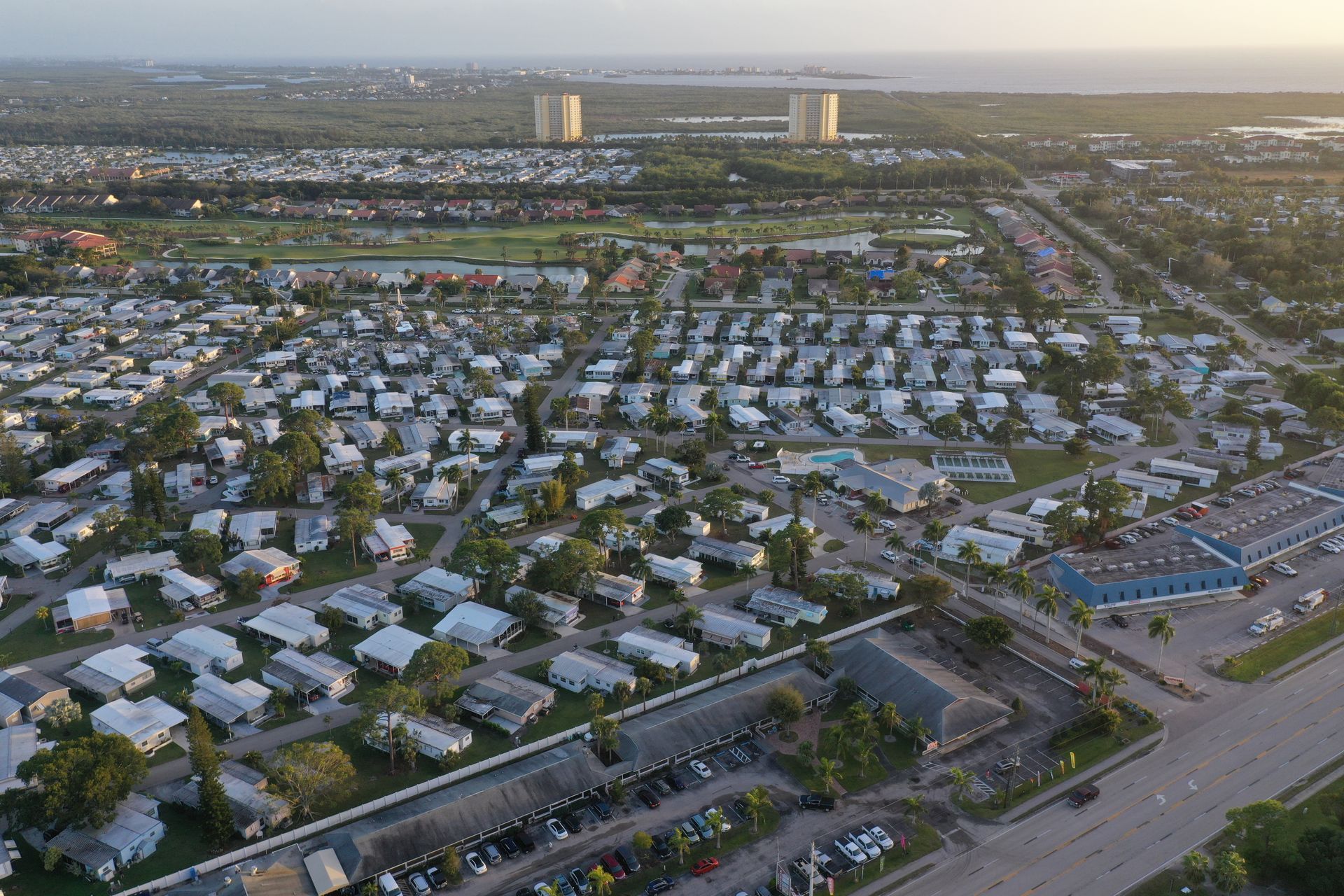
Cape Coral was platted in the 1950s as roughly 130,000 quarter acre lots cut by more than 400 miles of canals, and that plat still decides how you build here. Not one subdivision, but twenty or thirty houses scattered over a hundred square miles, each with its own permit, its own notice of commencement, its own draw and its own lien release packet. Most builders here can tell you the bank balance. Very few can tell you which of those houses is earning and which one is quietly being carried by a deposit taken on another. In Florida that second habit is a felony, not a cash flow technique.

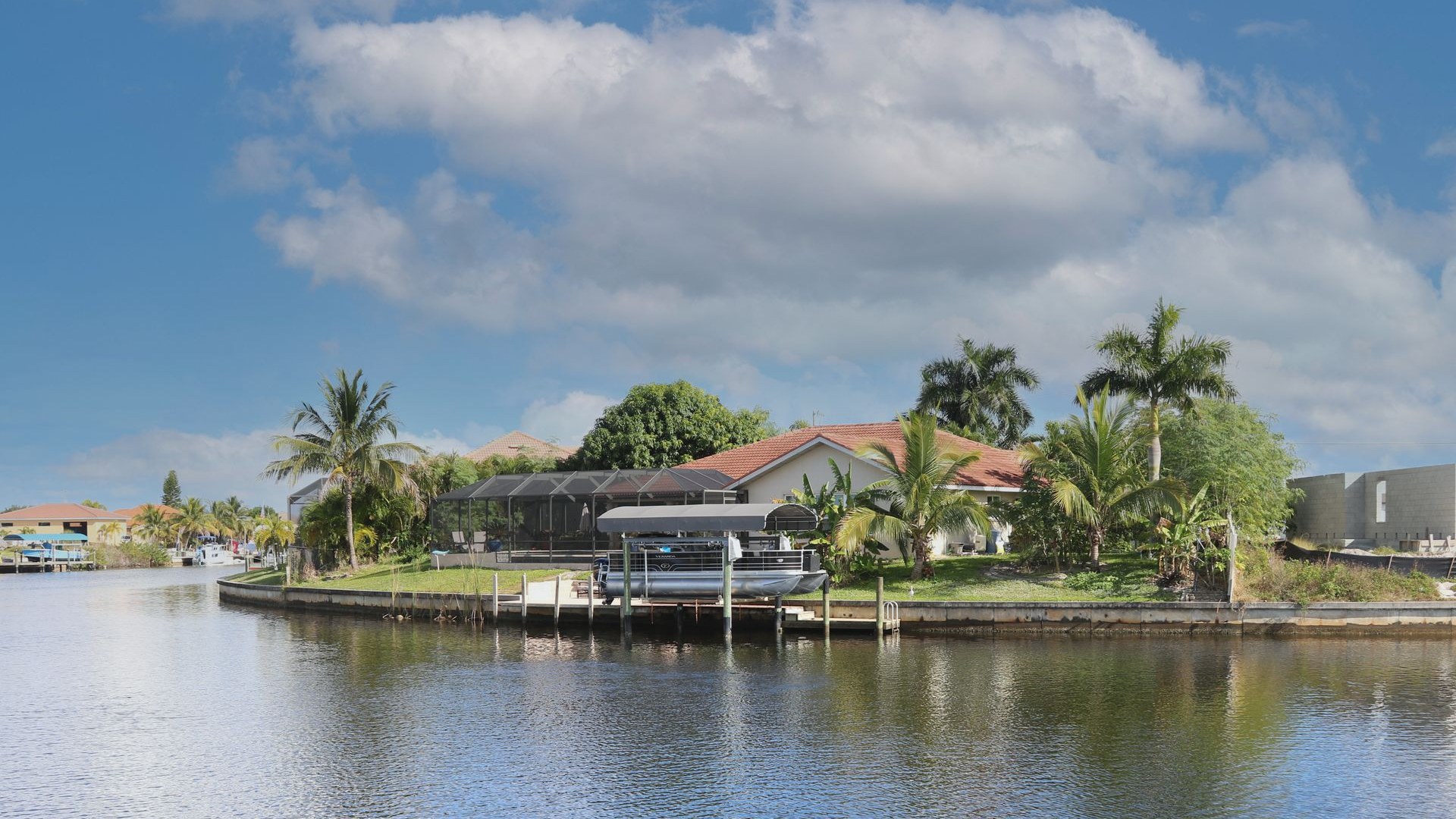
A tile-roofed Cape Coral house on a corner lot of the finger canals, screened lanai and pontoon boat on a lift at the seawall, with a concrete block house going up next door On the ground Canal-front lot, Cape Coral, Lee County, Florida
Builds the jobs Cape Coral
Runs the books FinTruction
Why It Matters

Why Cape Coral Builders Need Construction-Specific Accounting

A builder working a pre-platted grid is running dozens of small independent projects out of one bank account. That is a structural accounting problem, and Florida attaches criminal exposure to getting it wrong.

  • Every lot carried as its own job, with its own margin
  • Deposits and draws applied to the lot that earned them
  • Notice of commencement dates and expirations held per lot
  • Partial releases tracked by lot and by vendor before each draw
  • Lot basis carrying assessments, impact charges and closing costs
  • Site utilities, well and septic separated from the house build
  • Supervision, fuel and windshield time spread over live lots
  • Monthly WIP with over and underbilling by lot
The Cape Coral Bridge crossing the Caloosahatchee River under an overcast sky, seen from the shoreline with low waterfront rooflines on the far bank
Proof

What Construction Owners Say

Rated 5.0 on Google

Trusted by 25+ construction businesses nationwide

Procore logo Listed on theProcore Network

They didn’t just record transactions and call it a day. They built a custom chart of accounts around how a remodeling company actually runs, did a full catch-up on years of bookkeeping inside QuickBooks Online, and now stay on top of my monthly bookkeeping and payroll. Every step, they broke it down in simple terms instead of burying me in accountant talk.

Oniel Campbell, Founder of Moonz Contracting
Oniel Campbell
Moonz Contracting Founder

FinTruction rebuilt the whole thing from the ground up, with real job costing, work in progress, and retainage. They didn’t just hand me reports and disappear; they walked me through my numbers until I understood them.

Carl Moore, Owner of Hearth & Haus
Carl Moore
Hearth & Haus Owner
Dalton Mayberry, Owner of ProperCoat Painting
Sahil and his team handle the bookkeeping and job costing for my painting business. They cleaned up my books and set up integrations that give me accurate, timely job costing with solid weekly data. Reliable, detailed, and genuinely invested in getting the numbers right.
Dalton Mayberry
ProperCoat Painting
Owner

FinTruction is the only bookkeeping team we’ve found that truly understands construction accounting and WIP reporting. They aligned our income and costs across 21 jobs and gave us full, monthly transparency. Fast, accurate, and an indispensable partner.

John Wesley Sebastian, President of B&B Concrete
John Wesley Sebastian
B&B Concrete President

When I came to FinTruction I had no financial structure. No job costing, no WIP tracking, books behind. They did a full cleanup and rebuilt job costing and WIP tracking in QuickBooks. Now I know what’s billed, what’s owed, and where every job stands.

Clay Pearson, Owner of C. Pearson Contracting Corp
Clay Pearson
C. Pearson Contracting Corp Owner
Client testimonial

Hear it straight from a client we work with

A couple of minutes from a contractor we support, sharing what working with FinTruction has been like and what changed once their numbers finally made sense.

  • An owner sharing their honest experience
  • From guessing to numbers they actually trust
  • Why they’d recommend us to other contractors
Read more reviews
FinTruction client video testimonial
Local Context

The Cape Coral Construction Market, and What It Does to Your Books

Cape Coral metro
Where your jobs run
Accounting built around the local construction market.
Construction only
Not generic bookkeeping
Job costing, WIP, and retainage handled the way contractors need.
Remote-first
Across Florida
Full support without an in-house hire, anywhere you build.

Cape Coral is a product of the Florida land sales era. In the late 1950s and 1960s roughly a hundred square miles were dredged and subdivided into around 130,000 quarter acre parcels, laced with more than 400 miles of fresh and salt water canals, and sold off to buyers all over the country. The city was drawn before it was built, and much of it was never built at all. Lee County still holds hundreds of thousands of platted lots, a large share of them vacant, and the bulk of those sit here and in Lehigh Acres.

That history produces a construction market unlike almost anywhere else in Florida. There is no dominant master developer setting the pace, and comparatively little of the phased subdivision work that shapes builders elsewhere. Instead you get scattered-site homebuilding: one house here, three streets over another, a fourth on the far side of Del Prado. Every one of them is a separate owner, a separate permit, a separate notice of commencement, a separate draw schedule and a separate closing.

The second thing the plat did was outrun the utilities. Large parts of the Cape were sold long before water and sewer reached them, so the city has been extending service outward in phases for decades through the Utilities Extension Project, funded by special assessments on the parcels that receive it. Until a lot is served, it builds with a well and an onsite septic system. After it is served, it carries connection work and an assessment history instead. Two identical house plans can therefore cost materially different amounts depending on which side of a project boundary the lot sits on.

Put those together and you get the accounting failure we see most often here. A builder with twenty five or thirty concurrent lots, no site office anywhere, a single operating account, and a chart of accounts that treats the whole company as one job. The company looks fine because deposits keep landing. Whether any individual house earned what it was supposed to earn is genuinely unknown, and in Florida the practice that fills the gap has a statute and a felony grade attached to it.

What We Do

Our Construction Accounting Services in Cape Coral

Per-Lot Job Costing for Scattered-Site Builders

The single change that fixes most Cape Coral builders is treating each address as a job rather than each customer as a job. Once every lot carries its own budget, its own committed cost and its own margin, the questions you have been guessing at for years become a report you read on the fifth of the month.

  • A job record per address, opened when the lot is bought
  • Budget, commitments and actual cost visible per lot
  • Material runs and fuel allocated instead of dumped in overhead
  • Supervision spread across the lots actually open that month
  • Warranty and callback cost charged back to the lot that caused it

QuickBooks Integrations for Your Construction Software

Every construction platform claims to have a "QuickBooks integration." Most break the moment your books need to be accurate. Sales tax mismaps, retainage disappears, change orders create duplicates, and job costing reports stop matching project reality. We fix the integration so your software, your books, and your job‑level numbers all tell the same story.

Also work with Foundation, Sage 100, Bill.com, ADP, Gusto, Ramp, and more. See all platforms we integrate →

Draw Packages and Lien Release Tracking

On a residential construction loan the draw is an evidence exercise, and thirty lots means thirty rolling evidence exercises. The delay is rarely the lender. It is the hour spent hunting for a release from a plumbing sub who was paid five weeks ago, on a lot nobody has looked at since.

  • Draw schedule and inspection stage tracked by lot
  • Partial releases collected and filed against lot and vendor
  • Statutory release forms used rather than improvised ones
  • Notice of commencement recording and expiry dates held per lot
  • Draw request supported straight out of the job cost detail

Lot Inventory, Basis and Assessment Tracking

In a city with tens of thousands of vacant platted lots, the lots you hold are inventory, and inventory that is mis-costed lies to you at closing. Purchase price is only the start: closing costs, clearing, fill, impact and capital facility charges and any utilities extension assessment all belong on the parcel that carries them.

  • Each held lot carried at its true accumulated basis
  • Special assessments and capital charges tracked to the parcel
  • Carrying cost by lot, so slow inventory is visible
  • Land, site work and vertical build kept separable
  • Gross margin reported after the real lot cost, not the sticker

WIP, Revenue Recognition and Tax Method

Homebuilders sit in an unusual place. Book reporting still wants a monthly work in progress schedule so you can see over and underbilling by lot, while for tax, home construction contracts are excepted from the percentage of completion requirement under section 460, so a different permissible method may be available to you.

  • Monthly WIP with estimate to complete review by lot
  • Over and underbilling shown per lot and in total
  • Home construction contract tax method reviewed against your facts
  • Backlog and lot pipeline reporting for your lender
  • Year-end position planned before December, not in April

Controller and CFO Support

The hardest question a Cape Coral builder faces is how many starts the company can carry at once without the cash on one lot funding another. Our controller services and CFO services put a number on that, and hold you to it when a good lot comes up at the wrong moment.

  • Monthly financial review with a real conversation
  • A defensible limit on concurrent starts and held lots
  • Cash flow forecasting across staggered draws
  • Speculative versus contracted build mix analysis
  • Lender and line of credit reporting packages
  • Equipment purchase versus rent versus lease analysis
Who We Serve

Cape Coral Contractors and Trades We Work With

We support the builders and trades who work the Cape lot by lot, from custom and spec homebuilders to the site, water and finish trades that follow them across the grid.

Custom Home Builders
Spec & Production Builders
General Contractors
Seawall & Dock Contractors
Concrete & Foundation
Framing & Block
Roofing Contractors
Plumbing Contractors
Electrical Contractors
Mechanical & HVAC
Well & Septic Contractors
Site Work & Excavation
Pool & Spa Contractors
Irrigation & Landscaping
Trim & Interior Finish

Building in Cape Coral?

Get Your Free Audit
The Difference

Generic Local Bookkeeper vs FinTruction

A general bookkeeper can record transactions. Construction accounting is a different job.

What you needGeneric local bookkeeperFinTruction
Job-level costingLumps all jobs into one P&LCost codes and margin per project
WIP & revenue recognitionCash-basis, no WIP scheduleMonthly WIP with over/underbilling
Retainage trackingBuried in AR/AP, often missedTracked receivable & payable by contract
Bonding & lender packagesNot equipped to produce themBonding-ready statements and backlog
Construction softwareQuickBooks set up like a retail shopQuickBooks + integrations tuned for contractors
Compliance

Florida and Cape Coral Compliance That Shows Up in Your Accounting

1 Misapplication of Construction Funds, Section 713.345

Florida law requires that a person who receives payment for improving real property apply that money to the amounts then due and owing for the labor, services and materials furnished for that improvement. Doing otherwise knowingly and intentionally is misapplication of construction funds: a third degree felony below 1,000 dollars, a second degree felony from 1,000 dollars to under 100,000 dollars, and a first degree felony at 100,000 dollars or above. The statute also creates a permissive inference where a valid lien has been recorded, the person had received sufficient funds, and failed for at least 45 days to remit them. Job-level records are what keep this a bookkeeping matter rather than a legal one.

2 The Lien Law Notice in a Residential Contract, Section 713.015

A direct contract between an owner and a contractor for more than 2,500 dollars, on improvements to single or multiple family dwellings up to and including four units, has to carry the construction lien law notice in at least 12 point capitalized boldfaced type on the front page or on a separate page, signed and dated by the owner. It is a documentation habit rather than a difficult rule, which is exactly why it is missed on volume. We hold the executed contract and its signature date against the lot record.

3 Notice of Commencement, Section 713.13

The notice has to be recorded and posted at the job site before the first inspection, and it is effective for one year from the date of recording unless it states a longer period. Payments an owner makes after it has expired can be treated as improper payments, which is a problem for whoever is funding your job. Across thirty lots at thirty different stages this is a rolling calendar, and it belongs in the job records rather than in someone's memory.

4 Waivers and Releases on Progress Payments, Section 713.20

Florida sets out statutory forms for waiver and release of lien upon progress payment and upon final payment, and a person may not require a lienor to furnish a release in a form different from those. For a builder taking construction loan draws, the release trail is the difference between a draw that funds this week and one that funds next month. We keep release status by lot and by vendor so the package assembles itself.

5 Cape Coral Utilities Extension Project Assessments

The city funds water, sewer and irrigation extensions through special assessments on the benefiting parcels, calculated on an equivalent parcel basis using a 10,000 square foot lot. An owner may prepay or take the assessment amortized over 20, 25 or 30 years on the annual tax bill, and an unpaid balance continues to be assessed against the property regardless of who owns it. For a builder holding lots as inventory that is a cost of the parcel, not a household utility bill, and it belongs in lot basis where it will affect the margin you report.

6 Licensing and Financial Responsibility

Construction contracting in Florida is regulated by the Department of Business and Professional Regulation through the Construction Industry Licensing Board, with financial responsibility, insurance and workers compensation obligations attached to the license holder. Florida has also been consolidating licensing at state level and narrowing the older local certificate of competency route, so confirm current DBPR requirements rather than assuming the card in your wallet still covers the work. Whatever the outcome, licensing, bonding and insurance are overhead costs that have to be recovered in your pricing rather than absorbed quietly.

Why FinTruction

Why Cape Coral Builders Choose FinTruction

A fair question if you already have a bookkeeper or a CPA who files the return. Here is the honest answer.

  • Construction is the only industry we work in, so thirty concurrent lots is a normal file here rather than a hard one
  • Sahil Ahmad, CPA reviews the work, so you are not relying on a data entry pool
  • Every address is its own job, so you can finally see which houses earned and which ones were carried
  • We work inside the tools you already run: QuickBooks, Buildertrend, Procore, ServiceTitan and Knowify
  • A flat monthly fee, so asking a question does not start a clock
  • A free Audit first, so you can see what is wrong before committing to anything
Systems

The Software You Already Run, Set Up Properly

Most Cape Coral builders do not need new software. They need what they already pay for configured so a lot, a draw and a margin are three things the system understands.

QuickBooks Set Up for a Homebuilder

Most QuickBooks files we inherit here were set up by treating the homeowner as the job. That works until the same buyer builds twice, or a spec house sells to someone who was not in the file when the slab went down. Costs land on people instead of addresses, and the lot stops being traceable.

  • Chart of accounts rebuilt for job costing by address
  • Cost codes structured for land, site work and vertical build
  • Held lots carried as inventory with real basis
  • Customer deposits kept separate from earned revenue
  • Draw funding recorded against the lot it funded
  • Payroll connected so labor and burden land on the lot

Is your QuickBooks file working against you?

Field and Project Management Integrations

A builder running scattered lots lives or dies on the schedule, and the schedule usually already exists in a builder platform. The office should be reading it, not retyping it. Selections, change orders and purchase orders should reach the accounting with the address still attached.

One set of numbers that the field and the office both believe.

Reporting You Can Run the Company On

Once the systems are connected, reporting stops being a history lesson. These are the reports Cape Coral builders use to decide what to start, what to hold and what to walk away from:

  • Margin by lot and by house plan, current not year-end
  • Open lots by stage, with cost to complete on each
  • Draw status and outstanding releases by lot
  • Held lot inventory with basis and carrying cost
  • Cash forecast across staggered draws and closings

See how we have done this for other contractors in our construction accounting case studies.

Answers

Cape Coral Construction Accounting Questions

We have thirty houses open at once. Why can we never say which one is making money?

Because a scattered-site builder is not running one business, it is running thirty small ones that share a bank account. Cape Coral was platted as individual lots rather than as phased subdivisions, so your jobs are spread across the city with no shared site office, no shared trailer and no natural place where costs get grouped. If material runs, fuel, supervision and warranty callbacks are coded to the company rather than to a lot, the only number that survives to the end of the month is the bank balance. That number tells you nothing, because a healthy balance can simply be one customer deposit covering another lot.

Is it really illegal in Florida to spend money from one job on another?

It can be. Section 713.345 of the Florida Statutes says that a person who receives payment for improving real property must apply that money to the amounts then due and owing for the labor, services and materials that went into that improvement. Doing otherwise, knowingly and intentionally, is misapplication of construction funds. It is a third degree felony under 1,000 dollars, a second degree felony from 1,000 dollars up to 100,000 dollars, and a first degree felony at 100,000 dollars or more. The statute also creates a permissive inference against you where a valid lien has been recorded, you had received enough money to pay for that work, and you failed for at least 45 days to remit it. We are not attorneys. What we do is make the per-job trail exist so the question never becomes interesting.

Does our contract with the homeowner have to say anything specific?

Yes. Section 713.015 requires that a direct contract between an owner and a contractor greater than 2,500 dollars, for improvements to a dwelling of up to four units, contain the construction lien law notice in at least 12 point capitalized boldfaced type, on the front page or a separate page, signed and dated by the owner. That warns the owner that people who work on the property and are not paid in full can claim against the property even if the owner has already paid you. It is easy to miss on the twelfth spec contract of the quarter. We keep the executed contract, its signature date and the notice page filed against the lot in the job record.

What is a notice of commencement and why does it keep holding up our inspections?

Under section 713.13 a notice of commencement has to be recorded and posted at the job site before the first inspection, and it is effective for one year from recording unless a different period is stated on it. On a single subdivision that is a one-time task. On thirty scattered lots at different stages, it is a rolling calendar, and an expired notice matters because payments made after expiration can be treated as improper payments, which is a problem for the owner who is funding you. We hold the recording date and the stated expiration on each lot record so the ones about to lapse are visible in advance.

How should partial lien releases work on each draw?

Section 713.20 sets out statutory forms for waiver and release of lien on progress payment and on final payment, and a person may not require a lienor to use a form different from those. In practice, on a residential construction loan every draw is an evidence package: the inspection, the invoices behind the request, and a release from each sub and supplier who was paid last time. When that package is assembled by hand from email each month, the draw slips and the delay is yours. We set the job records up so the release status by lot and by vendor is a report rather than a search.

How do we cost a lot that carries a utilities extension assessment?

Carefully, and in the lot cost rather than in overhead. Cape Coral funds its Utilities Extension Project through special assessments levied on the parcels that receive water, sewer and irrigation service, using an equivalent parcel methodology based on a 10,000 square foot lot. An owner can prepay or take it amortized over 20, 25 or 30 years on the annual tax bill, and if it is not prepaid the assessment stays with the property regardless of who owns it. For a spec builder that is not a homeowner utility bill, it is part of what the lot cost you, and it will surface at closing. Buried in overhead it quietly overstates the margin on every lot you own.

Do we have to use percentage of completion on single family homes for tax?

Often not, and this is worth a conversation before year end rather than after it. Section 460 of the Internal Revenue Code generally requires the percentage of completion method for long-term construction contracts, but paragraph (e) excepts home construction contracts, broadly those where at least 80 percent of estimated total contract costs relate to dwelling units in buildings with four or fewer dwelling units and improvements on that site. A builder within that exception may be able to use another permissible method, including completed contract. Eligibility depends on your facts and your existing method, so it is a planning question, not an assumption. Sahil Ahmad, CPA looks at that as part of the Audit.

Some of our lots are on well and septic and some are on city service. Does that change the accounting?

It changes the cost structure of an otherwise identical house, which is exactly what your books should be able to show you. A lot outside a completed utilities extension area carries a well and an onsite septic system in the build, with their own permits, their own subs and their own inspection sequence. A lot inside a served area carries connection work and the assessment history on the parcel instead. Two houses to the same plan on two lots two miles apart can therefore land at genuinely different costs. If your cost codes cannot separate site utilities from the rest of the build, your plan pricing is an average of two different products.

Which parts of Southwest Florida do you work in?

We work with builders and trades across Cape Coral, North Fort Myers, Matlacha, Pine Island, Burnt Store, Lehigh Acres and the wider Lee County market, along with Charlotte and Collier county work in Punta Gorda, Port Charlotte, Estero, Bonita Springs and Naples. Everything we do is remote, so you are paying for construction accounting rather than toward an office you would never walk into.

How do we start, and what does it cost?

Start with the free Audit. Send your current file and a list of your open lots and we will tell you what is wrong, what it is costing you, and whether your file can actually answer which lots are earning. No obligation. After that it is a flat monthly fee based on transaction volume, active jobs and reporting needs, so asking a question does not start a clock. Sahil Ahmad, CPA reviews the work.

Nearby

Cities We Serve in Florida

FinTruction provides construction accounting across Florida. Select your city below for job costing, WIP and contractor bookkeeping support in your market.

Also available

Just need the monthly books kept?

If the job structure is sound but the close keeps slipping, we also run day-to-day construction bookkeeping for Lee County contractors: coding, reconciliations, AP and AR, and job-cost entry.

Construction Bookkeeping in Lee County

Construction Bookkeeping Services in Florida

Not Seeing Your City?

We serve contractors across all of Florida. View all locations →

Find Out What Your Cape Coral Books Are Hiding

Send us your current file and a list of your open lots. We will tell you what is wrong with it, what it is costing you, and whether it can answer which houses actually earned. No charge and no obligation for the Audit.

Get Expert Construction Accounting Support in Cape Coral

Trusted by 25+ Construction Companies
Response Within 24 Hours
Free Consultation, No Obligation

Request a Free Consultation

Looking for professional construction accounting in Cape Coral? Fill out the short form below and our contractor bookkeeping team will contact you within 24 hours.