Construction Bookkeeping

Construction Bookkeeping in Oakland, CA

Payables under a seven-day clock, coded to the job, closed every month

The money lands from the owner on a Thursday, and under California law you have seven days to pass the subcontractors their share. That is when the Oakland office discovers the drywall sub has no current insurance certificate on file, the second-tier hauler is not on the city's franchise list, and nobody has the conditional release for the last draw. So the check waits, the penalty clock runs, and the job cost still says the project is fine. FinTruction runs the accounts payable desk, the coding and the monthly close for Oakland contractors, so the documents are collected before the payment is due, not after.

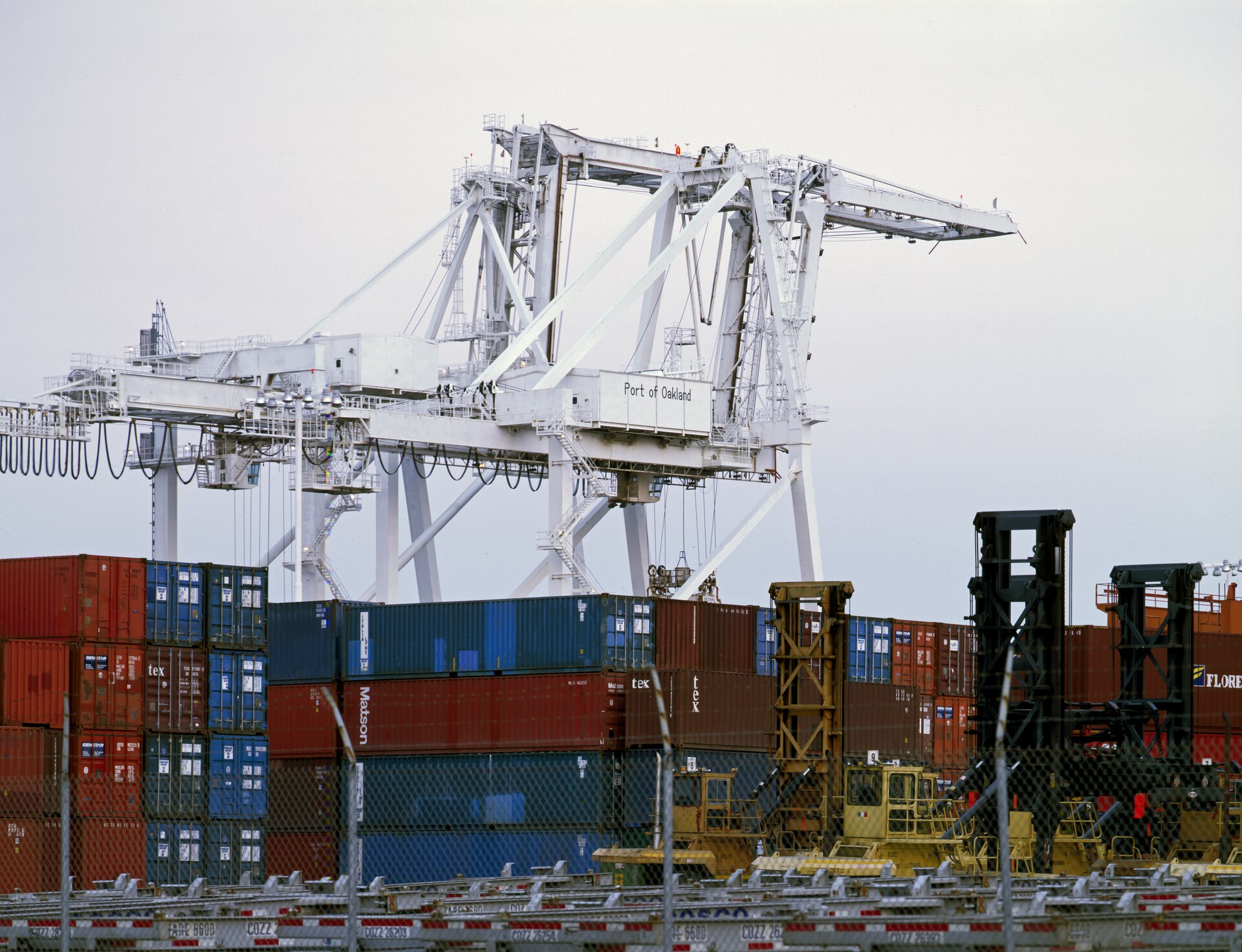
A white gantry crane lettered Port of Oakland standing over stacked shipping containers and yard equipment behind a chain-link fence On the ground Container terminal at the Port of Oakland, California
Builds the jobs Oakland
Runs the books FinTruction
What We Do

Our Construction Bookkeeping Services in Oakland

1 Contractor bookkeeping
2 QuickBooks integrations
3 Job costing
4 WIP reporting
5 Retainage management
6 Controller & CFO services

Accounts Payable and Subcontractor Document Control

This is the part of the month that decides whether a payment can go out at all. We enter subcontractor and supplier bills against the commitment they belong to, hold anything missing a document, and keep a live list of what is held and why, so a seven-day payment window is spent paying rather than searching. Start with the free books Audit if you want to see how many of your current payables would fail that test.

  • Subcontractor invoices matched to the subcontract and approved change orders
  • W-9 and certificate of insurance collected before the first payment
  • Conditional and unconditional releases logged against each payment
  • Public works registration checked for subcontractors before award and payment
  • Held bills reported weekly with the missing item named
  • Retainage payable recorded separately from the amount due now

QuickBooks Integrations for Your Construction Software

Every construction platform claims to have a "QuickBooks integration." Most break the moment your books need to be accurate. Sales tax mismaps, retainage disappears, change orders create duplicates, and job costing reports stop matching project reality. We fix the integration so your software, your books, and your job‑level numbers all tell the same story.

Also work with Foundation, Sage 100, Bill.com, ADP, Gusto, Ramp, and more. See all platforms we integrate →

Job-Cost Coding for Heavily Subcontracted Work

When most of a job is bought rather than self-performed, job costing lives or dies on how the subcontractor and supplier bills are coded. A lump-sum pay application posted to one expense line tells you nothing. We break it down to the cost codes the schedule of values already uses, so job costing in Oakland reflects what each scope actually consumed.

  • Cost codes structured around your schedule of values, not a generic list
  • Pay applications split across codes rather than posted as one line
  • Committed cost entry so open subcontracts and purchase orders stay visible
  • Change order costs kept separate from base contract costs
  • Hauling, disposal and tipping charges coded to the job that generated them
  • Equipment and rental time allocated to the project that used it

Catch-Up Bookkeeping and QuickBooks Cleanup

If the last month that truly reconciles was two quarters ago, nothing else on this page can be built yet. We work forward from that month, recode what was guessed at, and rebuild the file so an Oakland contractor can read it. Vendor records get rebuilt at the same time, because a backlog nearly always means the compliance documents were never collected either.

  • Bank, credit card and line of credit accounts reconciled back to a clean month
  • Chart of accounts rebuilt around jobs, cost codes and phases
  • Miscoded supplier and card charges pushed onto the correct project
  • Undeposited funds, duplicate bills and stale entries cleared out
  • Vendor list deduplicated and rebuilt with documents and tiers recorded
  • Bank feed rules set so the file does not drift back

Receivables, Draws and the Money Coming In

The payment clock on the way out only starts when money arrives, so the receivable side has to be just as tight. We record every progress draw and pay application accurately, book retainage as its own receivable the day the invoice goes out, and keep an aging that separates what is genuinely late from what is contractually held.

  • Progress draw and AIA style pay application entry by job
  • Retainage receivable recorded and aged separately from ordinary invoices
  • First furnishing dates and contract values recorded for notice purposes
  • Change order billing captured with its supporting documentation
  • Deposits matched and applied to the job that earned them
  • AR aging reviewed with you, with follow-up on what has stalled

Payroll Entry and the Monthly Close

Labor is the one cost nobody invoices you for, so it only reaches the job if payroll is entered to land there. We record payroll to job, cost code and craft, load the burden so an hour shows its true cost, and then close the month on a fixed date with every account reconciled. You get the same package at the same time whether or not you chase it.

  • Timesheet entry with job, cost code and work location recorded
  • Labor burden loaded so job cost shows the real cost of an hour
  • Fringe and benefit costs posted to the project rather than to overhead
  • Every bank, card and loan account reconciled before the close
  • Profit and loss company-wide and by job, plus a current job cost report
  • AR and AP aging with retainage broken out, delivered on a fixed date
Proof

What Construction Owners Say

Rated 5.0 on Google

Trusted by 25+ construction businesses nationwide

Procore logo Listed on theProcore Network

They didn’t just record transactions and call it a day. They built a custom chart of accounts around how a remodeling company actually runs, did a full catch-up on years of bookkeeping inside QuickBooks Online, and now stay on top of my monthly bookkeeping and payroll. Every step, they broke it down in simple terms instead of burying me in accountant talk.

Oniel Campbell, Founder of Moonz Contracting
Oniel Campbell
Moonz Contracting Founder

FinTruction rebuilt the whole thing from the ground up, with real job costing, work in progress, and retainage. They didn’t just hand me reports and disappear; they walked me through my numbers until I understood them.

Carl Moore, Owner of Hearth & Haus
Carl Moore
Hearth & Haus Owner
Dalton Mayberry, Owner of ProperCoat Painting
Sahil and his team handle the bookkeeping and job costing for my painting business. They cleaned up my books and set up integrations that give me accurate, timely job costing with solid weekly data. Reliable, detailed, and genuinely invested in getting the numbers right.
Dalton Mayberry
ProperCoat Painting
Owner

FinTruction is the only bookkeeping team we’ve found that truly understands construction accounting and WIP reporting. They aligned our income and costs across 21 jobs and gave us full, monthly transparency. Fast, accurate, and an indispensable partner.

John Wesley Sebastian, President of B&B Concrete
John Wesley Sebastian
B&B Concrete President

When I came to FinTruction I had no financial structure. No job costing, no WIP tracking, books behind. They did a full cleanup and rebuilt job costing and WIP tracking in QuickBooks. Now I know what’s billed, what’s owed, and where every job stands.

Clay Pearson, Owner of C. Pearson Contracting Corp
Clay Pearson
C. Pearson Contracting Corp Owner
Client testimonial

Hear it straight from a client we work with

A couple of minutes from a contractor we support, sharing what working with FinTruction has been like and what changed once their numbers finally made sense.

  • An owner sharing their honest experience
  • From guessing to numbers they actually trust
  • Why they’d recommend us to other contractors
Read more reviews
FinTruction client video testimonial
Local Context

Why the Payables Desk Is Where Oakland Books Break

Oakland metro
Where your jobs run
Accounting built around the local construction market.
Construction only
Not generic bookkeeping
Job costing, WIP, and retainage handled the way contractors need.
Remote-first
Across California
Full support without an in-house hire, anywhere you build.

An Oakland contractor is usually a distributor of other people's money. Terminal and landside work around the port, transit and roadway contracts, county and school projects, multifamily construction and seismic retrofit are all heavily subcontracted, so a large share of every dollar you receive is out again within days to a subcontractor, a supplier, a rental yard or a hauler. The office is not really running an expense ledger. It is running a payment gate.

The trouble is that the gate has conditions attached and a clock attached, and the two work against each other. California gives you seven days from receiving a progress payment to pass a subcontractor its share, with a 2 percent per month penalty for missing it. Meanwhile you should not be releasing money to a sub whose insurance lapsed last month, whose release for the previous draw never came back, or who is not registered to perform public work. Seven days is a comfortable window when the documents are already on file, and an impossible one when they are not.

Then the tiers multiply. On a mid-size East Bay job the subcontractor you hired has its own subs, its own suppliers, and a hauler taking debris off the site who has to hold a franchise agreement with the City of Oakland to be there at all. Every one of those parties can generate a claim, a notice or a compliance problem that lands on you, and none of them is visible if the pay application was posted as one line to one expense account.

This is why so many contractors we meet here are not behind because the work is complicated. They are behind because the payables desk was never designed, so every payment run turns into a search, the coding gets done in a hurry afterwards, and by the third month the job cost report has stopped being worth reading. Building the desk properly is a shorter job than it looks, and everything else gets easier once it exists.

Why It Matters

Why Oakland Contractors Need Construction-Specific Bookkeeping

Most of the money an East Bay contractor handles is not its own. It arrives from an owner or an agency and leaves again to subcontractors, suppliers and haulers within days, and every one of those payments is gated by a document somebody has to have already collected. A general bookkeeper enters bills. Construction bookkeeping decides which bills are allowed to be paid this week, and can prove why.

  • W-9s and insurance certificates collected before the first payment
  • Conditional and unconditional releases tracked payment by payment
  • Subcontractor bills matched to the commitment before they are entered
  • Lower tiers recorded as their own vendors, not hidden inside a pay app
  • Haulers and disposal facilities checked before the invoice is coded
  • Retainage payable held separately instead of buried in payables
  • Every cost posted to a job, cost code and phase in the week it happens
  • A reconciled close delivered on the same date every month
Twin federal office towers with pyramid roofs rising above downtown Oakland streets, low-rise blocks and the bay in the distance
Compliance

Oakland and California Rules That Land on the Bookkeeper

Prompt Payment to Subcontractors: Business and Professions Code section 7108.5 requires a prime contractor or subcontractor to pay a subcontractor its share of each progress payment no later than seven days after receiving that payment, unless agreed otherwise in writing. Violation is a cause for disciplinary action and carries a penalty payable to the subcontractor of 2 percent of the amount due per month for every month payment is not made, with attorney fees and costs to the prevailing party in a collection action. Where there is a good faith dispute the statute allows withholding of no more than 150 percent of the disputed amount. That is a bookkeeping deadline, and it is only survivable if the payables file is already complete when the money arrives.

Statutory Waiver and Release Forms: California prescribes four release forms in the Civil Code: conditional waiver and release on progress payment under section 8132, unconditional on progress payment under 8134, conditional on final payment under 8136, and unconditional on final payment under 8138. Each section provides that the waiver and release is null, void and unenforceable unless it is in substantially the statutory form. A conditional release only takes effect once payment actually clears, while an unconditional release gives up the rights on signature. Knowing which one belongs with which payment, collecting it and filing it against the right job is routine bookkeeping work that quietly protects a lot of money.

Preliminary Notice on the Receivable Side: Civil Code section 8200 requires most claimants who do not contract directly with the owner, including subcontractors, lower tier subs, material suppliers and equipment lessors, to serve a preliminary notice to preserve mechanics lien, stop payment notice and payment bond claim rights, and the notice reaches back only 20 days before it is given. We are not attorneys and we do not serve notices. What we maintain is the record the deadline runs off: first furnishing date, contract and change order amounts, what has been billed, what has been paid and what is being held, by job and by tier.

Public Works Contractor Registration: On California public works, contractors and subcontractors generally must be registered with the Department of Industrial Relations under Labor Code section 1725.5, with registration renewed annually. Labor Code section 1771.1 governs the effect on bidding and award, and a subcontractor's failure to be registered is grounds under Public Contract Code section 4107, with the awarding authority's consent, to substitute a registered subcontractor in its place. Registration status therefore belongs in your vendor record next to the insurance expiry date, checked before award and again before payment, not discovered when a compliance officer asks.

Oakland Construction and Demolition Debris Rules: Oakland requires a recycling plan submitted through the city's online system, 100 percent recycling of materials including asphalt, concrete, rock, sand, gravel, plant debris and clean fill, and a minimum 65 percent recycling rate for other materials. Any service provider transporting C&D debris from an Oakland project must hold a fully executed non-exclusive franchise agreement with the city, and the city assesses fines for missing the recycling rate or using unauthorized haulers or facilities. That turns disposal into a vendor approval question. We check the hauler before the bill is entered and keep the weight tickets attached to the transaction.

Oakland Business Tax Certificate: Oakland requires every person conducting business activity in the city to obtain an annual business tax certificate and pay the business tax, and a business based outside Oakland can still be covered if it does business inside the city, which catches plenty of contractors headquartered elsewhere in the East Bay. Measure T, approved by voters in November 2022, replaced the old business tax chapter with a tiered progressive structure based on gross receipts and business sector, effective January 1, 2023. The bookkeeping answer is to tag revenue with the jurisdiction of the work when the invoice is entered.

Subcontractor Reporting and Worker Classification: For payments made in calendar year 2026 the federal reporting threshold for Forms 1099-NEC and 1099-MISC rose from 600 dollars to 2,000 dollars under the tax law signed in July 2025, indexed for inflation from 2027. The higher threshold does not reduce the record keeping, since you still need accurate vendor totals to know who crosses it, and the income is taxable regardless. Alongside that, California applies a strict test to whether a worker is an employee or an independent contractor, and misclassification is expensive. We collect W-9s before the first payment and track payments by vendor and job all year.

The Difference

Generic Local Bookkeeper vs FinTruction

A general bookkeeper can record transactions. Construction accounting is a different job.

What you needGeneric local bookkeeperFinTruction
Job-level costingLumps all jobs into one P&LCost codes and margin per project
WIP & revenue recognitionCash-basis, no WIP scheduleMonthly WIP with over/underbilling
Retainage trackingBuried in AR/AP, often missedTracked receivable & payable by contract
Bonding & lender packagesNot equipped to produce themBonding-ready statements and backlog
Construction softwareQuickBooks set up like a retail shopQuickBooks + integrations tuned for contractors
Who We Serve

Oakland Contractors and Trades We Keep Books For

We work with contractors across Alameda and Contra Costa counties, from marine and civil crews working the estuary and the terminals to housing builders and specialty subs on jobs where most of the scope is bought from somebody else.

General Contractors
Civil & Heavy Highway
Marine & Terminal Contractors
Demolition Contractors
Excavation & Grading
Concrete Contractors
Steel & Structural
Electrical Contractors
Mechanical & HVAC
Plumbing Contractors
Underground Utilities
Multifamily Builders
Seismic Retrofit Specialists
Interior Finish Contractors
Abatement & Environmental

Holding Checks in Oakland Because the Paperwork Is Missing?

Get Your Free Audit
Why FinTruction

Why Oakland Contractors Choose FinTruction for Bookkeeping

A fair question when you already have a bookkeeper or an office manager who has been doing it for years. Here is the honest answer.

  • Construction is the only industry we work in, so lien releases and tiered subcontractor records are routine rather than research
  • Your payables file is built to survive a seven-day payment clock instead of collapsing under it
  • Catch-up and QuickBooks cleanup are a core service, not something we take on reluctantly
  • Sahil Ahmad, CPA reviews the work, so a CPA has seen the file before your CPA does
  • We work inside the software you already run rather than moving you onto ours
  • A flat monthly fee and a free Audit first, so you can see the state of the books before committing
Systems

The Tools You Already Pay For, Doing the Data Entry

A large part of the bookkeeping burden on an Oakland contractor is retyping something that already exists in the project management system. Connecting the field to the accounting file removes whole categories of entry, and what is left gets done properly and once.

QuickBooks Rebuilt Around Commitments and Cost Codes

A QuickBooks file set up for a business that sells products cannot hold a contractor who buys most of its scope. Subcontracts are not tracked as commitments, pay applications post as single lines, retainage payable hides inside accounts payable, and the vendor list has the same sub entered three different ways.

  • Chart of accounts and item list rebuilt around cost codes
  • Project or sub-customer structure so costs land by job and phase
  • Subcontracts and purchase orders entered as commitments
  • Retainage payable and receivable templates configured
  • Vendor records carrying documents, tiers and expiry dates
  • Bank feed rules that code correctly instead of plausibly

Not sure how bad the file is? Find out first.

Field and Project Management Integrations

If commitments, change orders and pay applications are already being managed in the field system, the office should not be entering them a second time. Double entry is exactly where the two sets of numbers start to disagree, and reconciling them later costs more than connecting them once.

One set of numbers, entered once, that the field and the office both believe.

What Arrives Every Month Once the Books Are Current

Clean books are not the deliverable. These are, and they arrive on the same date every month whether or not you ask:

  • Job cost by project and cost code, current rather than year-end
  • Profit and loss company-wide and by job
  • Balance sheet with retainage, deposits and loans stated correctly
  • AP aging showing what is due, what is held and what is missing a document
  • AR aging with retainage receivable separated out

See what a rebuilt set of books looks like in our construction bookkeeping case studies. When you want WIP schedules and bonding-ready statements on top of them, that is construction accounting for Oakland contractors.

Answers

Oakland Construction Bookkeeping Questions

How fast do we actually have to pay our subcontractors in California?

Faster than most Oakland contractors run their payables cycle. Business and Professions Code section 7108.5 requires a prime contractor or subcontractor to pay a subcontractor its share of each progress payment no later than seven days after receiving that payment, unless the parties agreed otherwise in writing. Miss it without a good faith dispute and the statute sets a penalty payable to the subcontractor of 2 percent of the amount due per month, plus attorney fees and costs to the prevailing party in a collection action. Where there is a genuine good faith dispute you may withhold no more than 150 percent of the disputed amount. Seven days is not enough time to go looking for a missing insurance certificate, which is the entire reason we collect the documents at the front of the job instead of at the payment.

What documents should be on file before a subcontractor payment goes out?

A signed W-9, a current certificate of insurance naming you as required by the subcontract, a signed subcontract or purchase order the bill can be matched against, the correct lien waiver and release for the payment being made, and on public work the subcontractor's current registration with the Department of Industrial Relations. For lower tiers we want the same set, because the tier below yours is the one nobody is watching. We hold bills that arrive without the documents, tell you which ones are held and why, and chase the paperwork ourselves so you are not the person emailing a sub for a certificate at nine at night.

Which lien waiver form do we use, and does the wording matter?

It matters enough that using the wrong form can make the release worthless. California sets out four statutory forms in the Civil Code: conditional waiver and release on progress payment under section 8132, unconditional on progress payment under 8134, conditional on final payment under 8136, and unconditional on final payment under 8138. Each of those sections states that the waiver and release is null, void and unenforceable unless it is in substantially the statutory form. Conditional means the release only takes effect when the payment actually clears. Unconditional means the rights are gone on signature. We track which form is required for which payment on each job, log what has been received, and flag the gaps before you release money.

We are months behind. Can you catch up an Oakland contractor's books?

Yes, catch-up is how most contractors start with us. We work forward from the last month that genuinely reconciles: bank, credit card and line of credit accounts brought back into balance, uncoded supplier and card charges pushed onto the right job and cost code, subcontractor bills entered against the correct contract, retainage separated out of accounts receivable, and payroll re-tied to the jobs the hours were actually worked on. Most contractors who are three to nine months behind are current within two to four weeks. The payables file usually needs rebuilding at the same time, because a backlog almost always means the compliance documents were never collected either.

How do you keep multi-tier subcontractor records straight on East Bay work?

By treating the vendor record as a compliance file rather than a name and an address. Each subcontractor carries its tier, its contract and change order values, its insurance expiry date, its W-9 status, its public works registration where that applies, and a running ledger of billed, paid, released and retained amounts. When a second-tier or third-tier sub appears on a pay application, it gets its own record rather than disappearing inside the tier above. That is what lets you answer, in an afternoon rather than a week, who was on the job, what they were paid and what documentation supports it.

Do you handle the C&D debris records Oakland asks for?

We handle the bookkeeping side of them. Oakland runs a construction and demolition debris ordinance administered through an online recycling plan and reporting system, requires 100 percent recycling of materials such as asphalt, concrete, rock, sand, gravel, plant debris and clean fill, sets a minimum 65 percent recycling rate for other materials, and requires that any service provider hauling C&D debris from an Oakland project hold a fully executed non-exclusive franchise agreement with the city. Using an unauthorized hauler or facility carries fines. In practice that makes disposal a vendor-approval question. We check the hauler before the invoice is entered, code the tipping and hauling costs to the job, and keep the weight tickets attached to the transaction so the reporting comes off the records.

Does Oakland have its own business tax we need to track receipts for?

Yes, and it catches contractors who are based somewhere else in the East Bay. Oakland requires every person conducting business activity in the city to obtain an annual business tax certificate and pay the business tax, and a business located outside Oakland can still be covered if it does business inside the city. Measure T, approved by Oakland voters in November 2022, repealed and replaced the old business tax chapter with a tiered progressive structure based on gross receipts and business sector, effective January 1, 2023. The bookkeeping consequence is that revenue needs a jurisdiction tag when the invoice is entered, because reconstructing which receipts were Oakland receipts a year later is guesswork.

What is the 1099 threshold now, and how do you keep subcontractor payments ready for it?

The threshold moved. For payments made in calendar year 2026, the federal reporting threshold for Forms 1099-NEC and 1099-MISC rose from 600 dollars to 2,000 dollars under the tax law signed in July 2025, and the figure is indexed for inflation from 2027 onward. That does not make the record keeping lighter, because you still have to know what each vendor was paid to know which side of the line they fall on, and the income remains taxable either way. We collect the W-9 before the first payment, record every subcontractor and supplier payment against the correct vendor and job all year, and reconcile vendor totals at the close so January is a report rather than an archaeology project.

Are we liable for wages our subcontractor did not pay its own crew?

You may be, and it is worth asking your attorney about the version of the law that applies to your contract. California ran a direct contractor wage liability regime for private construction work through Labor Code section 218.7 for contracts entered into from 2018 through 2021, then section 218.8 for contracts entered into from January 1, 2022, which as written applies to contracts entered into before January 1, 2026 unless the legislature extends it. Under 218.8 the direct contractor is liable for unpaid wages, fringe and other benefit contributions, interest, penalties and liquidated damages owed by a subcontractor at any tier, and the direct contractor may request payroll and project award records and withhold as disputed all sums owed if those records are not provided. We are not attorneys. What we do is keep the request, the response and the withholding recorded against the subcontract so the file supports whatever position you take.

How much does construction bookkeeping cost in Oakland, and how do we start?

Start with the free Audit. Send your QuickBooks file and a list of active jobs and subcontracts, and we will tell you which months actually reconcile, what has been coded to the wrong job, which subcontractors are being paid without current documents on file, and what a catch-up would take. No obligation. After that it is a flat monthly fee based on transaction volume, number of active jobs, payroll size and whether catch-up work is needed first, so asking a question does not start a clock. Sahil Ahmad, CPA reviews the work.

Nearby

Cities We Serve in California

FinTruction handles construction bookkeeping for contractors across California. Select your city for catch-up work, payables control, job-cost coding and a monthly close in your market.

Also available

Books already current and you need the reporting layer?

This page is the production work: entering bills, collecting the documents that release a payment, coding costs to jobs, running payroll and closing the month. When you need WIP schedules, over and underbilling analysis, bonding-ready statements and tax planning built on those records, that is the accounting service.

Construction Accounting in Oakland

Not Seeing Your City?

We serve contractors across all of California

Find Out Which Oakland Payments You Should Not Be Making

Send us your QuickBooks file, your active job list and your open payables. We will tell you which months actually reconcile, what has been coded to the wrong job, which subcontractors are being paid without current documents on file, and what a catch-up would take. No charge and no obligation for the Audit.

Get Expert Construction Accounting Support in Oakland

Trusted by 25+ Construction Companies
Response Within 24 Hours
Free Consultation, No Obligation

Request a Free Consultation

Looking for professional construction accounting in Oakland? Fill out the short form below and our contractor bookkeeping team will contact you within 24 hours.